

Tim Schafer: No one puts Double Fine out of business except me
Tim Schafer has stated that Double Fine Productions is now fully independent, explaining that the studio's survival depended on its own leadership rather than external forces. In a recent interview with Bloomberg, the studio head detailed the process of regaining control over the company's intellectual property and funding after leaving Microsoft.
Schafer described the period following significant layoffs at Xbox as a moment of creative awakening for the remaining team members. He noted that while some colleagues considered leaving, the core group viewed the situation as an opportunity to redefine their path. "You're like, 'Wait a second, we're not going out like this'," he said. "Some people said: 'I'm checking out, this is one too many battles for me.' But for the rest of us, it's like a creative awakening."
The studio was acquired by Microsoft in 2019, with then-Xbox head Phil Spencer expressing confidence that Double Fine's titles would succeed on Game Pass. However, after Spencer retired in February, Schafer observed a shift in strategy under new leadership, particularly as titles like Keeper and Kiln underperformed financially. "We had a mutually beneficial mission, which is just to put great games on Game Pass, and then their mission changed," Schafer explained. "I can't imagine any amount of profitability – unless we had a breakout, Minecraft hit that year – would've saved us."
Emphasizing the studio's autonomy, Schafer remarked: "No one puts Double Fine out of business except for me. Asha's not going to shoot my dog. I'm going to shoot it. But I'm not going to shoot it because it's going to do great. A lot of people want to walk the dog."
Since regaining independence, Double Fine has reduced its workforce by 23 positions, bringing the team size to just under 70. Schafer clarified that this return to a smaller scale reflects the studio's sustainable size as an independent entity, reversing the expansion that occurred during its time under Microsoft.
The studio is currently presenting new game concepts to investors, a process Schafer described as interesting after seven years of being part of a larger corporate structure. He acknowledged that the industry landscape has changed significantly, noting how little he understood about the business after so many years. "That's why I'm focused on keeping my team alive. That's why we do these creative things all the time. If we stopped doing these wacky creative things, we'd eventually be like, 'Who cares?' These games aren't lucrative enough to make up for how hard they are. They have to also be really fun and rewarding to make," he said.
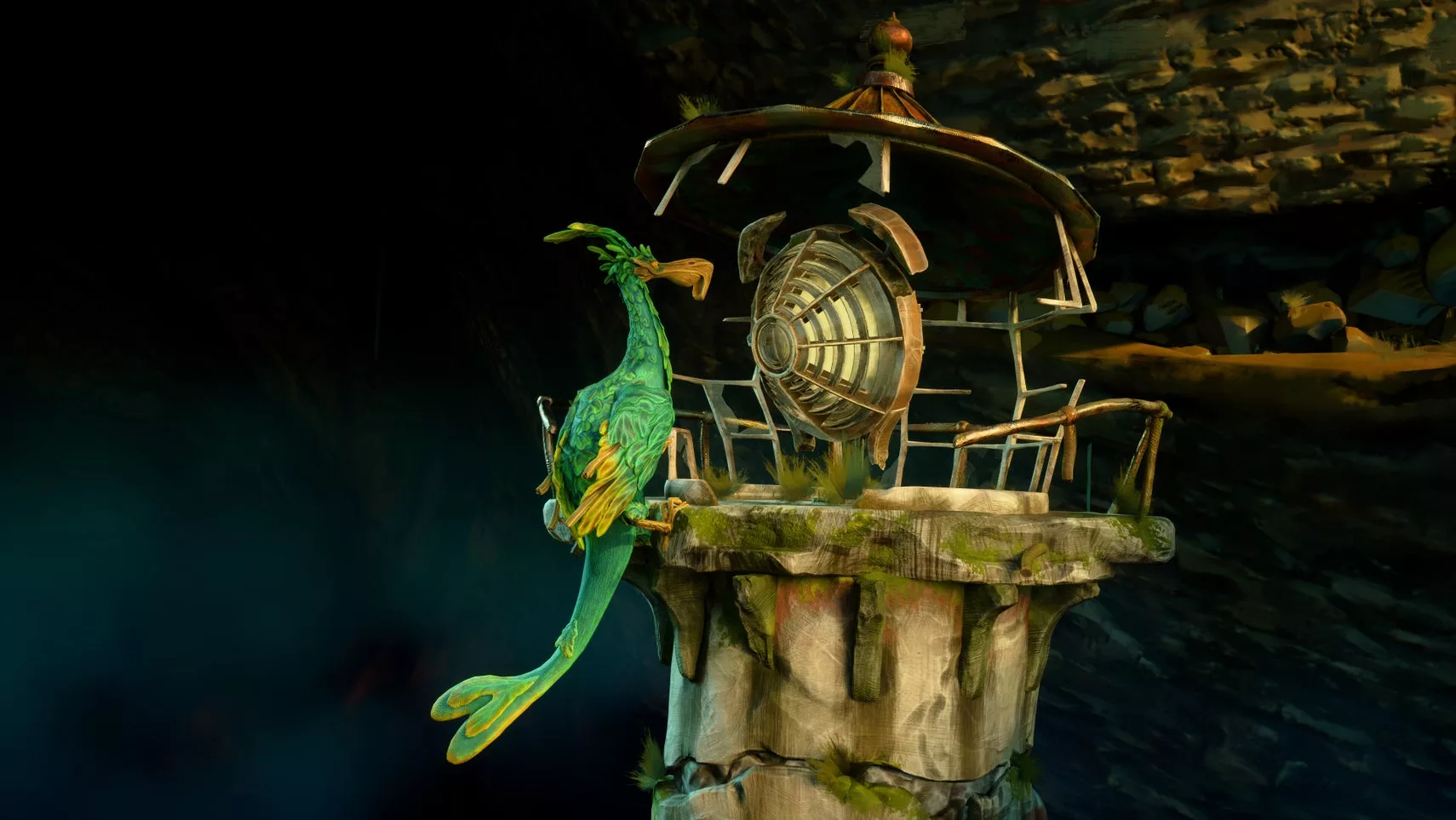
Regarding their approach to pitching games, Schafer stated that the studio has never actively tried to make a game they believed would lose money. He defended Keeper, suggesting it has mass market appeal despite its artistic style. "I think people would say, 'Oh, Keeper looks like this art house thing that no one expects to be a hit.' But to me it's the kind of game that someone who doesn't play games would love. I really think there’s a mass market appeal to Keeper. If we could just get to those people, we could have them catch Lighthouse Fever," he added.
Double Fine recently announced its fifth Amnesia Fortnight event, where small teams develop game prototypes. This initiative features a Kickstarter campaign and an accompanying documentary produced by 2 Player Productions.
Reflecting on the challenges of the past year, Schafer described the experience as involving "inner conflict, threats of extermination, long negotiations, strenuous hard tradeoffs with lawyers. Tons of demoralising stuff." However, he emphasized the positive aspects of problem-solving. "This is the good fight. Can we think of a great idea for a game that we can actually do for the right budget, that can get to this publisher who's interested in these types of games? This kind of problem-solving is soul-enriching. Using creativity to solve problems is what gets us up in the morning. So it is hard, and it is scary and it is stressful, but it's at least putting some fire back into the bellies of the team and me," he concluded.
Флешка
