The Big Question: What's the best GTA?
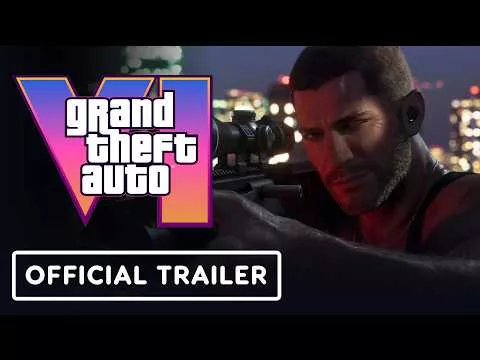
As we approach what might be the biggest gaming launch of 2026, the air is thick with speculation. Will the cars in GTA 6 live up to the hype? Is the soundtrack ready to dominate our playlists again? While the answers to these questions will eventually arrive, Eurogamer is turning its attention to a more subjective, yet deeply debated, topic. As part of our GTA Week, we are reviving 'The Big Question' to settle a debate that has divided fans for decades: which Grand Theft Auto is actually the best?
For many, the journey with the series began in the late 90s. The original GTA 1 offered a top-down sandbox that felt revolutionary, even if the controls were a struggle and the frame rates were antiquated. While the shift to full 3D with GTA 3 changed everything, it wasn't until the arrival of Vice City in 2002 that the series truly found its rhythm for many players. The atmosphere, fueled by an unmatched soundtrack featuring artists like A Flock of Seagulls and Loverboy, created a sense of freedom that remains a benchmark for the genre.
Dom's pick: Grand Theft Auto: Vice City
For Dom, Vice City remains the pinnacle of the franchise. Even 24 years later, the 'immaculate vibes' of 1980s Miami—a sun-washed, cocaine-fueled vision of Yuppie excess—provide the perfect backdrop for a game centered on freedom and fantasy. The narrative arc, casting players as the arrogant Tommy Vercetti, leads into a second half that is entirely open-ended, focusing on building an empire through business ownership and underworld dealings.
Vice City succeeded by seamlessly blending open-world side activities with its main narrative, a feat that Dom argues San Andreas occasionally loses focus on due to its sprawling scale. The production was bolstered by an incredible, if somewhat chaotic, cast including Ray Liotta, Burt Reynolds, and Danny Trejo. The tension between the studio and its high-profile stars reportedly manifested in the game's ambitious, boundary-pushing energy—a feeling that many hope will be present in the upcoming GTA 6.
Bertie's pick: Grand Theft Auto: San Andreas
While Vice City holds nostalgia, San Andreas left the deepest impression for Bertie. The game's attempt to portray Black culture through a West Coast rap lens—reminiscent of an NWA origin story—offered a unique experience that resonated deeply with the hip-hop culture of the time. Even years later, the game's specific cultural lens remains a standout element that few other developers have attempted to replicate.
Beyond the narrative, the 'ridiculous bloat' of San Andreas—gym sessions, mini-games, and even eating burgers—contributed to a sense of living a second life in a sun-drenched city. It was an immersive, if somewhat stylized, simulation of a lifestyle that felt worlds away from reality, and its influence can still be seen in the DNA of modern entries like GTA 5.
Sherif's pick: Grand Theft Auto 4
For Sherif, the answer lies in the gritty, autumnal streets of Liberty City. Despite not being a real-world location, GTA 4’s recreation of a New York-inspired metropolis offers a sense of place and atmosphere that remains unmatched. The compact, landmark-heavy layout of the boroughs makes the city feel lived-in and navigable in a way that the sprawling Los Angeles of San Andreas does not.
GTA 4 represents the bridge between the classic era and the modern RAGE engine era. While it retained the somewhat arcadey controls of its 3D predecessors, the engine provided a weightiness to animations and vehicle physics that signaled the series' next evolution. It stands as a unique moment in the franchise, balancing the old-school feel with next-generation technical ambitions.