

Persona 4 Revival: Director Kazuhisa Wada on Remake Duty

At Gamescom, Persona 4 Revival showcased its modernized combat and faithful narrative, while series director Kazuhisa Wada framed the remake as a duty of cultural preservation and hinted at future projects for the franchise.
During a hands-on session at Gamescom, the remake of the 2008 RPG presented a refined take on the classic turn-based combat system. The visual fidelity matches the standards set by Persona 3 Reload and Persona 5 Royal, applying modern models and effects to the original art direction. The demo allowed players to experience early story segments, including battles against the Shadow forms of Yosuke Hanamura and Chie Satonaka. These encounters highlighted the game’s core thematic focus on confronting repressed inner selves, with the Shadow of Yosuke manifesting as a class clown persona and the Shadow of Chie embodying envy toward Yukiko Amagi.
The combat system retains the strategic depth of the original, requiring players to identify enemy weaknesses and manage limited resources like mana and health. Kazuhisa Wada acknowledged that the original mechanics, while effective, contained elements that could feel frustrating by modern standards. The development team worked to remove these stressful moments while preserving the core rhythm of the battles. The One More system, which grants an extra turn upon landing a critical hit or exploiting a weakness, remains a central mechanic, offering both high rewards and potential risks during intense encounters.
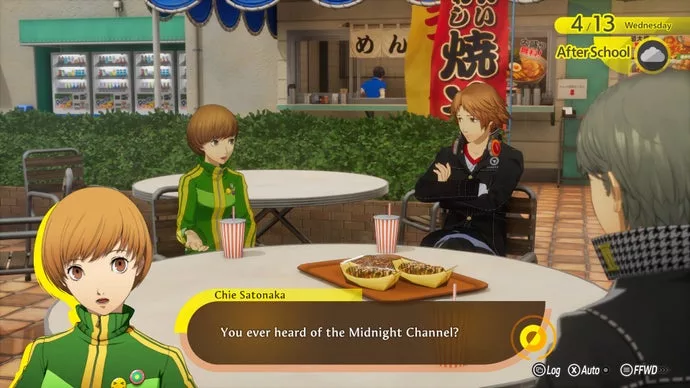
Beyond combat, the remake preserves the narrative and social link mechanics that define the series. Kazuhisa Wada stated that the characters and story remain exactly as they were in the original, with only minor tweaks made for additional nuance where the script felt unclear. The social links, which deepen relationships between the protagonist and party members while enhancing their combat effectiveness, have not been significantly altered. This approach ensures that the emotional core of the game, which explores themes of self-acceptance and the consequences of denying one’s true self, remains intact for both new and returning players.
The voice acting in Persona 4 Revival features a full recast, a decision that has sparked discussion among fans. While several members of the original cast expressed a desire to return, the development team selected new actors based on their ability to match the vibe of the characters while allowing for their own interpretation. Kazuhisa Wada noted that the auditions were not explicitly labeled as such to the actors, allowing for a fresh perspective on the roles. The new performances were described as strong, bringing a contemporary energy to the characters while maintaining their essential traits.

When asked about the motivation behind remaking a game that is already considered a classic, Kazuhisa Wada described the process as a form of cultural preservation. He emphasized that as a creator, there is a duty to ensure that significant works are not lost and remain accessible in the modern era. This perspective extends beyond Persona 4, with Kazuhisa Wada suggesting that Persona 1 and Persona 2 are also candidates for future remakes. The initial concept for Persona 4 Revival was developed alongside Persona 3 Reload, but it was put on the backburner to prioritize the earlier title. Now, the team is focused on delivering a version of Persona 4 that serves as an excellent entry point for new players while honoring the experience that made the original game a landmark in the RPG genre.
The remake aims to capture the essence of what made Persona 4 great, ensuring that its themes and characters resonate with a new generation. By balancing modern technical standards with a faithful narrative, Persona 4 Revival positions itself as both a nostalgic return for veterans and a compelling introduction for newcomers. The game’s release on PC, PS5, and Xbox Series X/S will make it accessible to a wider audience, continuing the legacy of the Persona series in the current gaming landscape.
Флешка
