
Path of Exile 2 in 2026: Beginner's Guide, Survival Tips, Class Choice, Builds, and Lifehacks

Path of Exile 2 radically changes the rules of classic isometric ARPGs. Unlike the first game, the sequel shifts the focus away from blindly clicking through hundreds of monsters toward tactical positioning, dodge timing, and deliberate skill combinations.
Core mechanics: what changed and how it works
1. The new Skill Gem system
In PoE 2, gem sockets are no longer located in armor or weapons. They are built directly into the character's skill menu.
While leveling, you find Uncut Gems of a specific level and choose which skill or Support Gem to unlock.
Each active skill can be expanded with up to five Support Gems, without relying on the luck of finding five- or six-linked armor.
2. Spirit replaces mana reservation
You no longer need to sacrifice your mana pool for auras and buffs. A separate resource called Spirit has been introduced (100 points by default, expandable through equipment and skills):
Permanent minions, such as Skeleton Snipers, require a fixed amount of Spirit to maintain.
Enabling permanent auras and heralds consumes Spirit, leaving the entire mana orb available for active skill casting.
3. WASD movement and Dodge Roll
The space bar activates a cooldown-free Dodge Roll that grants invulnerability frames (i-frames) and lets you pass through dense packs of monsters.
Full WASD movement support turns the game into a dynamic twin-stick action experience where you can move in one direction and fire in another.
4. Weapon specialization and the dual-spec passive tree
The game lets you assign specific passive points to different weapon sets.
Example: Equip a fire staff in the first slot and a dagger and shield in the second. The game will automatically switch to the fire-damage passive branch when you cast a fireball, then instantly activate the shield's defensive nodes when you use a defensive skill.
5. Gold and accessible skill respecs
PoE 2 introduces gold currency dropped by monsters. Gold is used for trading with NPCs, gambling, and, most importantly, instantly refunding points on the passive skill tree. Build mistakes no longer require creating a new character.
6. Boss Stagger meter
A white stability meter appears beneath each boss's health bar. Heavy hits, especially from crushing weapons or explosions, fill this meter. Once it is full, the boss drops to its knees for 4–6 seconds, giving you time to unleash maximum damage without the risk of retaliation.
Choosing a starting class
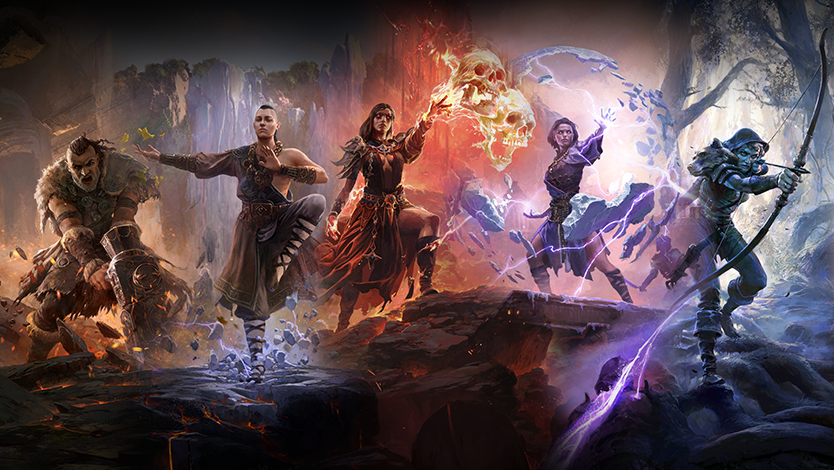
Classes in PoE 2 determine your starting position on the enormous passive skill tree and your base attributes.
| Class | Primary attribute | Playstyle | Beginner difficulty |
|---|---|---|---|
| Witch | Intelligence | An army of minions, curses, Chaos magic, and damage over time (DoT). | Very low (ideal for starting out) |
| Sorceress | Intelligence | Pure elements: freezing enemies, lightning cascades, and meteors. | Low |
| Mercenary | Dexterity / Strength | Crossbows, switching ammunition types (fragmentation, armor-piercing), and grenades. | Medium (shooter mechanics) |
| Warrior | Strength | Two-handed maces, shields, heavy area attacks, and quickly staggering bosses. | Medium |
| Ranger | Dexterity | Bows, lightning-fast arrows, and constant ranged kiting. | Medium (requires good reactions) |
| Monk | Dexterity / Intelligence | Quarterstaves, combo attacks, freezing lunges, and resonating bells. | High (requires timing) |
| Huntress | Dexterity / Strength | Thrown and thrusting spears, whirlwinds, and mid-range attacks. | Medium |
| Druid | Strength / Intelligence | Shapeshifting (Bear, Wolf), combining nature spells with melee combat. | High (managing resources and forms) |
Top three beginner builds
1. Undead-summoning Witch (Minion Infernalist / Lich Witch)
Build concept: You summon an army of skeletons (warriors, crossbowmen, and mages) and infernal hounds. The minions hold the aggro of bosses and monsters while you apply curses such as Flammability and maintain chaos spell damage with Contagion and Essence Drain.
Why it suits beginners: Maximum safety. While your army absorbs hits, you learn boss attacks and game mechanics from a safe distance.
Equipment priority: Items with bonus Spirit for summoning more minions, health, resistances, and minion damage.
2. Freeze & Spark Sorceress
Build concept: Combine ice spells for crowd control with lightning magic for eliminating single targets. Ice spells slow and freeze advancing monster packs, while Spark or Lightning Bolt with chain-reaction Support Gems clears the arena.
Why it suits beginners: Frozen enemies deal no damage, which offsets most positioning mistakes.
Equipment priority: Cast Speed, elemental damage, Energy Shield, and mana regeneration.
3. Permafrost Grenade Mercenary
Build concept: A rapid stream of icy bolts freezes ordinary enemies, after which you fire a combination of armor-piercing shots and incendiary grenades beneath the boss.
Why it suits beginners: Intuitive shooter-style gameplay, convenient kiting with WASD movement, and high base damage without strict dependence on rare items.
Equipment priority: High physical damage on the crossbow, movement speed on boots, Evasion, and armor.
Golden rules for completing the campaign
Elemental Resistances are a matter of life and death. The game's damage is balanced around a character having 75% Fire, Cold, and Lightning resistance. If your fire resistance is 0% when fighting an Act 3 boss, you will take four times more damage than intended. Prioritize rings and amulets with resistances.
Focus on one main damage skill. Do not spread valuable Support Gems across ten different skills. Choose one primary skill for single targets (bosses) and one for clearing crowds, then maximize their damage with supports.
Regularly upgrade weapons at vendors. If you play a melee or ranged weapon class (Warrior, Ranger, Mercenary), your damage directly depends on the numbers on the weapon itself. Check city NPC inventories for gold every 5–7 levels.
Flasks recharge at checkpoints. In PoE 2, health and mana flasks do not passively refill over time; their charges are restored by killing monsters or activating Wells/Checkpoints. Do not consume every flask charge as soon as you take minor damage.
Do not stand still. Most deadly boss attacks have clear visual and audio telegraphs. Rolling through a boss's attack and getting behind it is the most reliable way to survive.
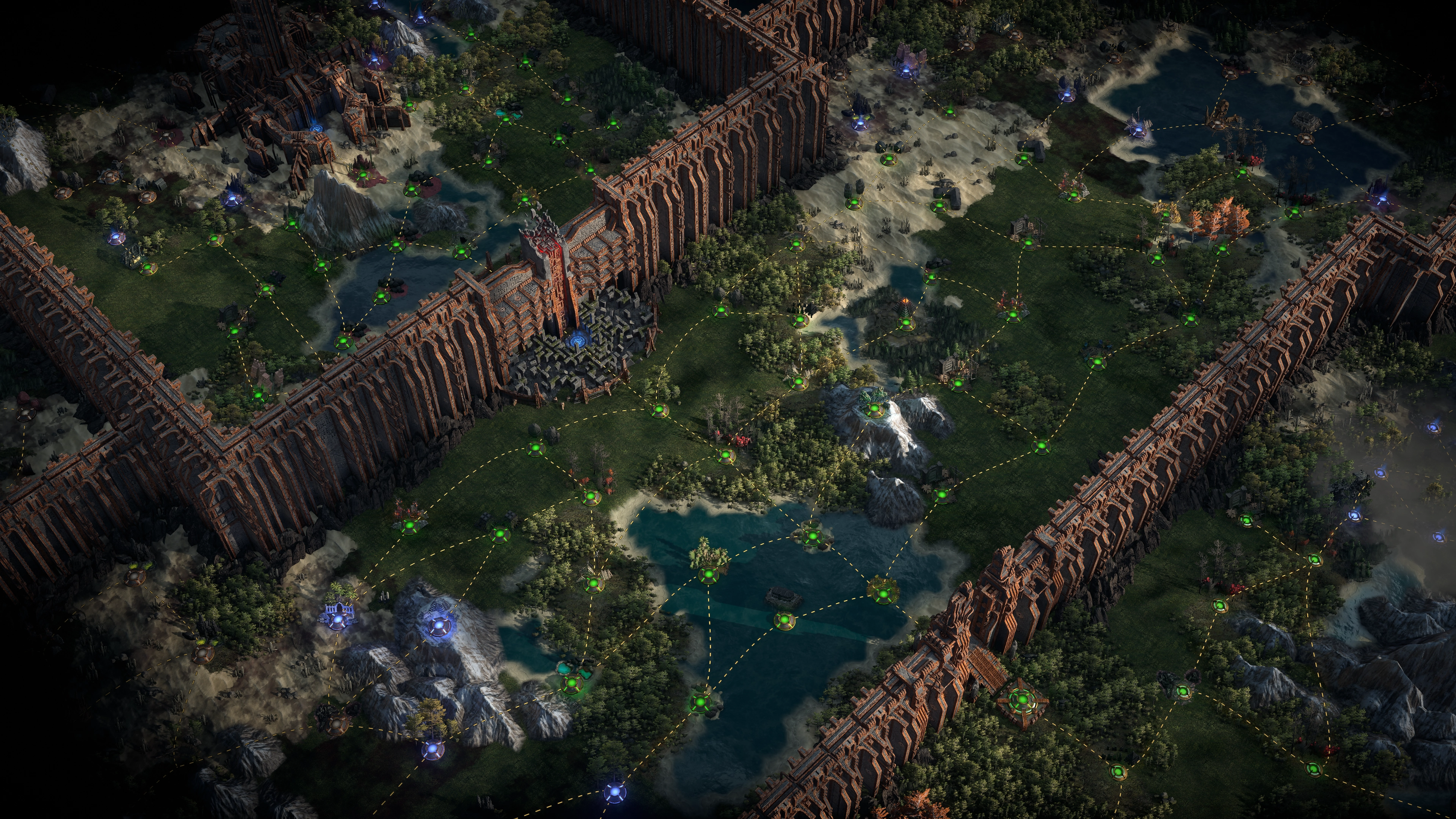
Completing the campaign in Path of Exile 2 is only a warm-up for the real game, but this is where the foundation is built. Many newcomers quit halfway through simply because their approach to the mechanics was not optimized.
Let's break down the campaign systematically, remove what is unnecessary, and focus on the metrics and tactics that really matter for a fast and comfortable start.
1. Route optimization (the speedrun approach)
Do not clear locations to 100%: This is the most common beginner mistake. Your goal is to keep your character level equal to, or 1–2 levels below, the current area level shown in the upper-right corner. If you fall behind, kill a couple of large packs of magic (blue) monsters. Spending time picking off isolated white enemies in the corners of the map is mathematically inefficient.
Use the roll for movement: Dodge Roll is not only for avoiding boss attacks. It helps you cross empty spaces faster and slip through dense monster packs if you are trapped in a narrow corridor.
The left-hand/right-hand rule: Locations are procedurally generated but follow strict algorithms. The exit to the next level or a quest boss is often on the opposite side from the entrance. Follow one side (wall) while exploring to minimize your chance of getting lost.
2. Data filtering: working with loot
Without properly configuring the interface, the screen quickly becomes an information mess filled with hundreds of unnecessary items.
Always install a loot filter: It is essential software—for example, the classic NeverSink option adapted for PoE 2. The filter automates loot sorting: it hides low-level junk and uses colors and sounds to highlight only valuable item bases, currency, and Uncut Gems.
Do not pick up everything: Take only yellow (rare) items for your equipment slots and currency. Inventory space is limited, and returning to town every five minutes to sell junk is a waste of time.
3. Economy and resource management
PoE 2 introduces a clear financial system that requires planning.
Gold is a strategic resource: Do not waste early gold on random yellow items from vendors. Gold is critically important for refunding passive-tree points (Respec) once you realize you made a build mistake, and for trading with other players in the later stages.
Uncut Gems: The level of dropped gems is tied to the location. The base damage of spells used by the Witch and Sorceress scales with the level of the gem itself, not the weapon. Always try to invest the highest-level gems in your main attack skill.
Tag synergy: Carefully read the tags under a skill name, such as Spell, AoE, Fire. A Support Gem will work and enhance a skill only if its tags match. The logic is strict: no matching tags means no damage increase in the character's underlying stats.
4. Combat tips and survivability
Pattern analysis and the Stagger window: Every boss has a hidden stability metric represented by the white bar beneath its health. Heavy attacks fill this meter quickly. The trick is not to waste your strongest long-cooldown abilities. Save them for the exact moment when the meter fills and the boss drops to its knees. During this window, you can deal maximum DPS without risking death.
Use flasks as buffs, not first-aid kits: Learn to activate defensive flasks for armor, speed, or evasion before taking damage as you enter a crowd, instead of panic-using them after your health falls to 10%.
Crafting Bench in the hideout: Use it constantly as soon as the story unlocks access. Found good yellow boots with health but no elemental resistance? Go to the bench and add the required stat cheaply. This dramatically increases survivability.
5. Vendor Recipes
The game contains hidden NPC trading algorithms. If you sell a specific combination of items, you receive a particular item instead of gold.
Movement-speed example: Sell any boots, an Orb of Augmentation, and a Quicksilver Flask to a vendor, and you will receive boots with a guaranteed movement-speed bonus. It is a great way to accelerate progress through the opening acts.
Which part of the game interests you most right now: a detailed breakdown of a specific class, or should we look further ahead and discuss how the trading economy and endgame system work?
Травник
