
Nvidia PAIR Utility Clusters Home GPUs for Agentic AI
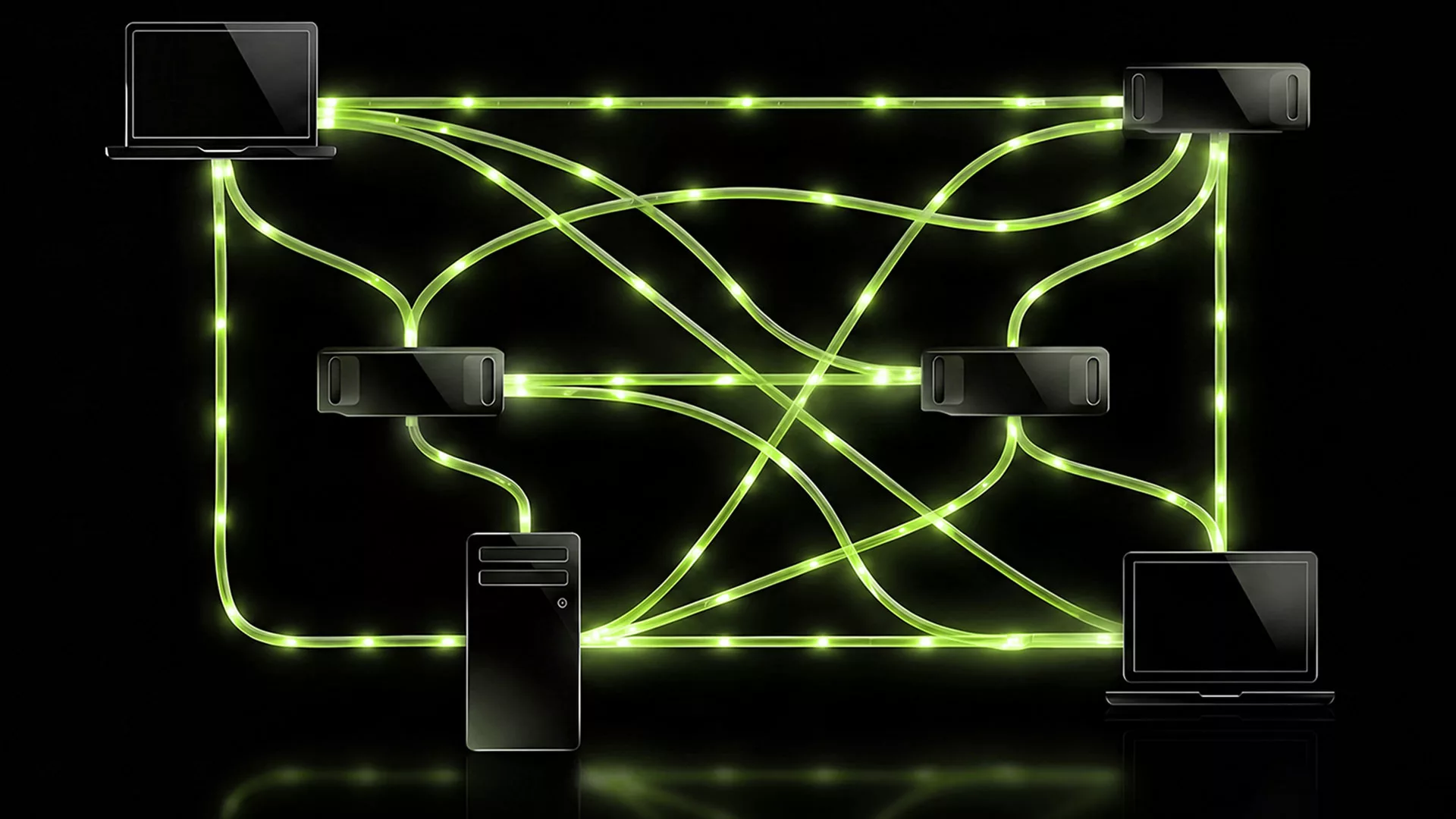
Nvidia is introducing the Personal AI Router (PAIR) at IFA 2026, a utility designed to cluster idle GPUs across a home network for distributed agentic AI tasks. The tool aims to reduce reliance on cloud inference by utilizing spare compute cycles from multiple devices, including GeForce RTX cards and Apple Silicon Macs, while dynamically managing resource availability without reserving dedicated capacity.
Local AI enthusiasts often face a bottleneck when running complex agentic workflows on a single machine. When a central AI agent breaks a large goal into multiple sub-tasks, executing all of them on one GPU creates contention that slows down overall completion. Nvidia addresses this by presenting PAIR as a solution that dispatches these sub-tasks to other systems on the local network that have suitable GPU cycles available. The primary goal is to save costs on cloud tokens and keep data processing private by leveraging existing household hardware.
The utility operates on an elastic model rather than a static cluster reservation. Since other users in the household may need their GPUs for gaming, creative work, or their own AI tasks at any moment, PAIR does not lock in dedicated capacity from participating PCs. Instead, it assesses the resources available at any given moment and assigns work accordingly. If a user needs their GPU back, the system is designed to gracefully release the resources. This approach means that quality of service is not strictly assured, but it is particularly useful for long-running agentic tasks that do not have strict deadlines.
Setup is designed to be straightforward for users already familiar with local AI front-ends. PAIR creates a proxy for popular applications like LM Studio and Ollama. The main node, or head node, connects to this proxy, and PAIR orchestrates the work across the available nodes on the network before returning the results to the originating application. Participating nodes must also be running Ollama or LM Studio and have their own installation of PAIR.
Device discovery within the cluster relies on mDNS, with an IP address fallback if necessary. Nvidia notes that PAIR can help initiate model downloads on participating systems, but nodes do not need to have identical models or the same set of models downloaded to participate. However, if more systems have a specific model available, it broadens the pool of potential nodes that can handle a request if the orchestrator agent requires the capabilities of that particular model.
Compatibility is broad, covering a range of modern hardware. PAIR will run on any DGX Spark or other GB10-based box, as well as GeForce RTX 20-series graphics cards or newer. For inference tasks, it also supports Macs with M4-series processors or newer. Consequently, the PAIR client will be available for Windows, macOS, and Linux, allowing for a heterogeneous home cluster that mixes different architectures and operating systems.
This tool fits into a broader trend of local AI clustering, where users seek to scale out AI compute at home to avoid high API fees. By turning idle cycles from family members' PCs into a distributed resource, Nvidia is targeting users who are token-hungry and willing to coordinate their hardware for more efficient local inference.
Гика
