

Nintendo, EA, and Riot Join ESA Initiative to Standardize Accessibility Tags
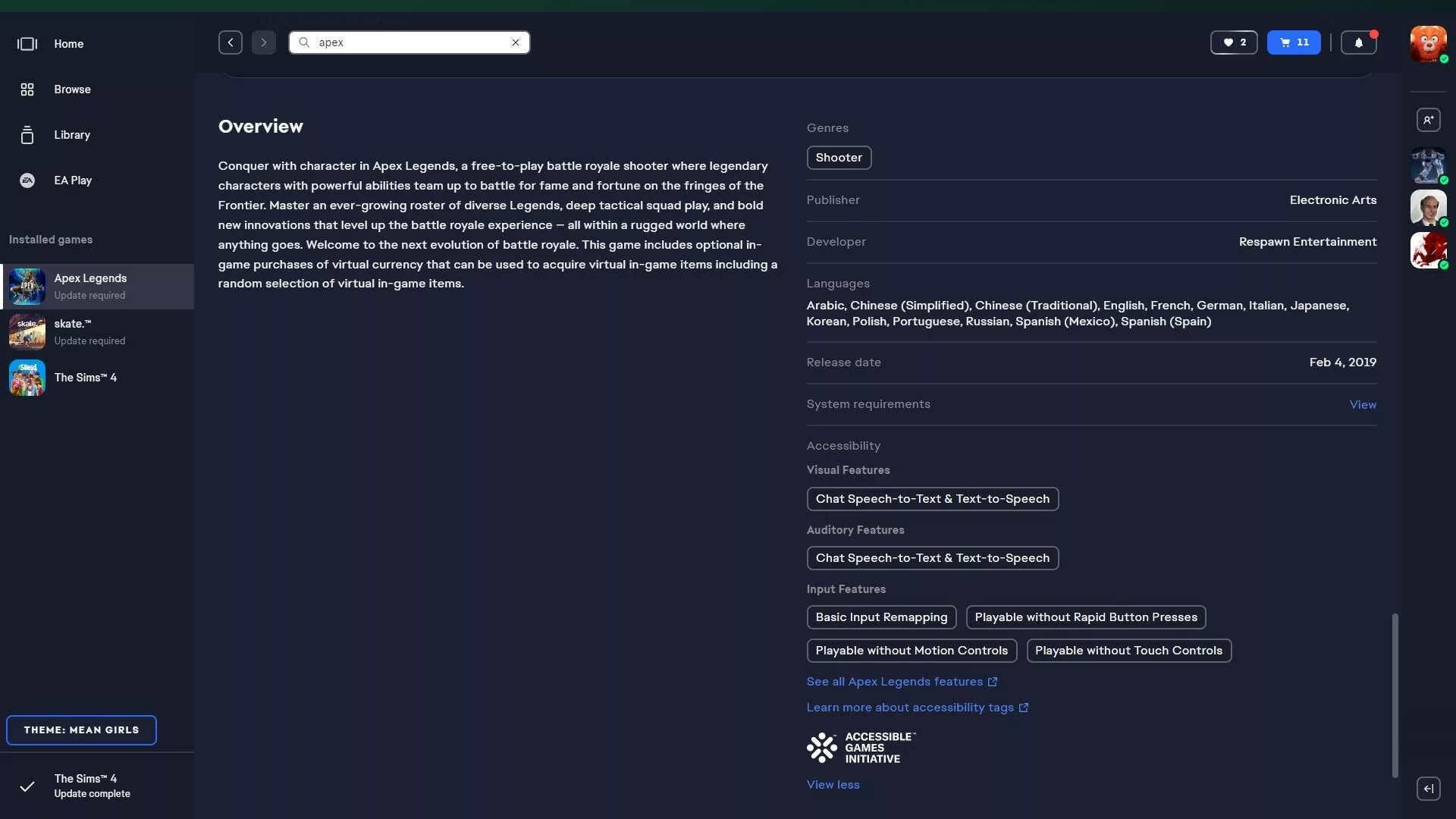
In a significant move toward industry-wide standardization, six major gaming entities—including Nintendo of America, EA, and Riot Games—have begun displaying standardized accessibility tags on their game information pages. This initiative, led by the Entertainment Software Association (ESA), aims to replace the fragmented terminology currently used by different publishers with a consistent set of descriptors, making it easier for players to identify essential features like subtitle clarity and button remapping before they buy or play a game.
The implementation marks a practical step forward for the 'Accessible Games Initiative' first unveiled by the ESA in March of last year. While the project was announced alongside several participating companies, the actual rollout was left to the discretion of each individual publisher. The recent announcement confirms that the initiative is now moving from planning to live storefronts and game information pages.
The push for a unified standard addresses a long-standing issue in the industry: inconsistent descriptions. As EA noted, different publishers often use varying terms to describe similar accessibility features, making it difficult for players to compare titles or accurately gauge the level of support provided. By incorporating feedback from players with disabilities, accessibility organizations, and development teams, the ESA has established a set of 24 specific tags that define features through clear, standardized criteria.
These tags cover a wide range of functional needs, such as 'large and clear subtitles,' 'narrated menus,' and 'basic input remapping.' Notably, the tags go beyond simple presence; for instance, the 'large and clear subtitles' tag requires specific conditions regarding text size, font, and background contrast to be met, rather than just confirming that subtitles exist.
Implementation Across Major Platforms
The way these tags are presented varies depending on the service and platform used by the player:
It is important to note that this rollout is currently limited to US English and is a voluntary adoption process. This means the tags are not yet applied to all games within these companies' catalogs, nor are they available in all regions. For instance, it remains unconfirmed whether these tags will be implemented on the Nintendo eShop in Korea. Furthermore, EA has clarified that these tags do not serve as a formal certification or a guarantee of overall game accessibility for every individual player, and that supported features may change as games receive updates.
Флешка
