
Intel Raises MSRP of Core Ultra 7 270K Plus and Core Ultra 5 250K Plus
Intel has quietly increased the recommended selling price (MSRP) for its recently launched Arrow Lake-S desktop processors: Core Ultra 7 270K Plus and Core Ultra 5 250K Plus. Prices have risen by 16% and 15% respectively from their launch figures.
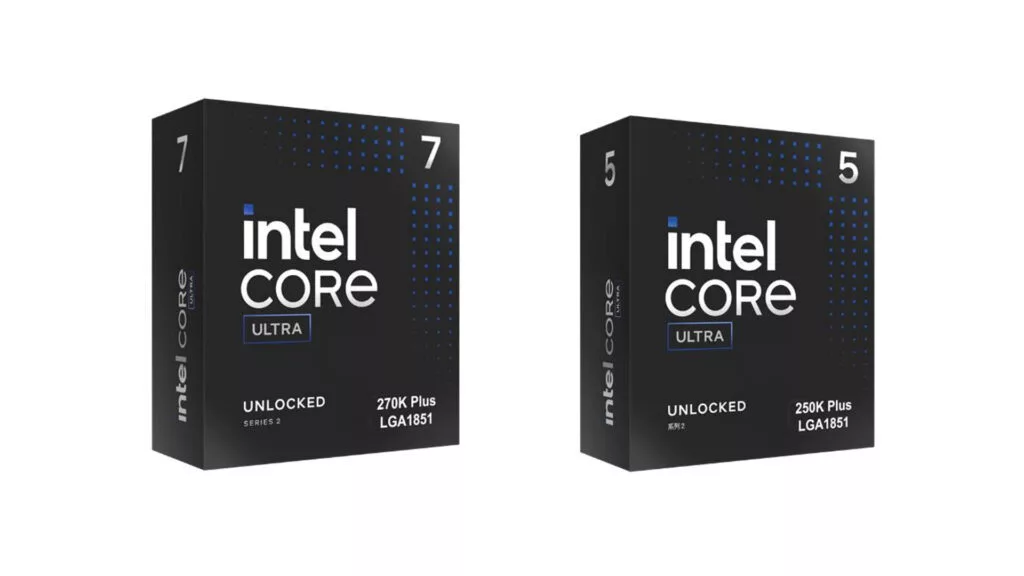
Intel has quietly increased the recommended selling price (MSRP) for its recently launched Arrow Lake-S desktop processors: the Core Ultra 7 270K Plus and the Core Ultra 5 250K Plus. The update came immediately after launch, raising prices from their original starting points of $299.99 and $199.99 respectively.
The Core Ultra 7 270K Plus now carries an MSRP of $349.99 — a significant 16% increase. Meanwhile, the Core Ultra 5 250K Plus, which received widespread praise for its disruptive launch pricing, has seen a 15% price hike, bringing its new MSRP to $229.99. These updated prices are now reflected on Intel's official product information pages.
What Changed and Why It Matters
Both chips are LGA1851 socket processors designed for motherboards using the Intel 800-series chipset. The 270K Plus offers an 8P+16E core configuration that fully utilizes the Arrow Lake-S silicon, featuring a total of 36 MB of L3 cache and a maximum P-core boost frequency of 5.50 GHz. The 250K Plus, conversely, boasts the highest core count among any Intel processor in the "5" segment (6P+12E) with 30 MB of L3 cache.
Both chips support Intel's new Binary Optimization technology. However, raising prices immediately after launch — especially for the 250K Plus, which was positioned as a budget-friendly high-performance alternative — has drawn questions from the community. Users note that these processors have been selling above their MSRP since their March 2026 launch, and the price hike merely catches up to their actual market value.
It is important to consider the context: these chips compete against older AMD Ryzen 9000-series models (launched in August 2024), making direct performance-to-price comparisons less straightforward. Nevertheless, a $50 price increase per processor significantly reduces the appeal for buyers expecting good value.
Гика
