

HP Googlebook 14c: Premium Hardware or Just an Expensive Chromebook?
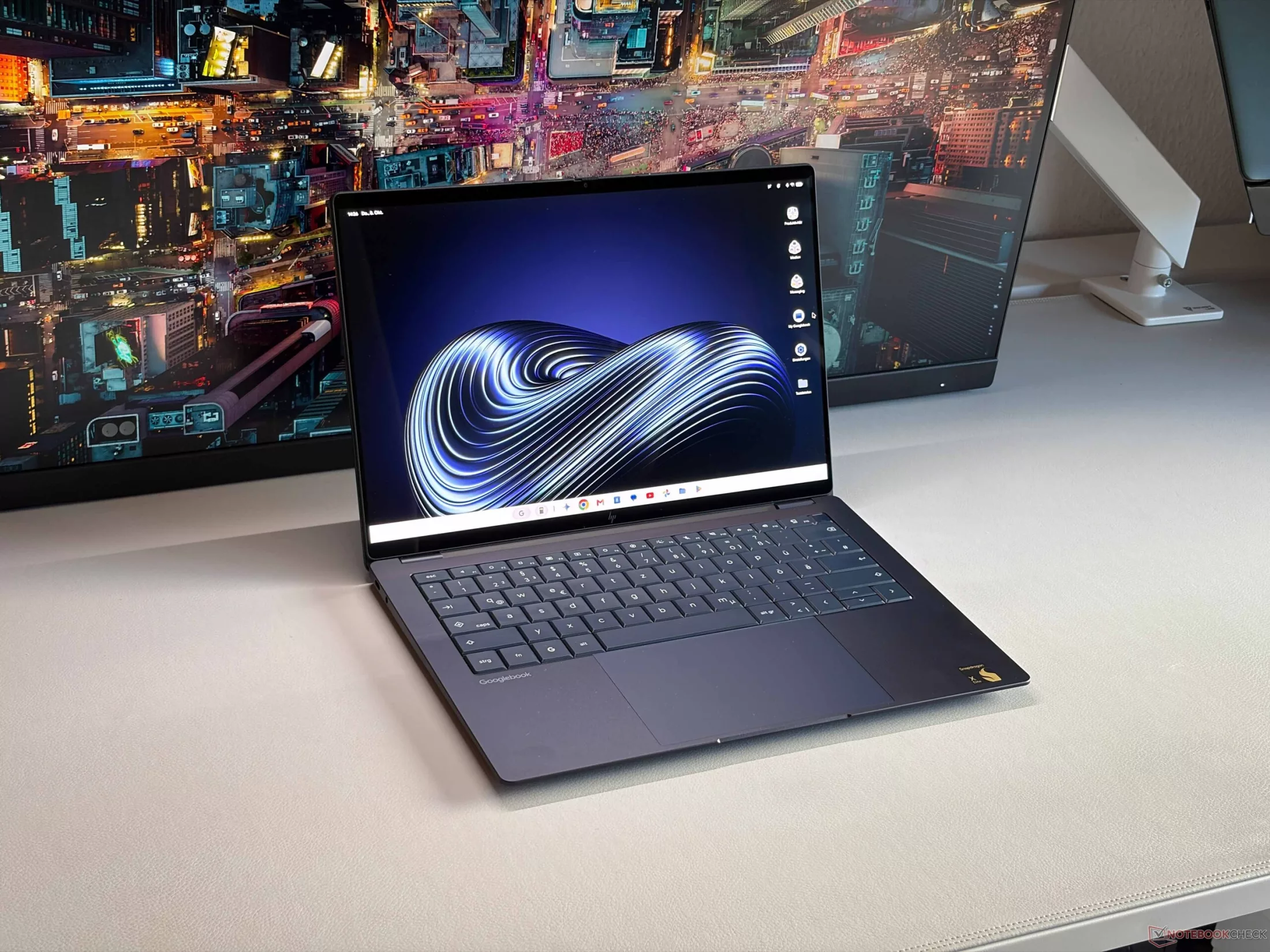
The new HP Googlebook 14c is a device that feels like a premium Windows or macOS laptop in terms of build quality, but runs on a completely different software foundation. Equipped with a Snapdragon X1 Elite processor and a stunning 2.8K OLED touchscreen, it aims to be a serious contender, yet it faces significant software hurdles.
Premium Build vs. Software Limitations
Visually, the HP Googlebook 14c is nearly indistinguishable from the high-end HP Spectre series. Its dark blue metal chassis offers excellent stability and a premium feel. Under the hood, the Qualcomm Snapdragon X1 Elite provides substantial power—perhaps even more than necessary for a system primarily designed to run Android apps. This mismatch is one of the device's most confusing aspects.
The core issue lies with Googlebook OS. The experience remains very close to Chrome OS; it is essentially an online-centric device that relies heavily on Google services and AI features like Gemini AI, which often require an active internet connection. The lack of built-in 5G connectivity is a notable omission for a device positioned as a high-end mobile workstation.
Display and Multimedia Experience
The tested unit features a 2.8K OLED touchscreen with a 120 Hz refresh rate. The image quality is exceptional, and the fast response times make it excellent for media consumption. However, there are caveats: the screen is highly reflective, making outdoor use difficult, and HDR support is currently missing (though this may be a software issue fixable via updates). Additionally, PWM flickering is present at 960 Hz, which may affect users sensitive to screen modulation.
The audio setup is impressive, featuring quad speakers that deliver great sound. While the dual-fan cooling system keeps the laptop very quiet during daily tasks, heavy CPU workloads can push internal temperatures above 50 °C near the keyboard, which might be uncomfortable for lap use.
Performance and Expandability
While the Snapdragon X1 Elite delivers strong raw performance in benchmarks like Geekbench 6.7, the practical utility is hampered by software compatibility. Popular Android titles like Fortnite or PUBG are currently unsupported, limiting the device's gaming potential. For gaming, users are largely relegated to streaming services like GeForce Now. That said, the integrated Adreno X1-85 graphics handle available Android apps smoothly.
Regarding hardware flexibility, the HP Googlebook 14c offers a rare advantage: the M.2-2280 SSD is replaceable. However, the "LPDDR5x" RAM is soldered to the motherboard, and the connectivity is somewhat sparse, with only two USB-C 3.2 ports available.
At a price point of $1299 (or 1199 €), the HP Googlebook 14c remains a polarizing choice. With plenty of Windows alternatives and the highly efficient Apple MacBook Air available in the same price bracket, the decision to invest in such a specialized and limited operating system is a significant one for any buyer.
Гика
