
Game devs on genAI witchhunts and honing your visual literacy

The era of generative artificial intelligence has ignited a wave of accusations, often termed 'witchhunts,' targeting video game developers who are frequently accused of using the technology despite their vocal opposition to tools like ChatGPT and Claude. Recent high-profile examples include Sandustry, a 2D factory builder from Hooded Horse that faced scrutiny over its physics, and Humankind 2, whose creators at Amplitude had to rush to confirm their announcement trailer was genuine live-action film. This article explores the shifting landscape of visual perception in gaming, where established hallmarks of AI-generated imagery are rapidly becoming obsolete, and discusses why developers like those at New Blood Interactive, Failbetter Games, and Abandoned Sheep find themselves defending their craft against baseless claims.
The Rise of Generative AI Witchhunts
The conversation surrounding generative AI imagery is evolving rapidly. The confusion stems from the fact that AI-generated content has no fixed style or quality; it is entirely derived from the data fed into the model. This fluidity is exacerbated by the constant introduction of new tools and buzzwords, causing established markers of AI art to become outdated quickly. Furthermore, advocates for the technology often muddy the waters by conflating different tools and framing their capabilities in overly broad terms. Despite this, a significant burden of responsibility falls on regular users who have become accustomed to casually dismissing any visual output as "AI slop." Over recent weeks, Edwin Evans-Thirlwell, News Editor at Rock Paper Shotgun, spoke with several developers and artists who have been falsely accused of using generative AI for their visual art. The journey has been described as both depressing and uplifting, highlighting the difficulty of identifying generated imagery at a glance—a challenge that extends far beyond gaming into broader social and political contexts where such fakes are used to manipulate public opinion.

Defending Against Accusations: New Blood Interactive
David Oshry, CEO of New Blood Interactive, has had to contend with relentless accusations regarding their upcoming horror game, Tenebris Somnia. This title combines top-down pixel art with live-action film elements. To address claims that the game's assets were generated by a chatbot, New Blood released a behind-the-scenes video demonstrating the manual creation of props. When asked if this was a preemptive measure or a response to specific allegations, Oshry pointed directly to the comments section: "LOOK AT THE COMMENTS AND YOU TELL ME." He noted that allegations have become non-stop, particularly on platforms like Instagram. Oshry expressed frustration that short-form video platforms seem to have negatively impacted users' ability to distinguish between genuine craftsmanship and AI output. Despite the exhaustion caused by the constant engagement, Oshry remains sanguine about the outcome. The controversy has actually driven up wishlists for Tenebris Somnia, with 15,000 added in a single week. While he acknowledges that committed followers often come to their defense, Oshry expressed a preference for making content about the game rather than content proving it is not AI-generated.

Failbetter Games and the 'Eldritch' Aesthetic
Hannah Flynn, Communications Director at Failbetter Games, noted that their studio is accustomed to receiving attention, which often comes with scrutiny. For their flagship title Fallen London and other projects like Sunless Skies, the studio has issued statements swearing off any use of generative AI. Flynn explained that while some community members may have genuine concerns about accidental violations of their AI policy, much of the criticism comes from "social media fly-bys" from people not invested in their games. She reassured the community that the team takes great pleasure in their craft and has no interest in switching to AI tools. Flynn also offered insight into why their specific art style attracts suspicion. Fallen London features a painterly art style and a penchant for 'aberrant' bodies, such as disembodied limbs and knotted proportions, which recall an older variety of photorealistic AI generation. Flynn noted that AI models are often trained on classical styles, which can ironically make hand-crafted works in similar styles appear generated. She added that while their artwork genuinely contains too many eyes or fingers, these are intentional elements of their eldritch horror theme.

Abandoned Sheep and the 'Too Good to Be True' Paradox
Martin Binfield, Studio Director at Abandoned Sheep, discussed the case of their game Schrodinger's Cat Burglar. One of the game's older pieces of key art, hand-painted by local artist Tom Williams in mid-2022, has been repeatedly called out as AI-generated. Binfield explained that the piece was produced before generative AI could produce work to such a standard. Rather than push back on the suspicion, Abandoned Sheep found it more practical to replace the art, noting that after four years, the visuals needed a refresh anyway. Binfield expressed no grudge against the vigilance of commenters, stating that he and his team have never used generative AI and share the sentiment that gamers hate the idea of it appearing in games they want to play. Binfield highlighted a paradoxical trend: immaculate execution often invites hostile scrutiny. The key art for Schrodinger's Cat Burglar was described as 'unnaturally polished,' with airbrushing and reflections in the cat's eye setting people off. This feels like being 'cursed by success'; the high quality of the work leads observers to assume it must be AI because it looks too good to be true. Binfield also noted that while some accusations stem from minor errors like incorrect finger counts, a common trend in responses is an absolute sense of correctness, often declaring "no sale" rather than asking questions.
The Difficulty of Visual Detection
Janna Sophia Koppenwallner, a table-top game and book illustrator, conducted an academic survey to investigate human AI detection accuracy. Her findings suggest that the task is far from straightforward. She found that people who finished a short training module actually performed just slightly worse than those who did not, though the difference was statistically significant. Koppenwallner observed that people tend to get overly suspicious and over-correct, misidentifying real photos and art as AI-generated. This aligns with the experience of many developers who face false positives. She noted that artists being falsely accused often have popular art styles that look very clean, highly rendered, and polished. Since generative AI relies on immense datasets, models perform better on common styles but struggle to reproduce niche art styles due to a lack of training data. Koppenwallner emphasized that every generative AI model has a distinct visual language that becomes apparent when comparing large amounts of output. She advised users to follow their intuition—that nagging feeling that something is wrong—but also warned that the feeling that something is 'too good to be true' can easily become sheer bias. Intuition must be deliberately modulated through study and proper training.

Denoising vs. Generative AI: A Technical Distinction
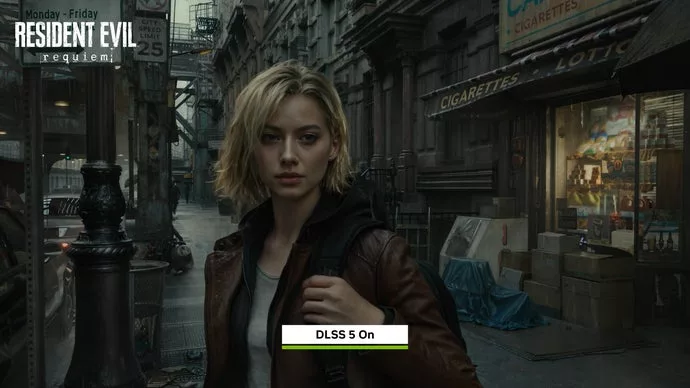
Abdou Bouam, a freelance artist, clarified the technical confusion surrounding older machine learning tools that overlap with generative AI. He recalled an instance where a client questioned images he sent for feedback, pointing out blurry and indistinct patches and asking if they were generated by AI. These blemishes were actually created by older denoising methods used to clean up renders from pathtracing. Pathtracing creates physically plausible images by firing rays from the camera and bouncing them around until they hit a light source. The finished image is produced by averaging out discrepancies between samples. Since rendering for an infinite amount of time to get a noise-free image is not feasible, denoisers are used to remove random variations. The difficulty lies in the fact that denoising blemishes can resemble symptoms of AI generation, such as lost details, blurring, and smearing with artifacts. However, Bouam argued that these tools do not have the same ethical concerns as generative AI. Unlike generative models trained on non-consensually obtained public data, denoisers are created using archives of tailor-made images purposely rendered with noise. They run locally rather than via data centers and save energy by drastically shortening render times. Bouam concluded that these tools do not represent a loss of artistic control. They do not change the way a scene looks, other than introducing smears if the sample count is too low. They do not alter lighting or character features. In his view, it remains his art.
Conclusion: Honing Visual Literacy
The insights from these developers and researchers offer a steer for navigating a world where generative AI is being shoved into every vocation. As the technology changes, pure visual detection is getting harder and harder. Today's tools display fewer of the unearthly mutations that characterized early iterations of models like Midjourney. Koppenwallner advises that most clues are now in the context of an image: what one is seeing, why one is seeing it, and whether it is plausible to get a fully rendered painting in two days for $200. She urges caution about calling someone out for using AI based on a hunch. The conversation remains vital, not just for protecting artists from false accusations, but for improving our collective visual literacy and understanding the complex relationship between human creativity and machine assistance.
Дурик
