

DLSS 5 on Second GPU: MGPU Bridge Boosts FPS by 127%
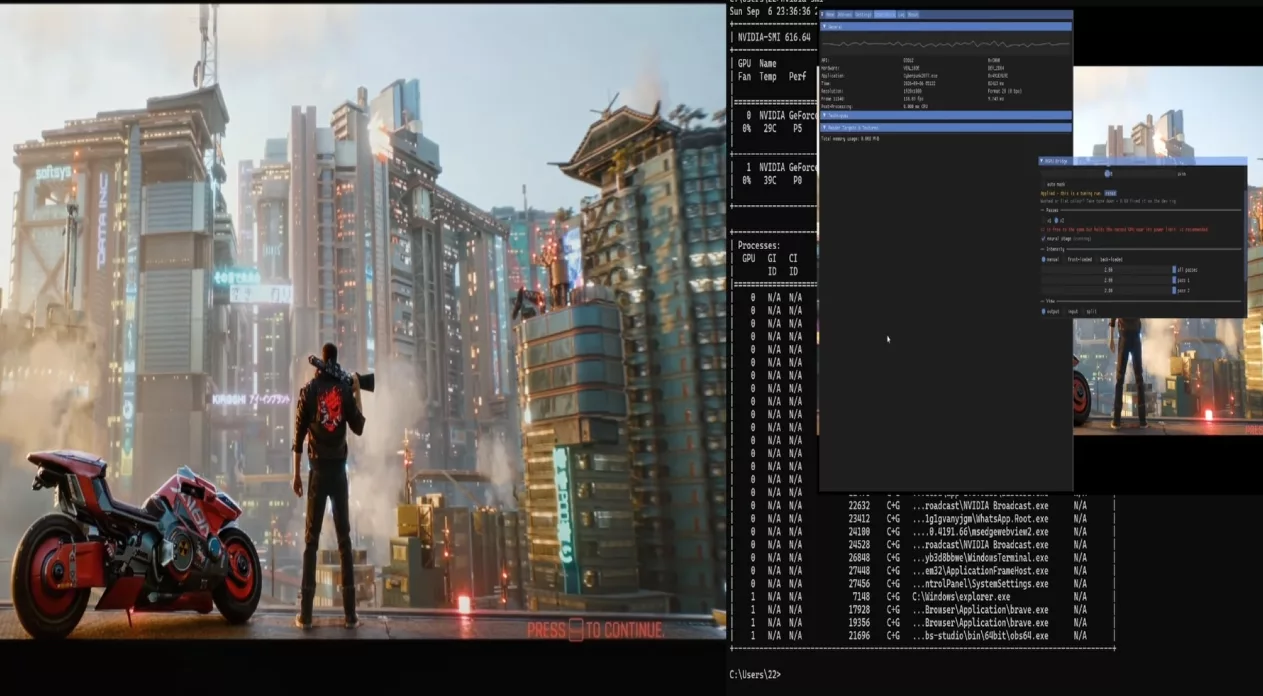
A community-developed ReShade add-on called MGPU Bridge offloads the neural rendering stage of NVIDIA's DLSS 5 to a second graphics card, recovering up to 127% of the frame rate lost when that stage runs on the primary GPU. The project, released on September 7, 2026, by developer Marcelo Guibout, is explicitly a research tool rather than a finished product, and it requires two monitors, DirectX 12, and a specific driver configuration to function.
The core concept behind MGPU Bridge is a departure from traditional multi-GPU setups like SLI or CrossFire. Instead of splitting geometry or frames between two cards, the first GPU renders the entire game scene. Once the frame is complete, MGPU Bridge copies it via a cross-adapter memory region to the second GPU, which then executes the DLSS 5 neural rendering step using the NGX libraries from the installed NVIDIA driver. Because this neural stage sits at the end of the rendering pipeline, the second card receives a fully rendered frame, processes it, and outputs the final result. This architecture mirrors the old dedicated PhysX GPU approach, where a secondary card handled a specific, computationally heavy workload separate from the main rendering task.
Performance and Methodology
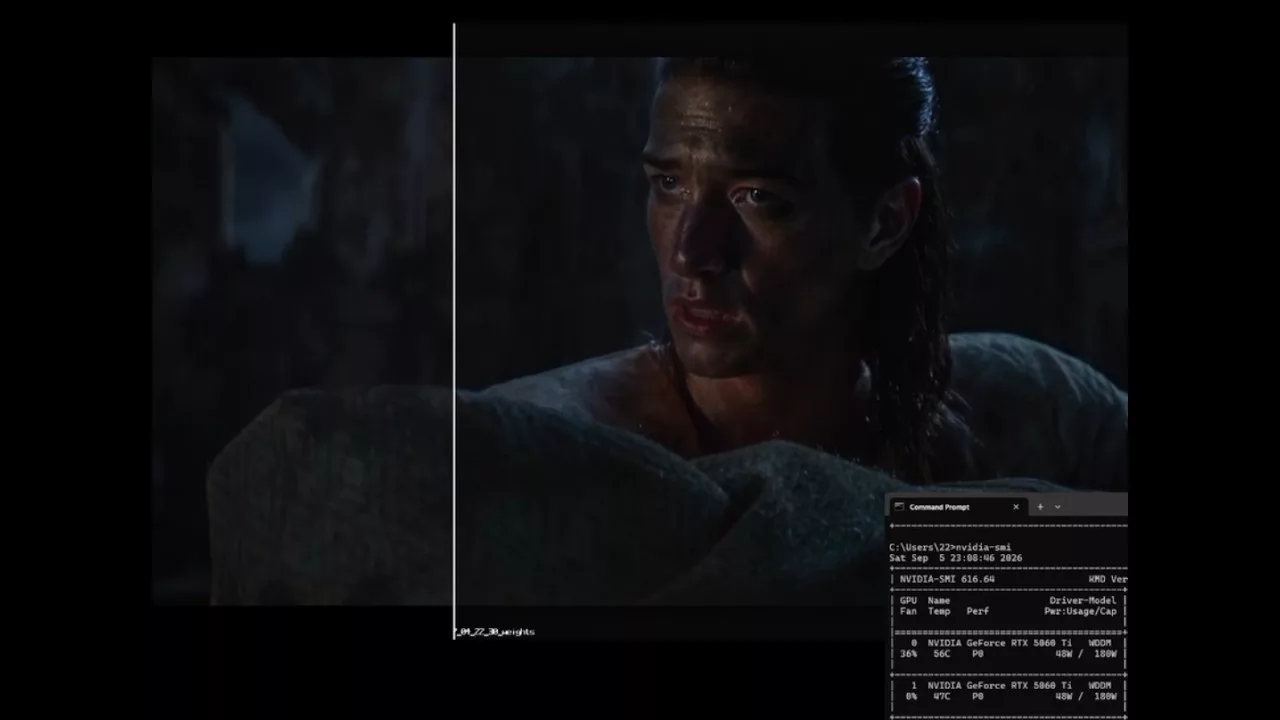
Guibout published initial measurements using two GeForce RTX 5060 Ti 16 GB cards running The Blood of Dawnwalker at 1,920 × 1,080 resolution. The tests compare three scenarios: DLSS 5 with neural rendering disabled, neural rendering enabled on the primary GPU, and neural rendering offloaded to the second GPU. It is important to note that "neural rendering disabled" does not mean DLSS Super Resolution was turned off; the respective DLSS resolution mode remained active in all cases. The only variable was the execution of the new neural rendering step.
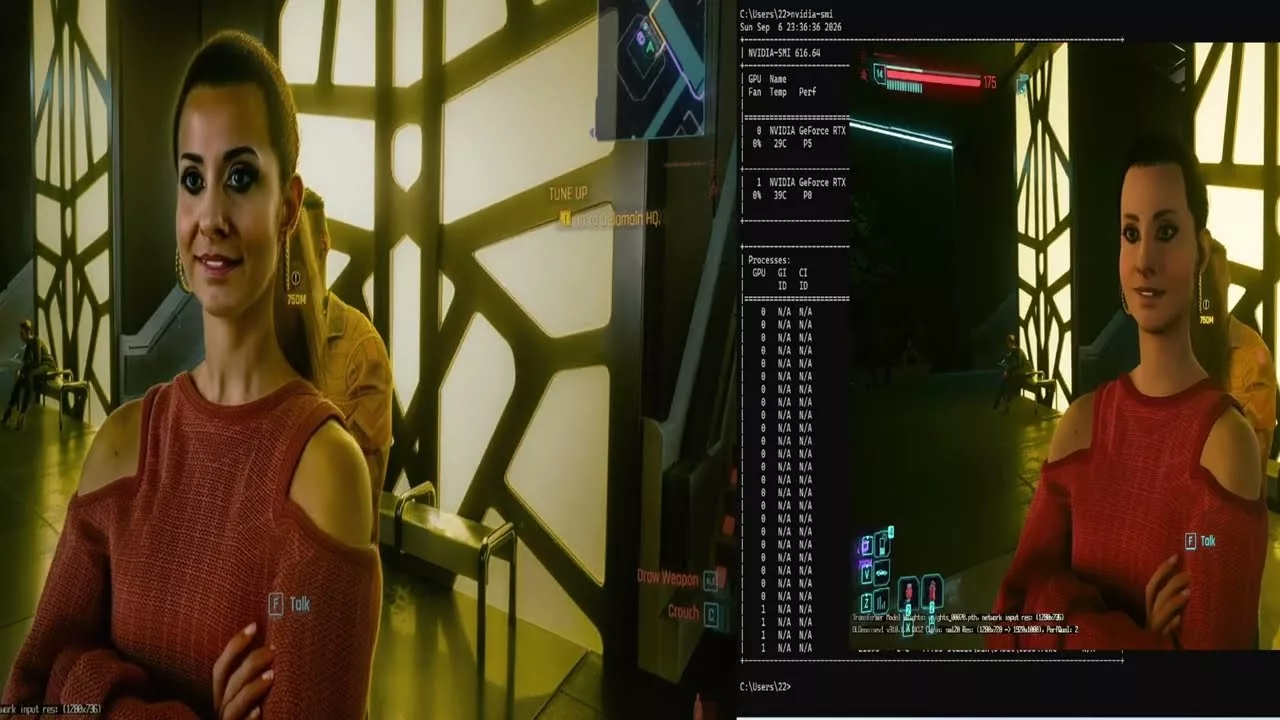
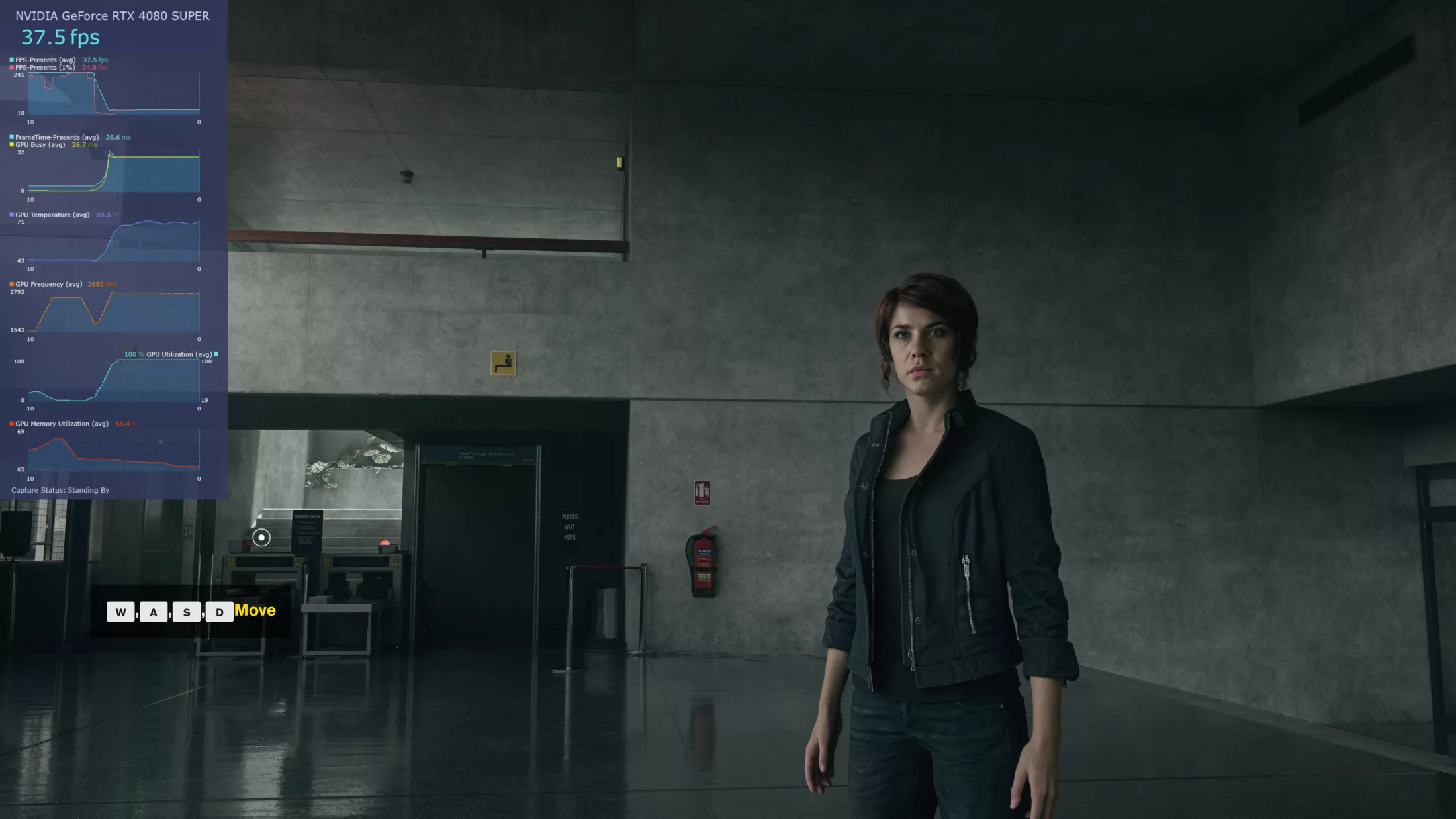
The most significant difference appears in the Ultra Performance mode. When neural rendering runs on the same RTX 5060 Ti as the game, the frame rate drops to 69–71 FPS. Offloading that stage to the second card raises the rate to 157 FPS, representing a gain of approximately 127% based on the lower baseline measurement. In Performance mode, the rate increases from 59 FPS to 106–107 FPS. In DLAA mode, offloading neural rendering restores performance to nearly the same level as when the neural stage is disabled entirely (67–70 FPS versus 44 FPS on a single card).
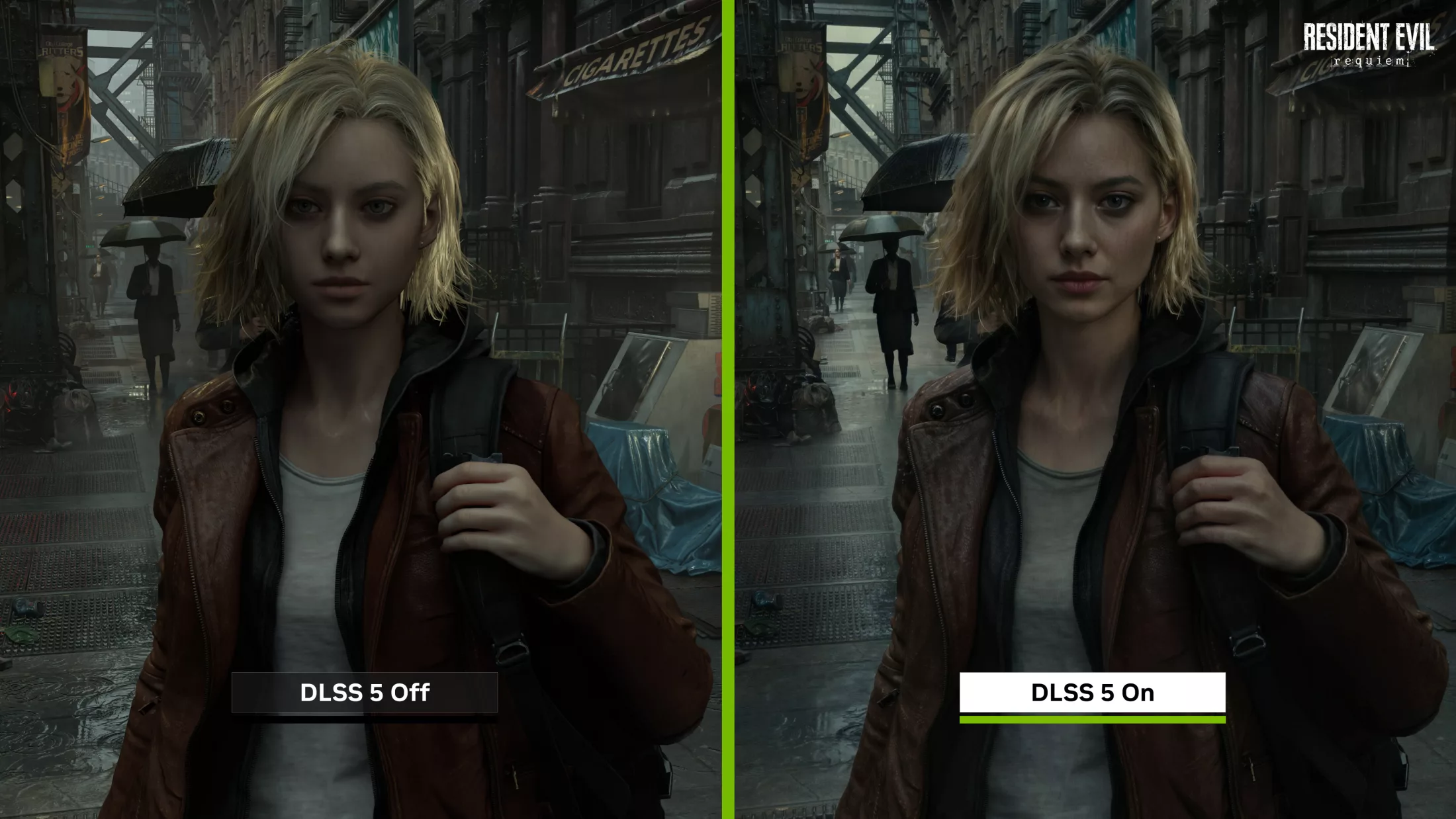
Guibout emphasizes that the key takeaway is not just the absolute frame rate, but the scaling behavior. Neural rendering operates at the output resolution and does not automatically become cheaper when the internal render resolution is lowered by an aggressive DLSS mode. The measurements demonstrate that the neural step consumes a substantial portion of GPU resources when competing with the main rendering workload.
Limitations and Requirements
The current version of MGPU Bridge has several significant constraints. It only works with DirectX 12 and requires ReShade with add-on support, along with an up-to-date NVIDIA driver. The tests were conducted exclusively with two identical RTX 5060 Ti 16 GB cards, so the results cannot be extrapolated to mixed GPU configurations or higher-end models. Additionally, the setup currently requires two monitors, one connected to each GPU. Attempting to route the final image back to the primary GPU for display increases copy overhead and latency significantly. Guibout reports roughly 33% lower throughput and approximately double the latency in such a configuration, which is why the second card currently outputs directly to its own display.
Other untested or unreliable areas include color processing, resolution changes, and Frame Generation. Long gaming sessions beyond the tested durations have not been characterized. Guibout explicitly labels MGPU Bridge as research code, not a finished product. While the project demonstrates that the neural rendering stage can be offloaded to separate hardware, it remains an experimental tool with practical limitations that prevent it from being a viable daily driver for most users.
Гика
