

Razer Blade 16 (2026): What Changed in the Thin Gaming Laptop
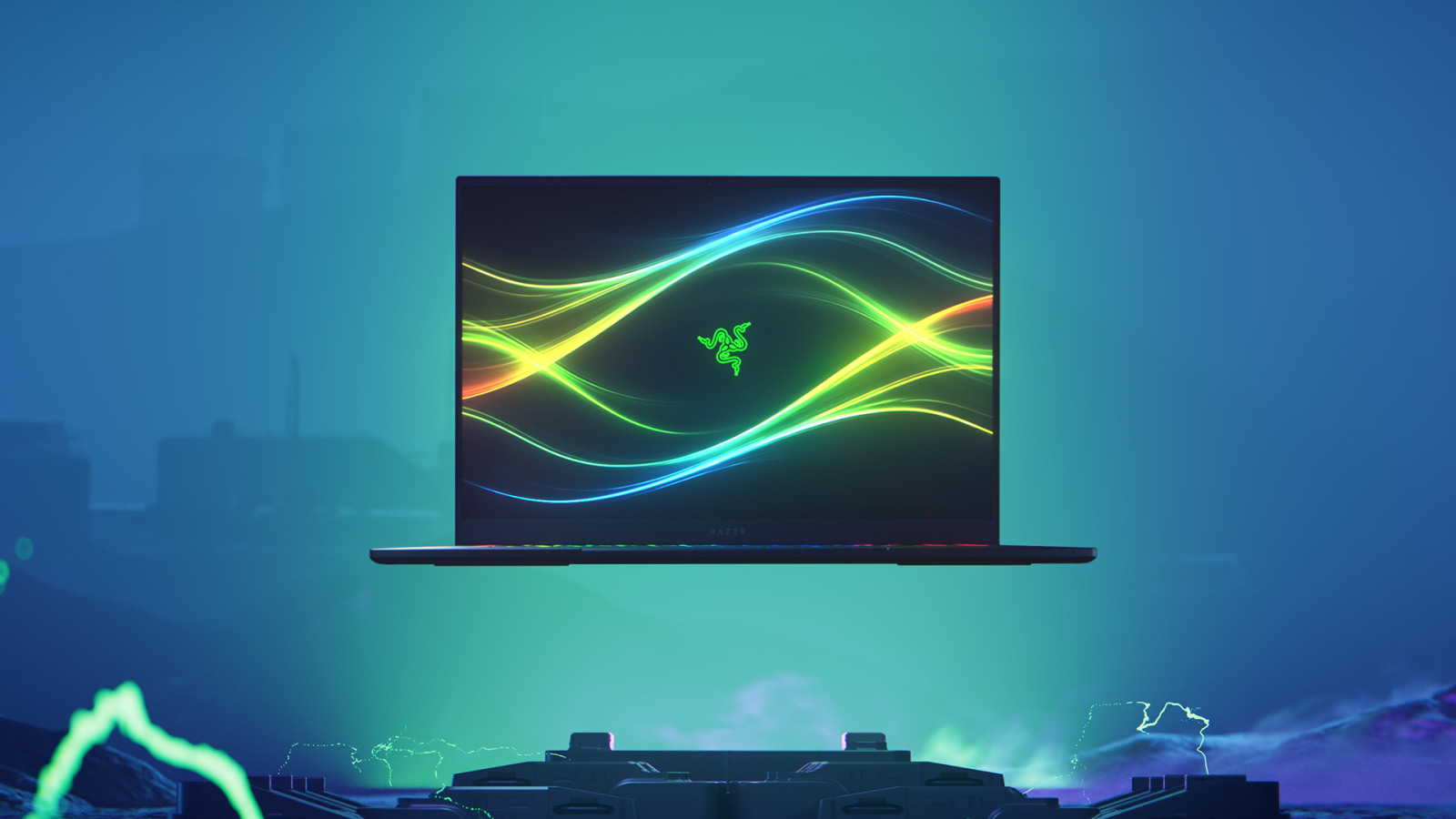
The 2026 Razer Blade 16 retains its 16-inch format while moving to Intel’s Core Ultra 9 386H, LPDDR5X-9600 memory, and an updated OLED display. Razer lists a thickness of 14.9 mm and a weight of roughly 2.14 kg. Those numbers make mobility the defining feature, but a thin chassis requires power, cooling, and repairability to be evaluated alongside component speed.
A New Processor and Soldered Memory
The Core Ultra 9 386H has 16 cores and a maximum frequency of 4.9 GHz. Its integrated NPU is rated at up to 50 TOPS. Razer compares core count with the 2025 Blade 16 and states a 33 percent increase, but that is a generational specification comparison rather than a promise of equal gains in every game.
Configurations include up to 64 GB of LPDDR5X-9600 memory. Bandwidth benefits heavy creative and mixed workloads, while the memory is soldered and cannot be upgraded by the owner. Capacity must therefore be chosen at purchase because standard SO-DIMM replacement is not available later.
RTX 50 Meets the Limits of a Thin Chassis
Graphics options use mobile GeForce RTX 50 GPUs based on Blackwell with DLSS 4 support. A GPU name alone does not define laptop performance; the exact model, power limit, temperature, and fan profile all matter. Two systems carrying the same graphics label can produce different results.
Razer uses a vapor chamber, thin fins, and dual fans. HyperBoost with the separate Razer Laptop Cooling Pad can raise select compatible models to as much as 175 W TGP. That is a conditional ceiling with an accessory, not the permanent specification of every Blade 16 configuration.
What the RTX 5090 Configuration Delivered
PC Gamer tested a Core Ultra 9 386H configuration with a mobile RTX 5090, 32 GB of LPDDR5X-9600, and a 2 TB SSD. Metro Exodus Enhanced Edition at native resolution and Ultra averaged 95 fps with a 56 fps 1% low. Cyberpunk 2077 at 1600p, RT Ultra, Quality upscaling, and 2x frame generation averaged 112 fps with a 75 fps 1% low.
Turbo mode produced those figures with intrusive fan noise. In Balanced mode, the reviewer recorded a 100 fps average and 68 fps 1% low in Cyberpunk 2077—12 average frames lower with much calmer acoustics. These are results for one top configuration and a specific settings suite, not evidence for RTX 5060, RTX 5070 Ti, or RTX 5080 models.
The 240 Hz OLED Is Brighter
The display measures 16 inches at 2560×1600 and 240 Hz. Razer lists a 0.2 ms response time, NVIDIA G-SYNC, complete DCI-P3 coverage, and per-unit Calman calibration. VESA DisplayHDR True Black 1000 certification accompanies a claimed HDR peak of up to 1,100 nits.
OLED supplies true black and fast response while retaining familiar technology limits: brightness changes with illuminated area, static elements can produce uneven wear, and perceived black depends on ambient light and coating. A 240 Hz refresh rate matters most in games where the mobile GPU can actually sustain a high frame rate.
14.9 mm Does Not Remove the Power Brick
The 14.9 mm figure is measured at the thinnest point, and the roughly 2.14 kg weight describes the laptop itself. A complete gaming load includes its power adapter, while battery life falls under GPU-intensive use. Razer’s claims of up to 13 hours of productivity and 15 hours of video were measured at 45 percent brightness, 60 Hz, and power-saving settings.
Those conditions can compare generations inside Razer’s method but do not predict a battery-powered gaming session. Buyers should separate two scenarios: light work while traveling and gaming near an outlet. Blade 16 tries to combine them, but the physical requirements of a mobile RTX GPU remain.
Connectivity Avoids the Bare Minimum
Ports include three USB 3.2 Gen 2 Type-A connectors, one Thunderbolt 5, one Thunderbolt 4, full-size HDMI 2.1, and a UHS-II SD reader. Wireless support covers Wi‑Fi 7 and Bluetooth 6.0. Thunderbolt 5 normally provides 80 Gbps bidirectional bandwidth, while Bandwidth Boost raises downstream bandwidth to 120 Gbps.
The six-speaker system combines four tweeters and two subwoofers. THX Spatial Audio+ supports virtual 7.1.4 through 3.5 mm headphones. Full-size HDMI and several Type-A ports are especially useful on a gaming desk because the thin laptop does not immediately require a dock for a mouse and external display.
What to Check Before Choosing a Configuration
Soldered memory makes a capacity mistake more expensive than it would be in a laptop with replaceable modules. A particular gaming workload may be comfortable at 32 GB, while creative software, virtual machines, and large projects can use more. Choosing 64 GB for the number alone is not automatically rational; the actual workload should decide.
Razer lists a battery warranty of up to two years and optional RazerCare coverage in selected regions. The words “up to” and regional limits require checking the exact retailer terms. Ownership cost for a premium laptop includes more than purchase price: service access, the power adapter, proprietary charging requirements, and eventual battery replacement all matter.
Who the 2026 Update Suits
Blade 16 targets someone who wants one premium system for travel, games, and creative work. Its strengths are visible in the construction: a capable OLED, broad connectivity, fast components, and a rigid aluminum chassis. The compromises are equally clear: soldered memory, GPU speed tied to thermal conditions, and the cost of thinness.
A buyer should compare the exact TGP, SSD capacity, regional warranty, noise, and independent tests of the selected configuration—not only the GPU name. Official specifications describe the platform’s possibilities, not a guaranteed frame rate in every game. Sources: Razer; Intel; NVIDIA; VESA; PC Gamer.
Редакция MBG
