
DirectX Update: Massive Ray Tracing Boost and 90% VRAM Savings
Microsoft unveils Clustered Geometry and PTLAS, aiming to drastically improve ray tracing efficiency and reduce VRAM overhead.
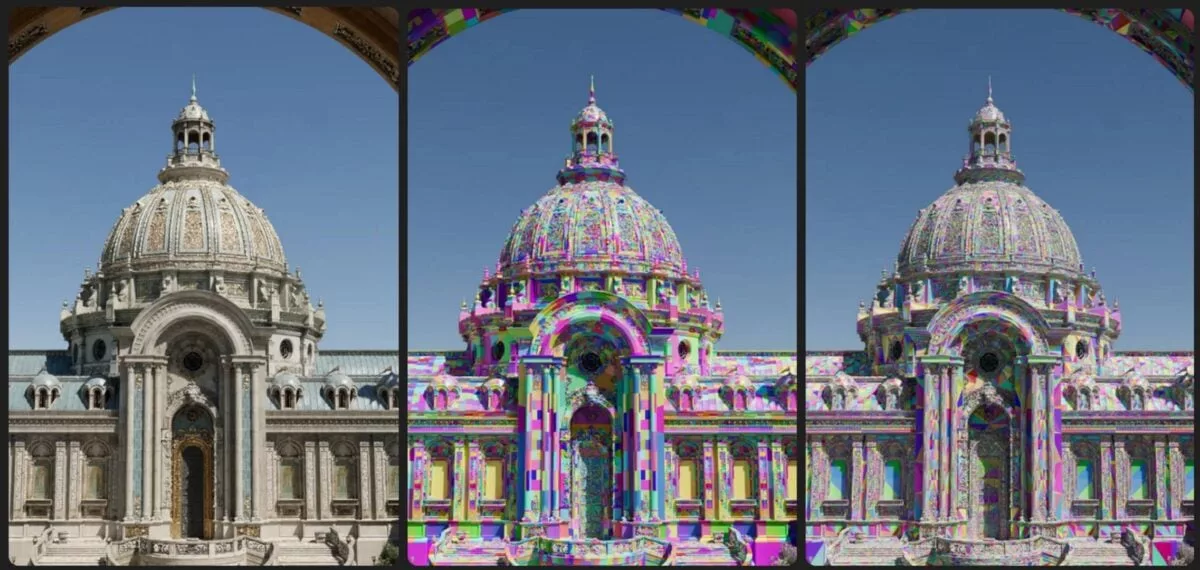
Microsoft has released a preview of two new DXR API features: Clustered Geometry and Partitioned Top-Level Acceleration Structures (PTLAS). These updates are designed to minimize computational and memory overhead during ray tracing and are expected to be compatible with current-generation hardware via driver updates.
Ray tracing relies on Bounding Volume Hierarchy (BVH) to manage how light rays intersect with geometry. This is typically split into two tiers: Bottom-Level Acceleration Structures (BLAS) for individual object geometry and Top-Level Acceleration Structures (TLAS) for the objects' positions in the world. In massive open-world environments, updating the TLAS as objects move can place immense strain on both the GPU and VRAM.
Clustered Geometry and PTLAS Explained
To mitigate these demands, Microsoft is introducing PTLAS, which partitions the game world into distinct zones. This allows the GPU to focus recalculations only on the specific area where changes occur, rather than updating the entire structure. Complementing this, Clustered Geometry addresses the BLAS bottleneck by allowing engines to reuse pre-built geometry clusters instead of duplicating data for different Levels of Detail (LOD). Microsoft claims this can reduce VRAM usage dedicated to ray tracing by up to 90%.
Performance Benchmarks and Compatibility
In a demonstration using an AMD Radeon RX 9070, enabling both features resulted in a massive performance leap: build times dropped from 788ms to just 3.11ms, while frame rates increased from 1.2 FPS to 79 FPS. Additionally, VRAM usage for ray tracing tasks saw an 89.7% reduction in the test scenario.
The new features can function either together or independently. Microsoft confirmed that support for these technologies will be brought to the following platforms through upcoming driver updates:
Гика
