Voyager 1 Crosses One Light-Day Milestone as Nuclear Power Fades
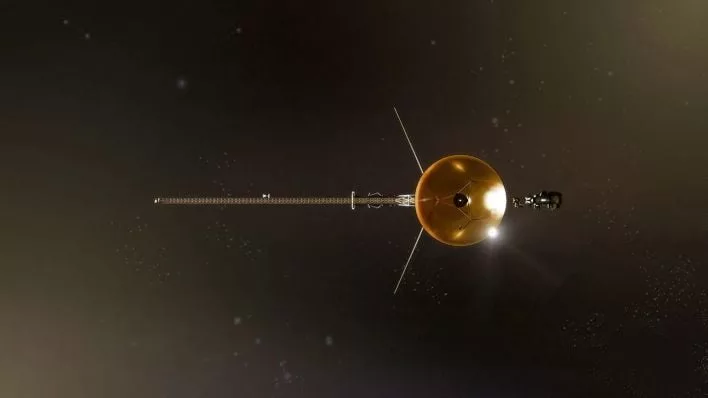
In a milestone that underscores the sheer scale of interstellar space, NASA's Voyager 1 has officially crossed the one light-day threshold. Nearly 50 years after its 1977 launch, the spacecraft has become the first human-made object to put a full 24-hour light-travel distance between itself and Earth, a feat achieved even as its aging nuclear power source continues to dwindle.
To put this distance into perspective, light travels at approximately 186,282 miles per second. In a full 24-hour period, a beam of light covers roughly 16 billion miles. On November 18, Voyager 1 reached this exact distance, marking a significant departure from our planetary neighborhood. For comparison, sunlight takes just over eight minutes to reach Earth, and even Neptune is only about four hours and ten minutes away at light speed. Voyager 1 has now pushed deep into the vast expanse of interstellar space.
The Reality of Interstellar Communication
Reaching this distance fundamentally changes the operational rhythm of communicating with the probe. Because radio signals are limited by the speed of light, a command sent from Earth now requires 24 hours to reach the spacecraft. Conversely, any data or reply sent by Voyager 1 will take another 24 hours to make the return trip. Despite this massive latency, engineers at JPL continue to monitor the spacecraft daily via the Deep Space Network, though commands are typically sent on a weekly basis. The data currently trickling back arrives at speeds reminiscent of the early dial-up internet era.
Surviving on Decaying Power
What makes this achievement particularly remarkable is the hardware's longevity. Built with 1970s-era technology, Voyager 1 continues to transmit scientific data from interstellar space using radioisotope thermoelectric generators (RTGs). These units convert heat from decaying plutonium into electricity, but the fuel supply is finite. Both Voyager 1 and Voyager 2 lose approximately four watts of power every year as the fuel depletes. To combat this, mission teams have had to implement creative power-management strategies, including rerouting data pathways, switching to backup thrusters, and carefully managing power budgets to keep essential instruments operational.
Current power-saving measures are expected to keep the scientific instruments functioning on both spacecraft until at least their 50th launch anniversaries in the summer of 2027. While Voyager 1 has taken a faster trajectory—utilizing gravity assists to cruise at roughly 37,800 mph—its twin, Voyager 2, trails behind. Voyager 2 is currently about 20 light-hours away and is not projected to hit the one light-day mark until November 2035, a milestone that may arrive long after its power supply has been exhausted.