
Sugon Teases 64-Thread Mobile Workstation with 16GB VRAM
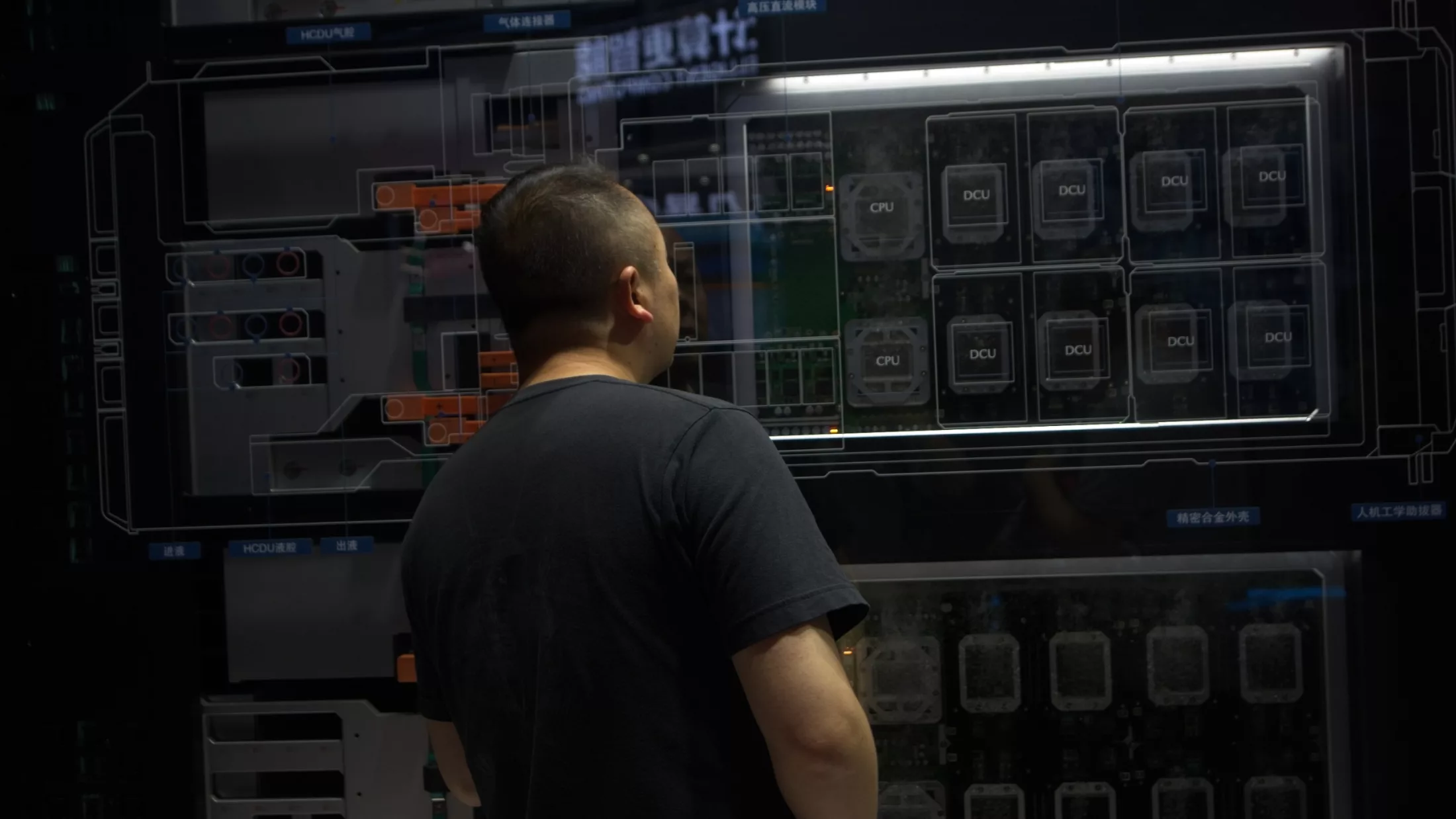
Sugon, a major Chinese supercomputer manufacturer, has teased a new mobile workstation designed for local AI inference. The device features a domestic 64-thread processor and a discrete GPU with 16GB of VRAM, promising performance that rivals cloud-based APIs for large language models.
The announcement, reported by ITHome, highlights a shift in the Chinese hardware landscape. While names like Sugon and Hygon do not frequently appear in global consumer benchmarks, they are making significant strides in domestic computing. The upcoming mobile workstation (MWS) is positioned as a tool for pushing the boundaries of local AI performance, specifically targeting the inference of large Mixture of Experts (MoE) models.
One of the most striking claims is the device's ability to process a 35-billion-parameter MoE model at a rate of up to 50 tokens per second. For context, standard cloud APIs typically offer throughput ranging from 30 to 80 tokens per second. If Sugon can deliver on this promise, the workstation could offer a viable alternative to cloud-dependent AI workflows, providing substantial processing power without the latency and privacy concerns associated with remote servers.
Hardware Architecture and Design
The device adopts a traditional laptop form factor rather than the bulky, pseudo-portable workstations that have dominated the market in recent years. With a thickness of 16.9 mm (0.665 inches), it sits comfortably within the category of thin and lightweight premium laptops, only slightly thicker than standard ultrabooks. This design choice suggests a focus on portability without sacrificing the thermal headroom required for high-performance AI tasks.
At the heart of the system is a domestic 64-thread processor. While Sugon does not manufacture its own chips, it has a close relationship with Hygon, its largest shareholder. The two companies previously attempted a merger to create a domestic server powerhouse to rival global giants like HPE and Dell, but the deal did not go through. Despite the failed merger, the partnership remains strong, and the mobile workstation likely utilizes a chip from the Hygon C86-5G series.
This new series is notable for its departure from the AMD Zen microarchitecture that previously underpinned Hygon's offerings. The C86-5G features a self-developed microarchitecture and supports AVX-512 instructions. It utilizes a four-way simultaneous multithreading (SMT4) configuration, meaning each core can handle four threads. If the workstation is indeed equipped with a 16-core version of this chip, it would provide the 64-thread count mentioned in the teaser, offering substantial parallel processing power for AI workloads.
GPU and AI Performance
The teaser specifically highlights the inclusion of 16GB of VRAM, indicating the presence of a discrete graphics card rather than integrated graphics. The identity of this GPU remains a mystery, as Sugon has not officially disclosed the specific model. However, the combination of the 64-thread processor and the 16GB discrete GPU is claimed to deliver AI inference performance that is 3X to 5X faster than mainstream products currently available on the market.
The focus on local inference is a significant trend in the AI hardware sector. By enabling users to run large models locally, manufacturers are addressing concerns about data privacy, reducing dependency on internet connectivity, and potentially lowering long-term operational costs compared to paying for cloud API usage. The 50 tokens per second figure for a 35B MoE model is particularly impressive, as it suggests the hardware can handle complex, multi-expert models with reasonable speed.
Market Context and Availability
Sugon has not revealed the availability or pricing for the forthcoming mobile workstation. Given the current market conditions for memory and storage components, the device is expected to be a premium offering. The high cost of high-bandwidth memory and fast storage, driven by the global AI boom, will likely contribute to a high price point, positioning the workstation as a specialized tool for professionals and researchers rather than a mass-market consumer product.
The move by Sugon reflects the broader trend in China to develop self-sufficient hardware ecosystems. By leveraging domestic processors and high-performance discrete GPUs, the company is aiming to provide a competitive alternative to Western-made workstations. This is particularly relevant in an era where geopolitical tensions and export controls have made access to top-tier AMD and Nvidia hardware more complex for some markets.
While the specifications are promising, independent verification of the performance claims is still pending. The 3X to 5X speedup over mainstream products is a bold statement that will need to be tested against real-world workloads. For now, the teaser serves as a significant indicator of the direction in which Chinese hardware manufacturers are heading, focusing on high-performance, portable solutions for the growing demand for local AI capabilities.
Гика
