
More than just action: first impressions of Stranger Than Heaven
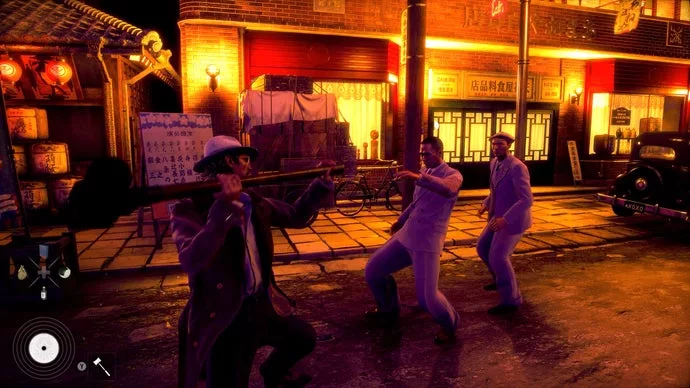
While many publishers opt for the safest routes, RGG Studio (the developers behind Like a Dragon) is taking a bold leap. Stranger Than Heaven isn't just another third-person action game; it's an ambitious attempt to redefine the studio's approach to storytelling and gameplay. Early impressions suggest it could be one of the most soulful projects the studio has ever tackled, even if its unconventional mechanics might prove divisive.
The story follows Makoto Daito, a man of mixed American and Japanese heritage, as he struggles to build a life in Japan. The narrative spans several decades, allowing players to witness the country's evolution firsthand. It blends a strong dramatic arc with visceral melee combat and touches of the signature silliness often found in RGG titles.
Combat: A heavy, high-stakes affair
The combat system is perhaps the most controversial element. Moving away from traditional button layouts, Stranger Than Heaven assigns left and right strikes to the controller's triggers and bumpers. This change makes every blow feel heavy and impactful, with the weight of the hits reverberating through the gamepad. The game is also significantly more violent than previous RGG entries; combat involves throat-slitting, stabbing, and brutal takedowns triggered by pressing both triggers simultaneously.
Mastering the flow requires precision. The game emphasizes manual parrying and dodging based on the direction of incoming attacks. A well-timed right parry can deflect a haymaker, while dodging allows you to weave under a strike. While this makes fights feel like high-octane action films, the steep learning curve regarding parry timing might be a hurdle for some players.
A world in transition
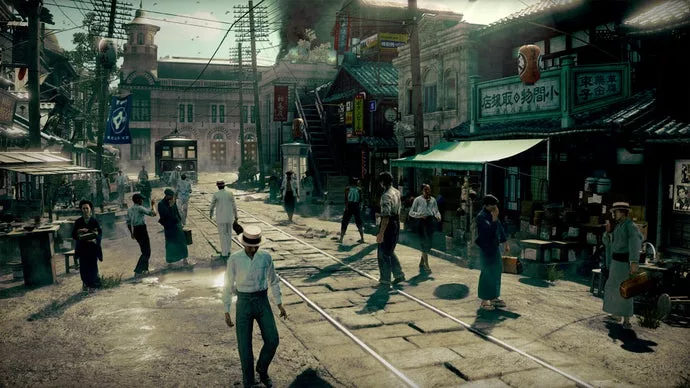
The setting is a standout feature, showcasing a Japan in flux. The journey takes players from the smoke-filled skyline of Kokura in 1915 to the bustling streets of Kure in 1929, and eventually to Minami in 1943. The world-building is striking, capturing everything from theatrical posters and early automobiles to the stark contrast between traditional wooden docks and modernizing urban architecture. As Daito evolves from a struggling brawler into a man shaped by his era, the world around him shifts in tandem.
The musical heart of the journey
Music plays a surprisingly central role through a management minigame where players run a musical revue. Makoto Daito selects songs and stage accompaniments, with players able to alter the mood of tracks to suit different performances. This adds a layer of sophistication and soul to the experience, moving beyond simple background tracks.
If Stranger Than Heaven maintains the quality seen in these early hours, it will signal a bright future for this new generation of RGG Studio developers. The game is set to release on January 15th for PC, PS5, and Xbox Series X|S.
Флешка
