

Splatoon Raiders: Why a Single-Player Looter Shooter Fits the Series
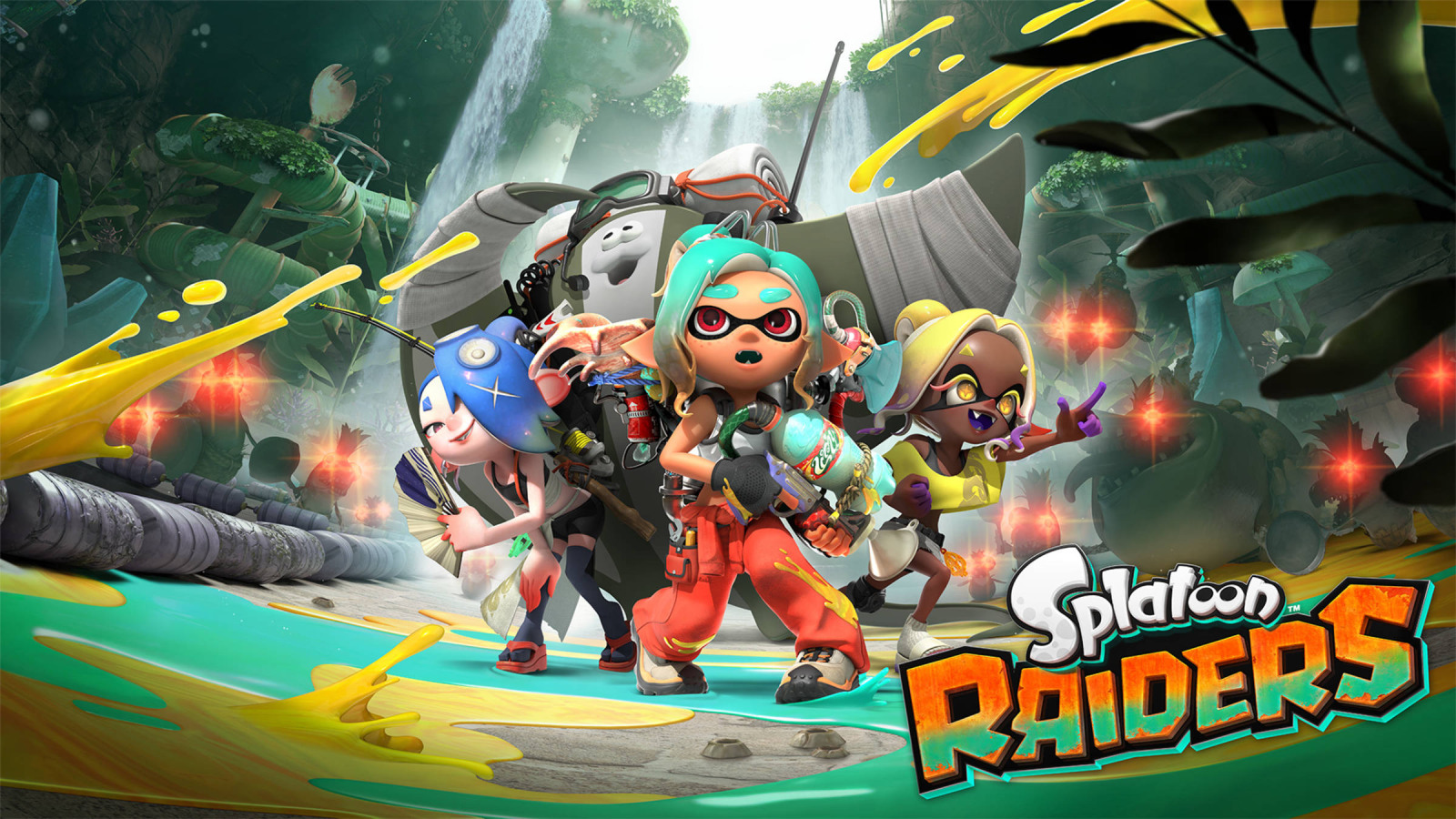
Splatoon Raiders launched July 23, 2026, exclusively for Nintendo Switch 2. Instead of competitive matches, it offers a solo expedition across the Spirhalite Islands, progression for the Mechanic, and raids against Salmonids. The genre shift looks sharp, yet Splatoon’s core rules have long suited a looter shooter.
Ink Was Already a Universal System
A shot in Splatoon damages an enemy, changes a surface, and creates a route at once. Friendly ink speeds squid-form movement, restores the tank, and opens vertical paths, while hostile ink slows the player. Weapons have always served more than one meter. A looter shooter benefits from that multitasking because a new item can change control of an arena rather than only a damage number.
The developers call Raiders an attempt at an “ultimate multitasker” experience. That is not a marketing substitute for Turf War but a transfer of a familiar principle into a different structure. The player fights waves, paints movement, gathers resources, and follows an objective simultaneously. Competitive territory disappears while surface coverage retains its meaning.
Gadgets Expand the Verbs
The new gadget system enables high leaps, powerful charges, and multiple deployed devices. Alongside character upgrades, it makes the Mechanic more versatile than a standard participant in an online match. A skill answers both navigation and combat problems, so progression feels like a larger action vocabulary.
That distinction matters in a solo game. PvP derives variety from human behavior and team compositions; a campaign must place variety inside its levels. A gadget becomes a variable that changes an established arena without requiring a new enemy every time.
Weapon Rarity Does Not Erase Identity
Raiders uses familiar weapon classes while adding rarity and passive properties. A player may find a version with a different fire rate or secondary effect, then choose a tool for a specific mission. Loot need not replace an older weapon through one larger number; a model poorly suited to one distance can become valuable in another task.
The design has a clear boundary. Weak properties make loot uninteresting, while overpowering ones erase the weapon class. Reviews indicate that the system usually preserves recognizable identities, although repeated combat spaces and searching for a stronger variant can become tiring.
A Solo Foundation With Help Available
The primary campaign follows one Mechanic, with Deep Cut accompanying the expedition through a research robot. Another player may be called into an individual stage when needed, and the game scales player power automatically. This is campaign assistance rather than a permanent co-op replacement for the main structure.
The choice preserves authored pacing while lowering the barrier of a difficult challenge. It differs from Salmon Run, where participant roles and coordination define the mode itself. Raiders must remain legible without a regular group or its single-player experiment would lose its purpose.
Why Reviews Disagree
Some critics see Raiders as a fresh recombination of established mechanics, while others find the campaign too repetitive and visually familiar. Both conclusions can be true. The systems form a coherent looter shooter, but systemic coherence does not guarantee mission variety. When an arena changes only its enemy waves, familiar actions repeat before progression refreshes them.
The spin-off still demonstrates how Splatoon can grow without dismantling the competitive series. Ink remains movement, resource, and spatial control; only the reason for using it changes. Raiders makes sense not because every brand fits loot progression, but because its central mechanic has always joined combat and exploration. Sources: Nintendo; Ask the Developer; GameSpot; Creative Bloq; TechRadar; The Guardian.
Аналитика MBG
