

Splatoon Raiders Review: A PvE Expedition Where Ink Becomes Loot
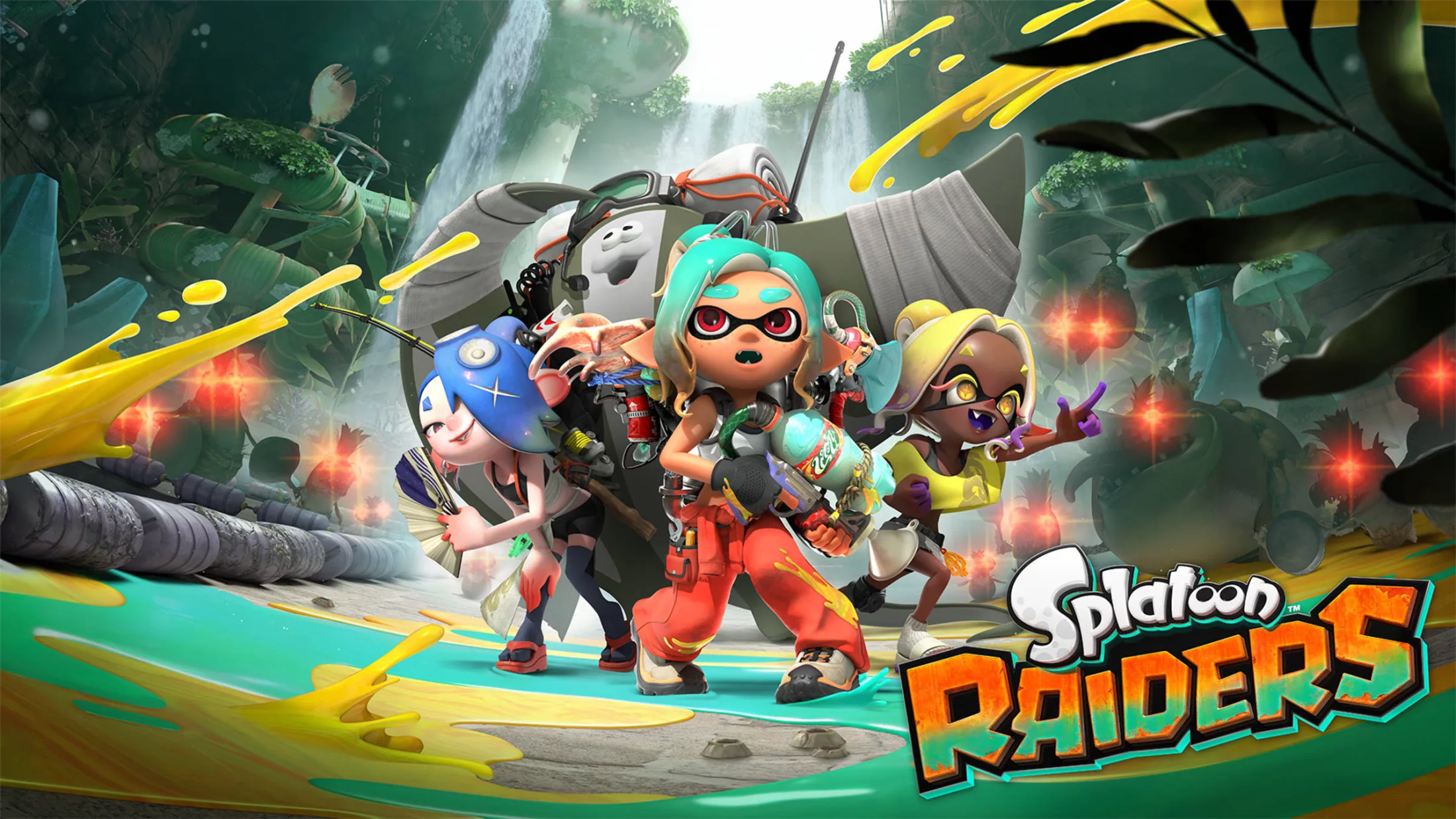
Splatoon Raiders retains ink movement and shooting while moving them from competitive arenas into short PvE expeditions.
Raid, Loot, Upgrade
The Mechanic joins Deep Cut in searching the Spirhalite Islands and gathering resources for a hideout ship. Short missions return quickly to gear decisions.
The loop uses Splatoon’s satisfying ink movement and gives it a persistent purpose beyond a match score.
Salmonids Instead of Turf War
Salmonid waves apply pressure through numbers and attack directions. Territory control against people becomes management of a chaotic PvE field.
Familiar weapons take on different value because a useful kit must handle groups and multiple ranges rather than one opposing player.
Gadgets and Builds
Mechanical gadgets and modifiers support distinct styles. The best choices alter character behavior rather than adding a tiny damage percentage.
Progression can discourage switching: reviewers note that an underdeveloped new weapon may feel like a penalty for experimentation.
Solo Focus and Co-op
The campaign is primarily single-player, while most missions support online co-op for up to four players with adjusted enemy pressure.
Co-op offers another way to repeat raids, but does not replace the solo structure or restore Turf War.
Repetition and Accessibility
Brief stages sustain the loot pace, although the enter-clear-upgrade rhythm becomes visible over time. Objective variety softens rather than removes repetition.
Difficulty modes and ink-color locking help, but accessibility options remain limited for such a visually busy game.
Verdict
8.5/10. Splatoon Raiders translates ink shooting into a confident looter-shooter without pretending to be Splatoon 4. Strong raids, expressive builds, and flexible co-op outweigh repetition and uneven weapon value.
It is an excellent entry point for players who like the setting but avoided constant PvP. Turf War specialists will not find a replacement for the main series.
The Raid-and-Return Loop
The main loop connects expeditions, salvage, and improvements aboard the Hideout Ship. Spirhalite Crystals and other finds are not checklist collectibles: they support gear, weapon, and base upgrades. Even a short raid therefore leaves a visible result and encourages one more destination on the map.
Items recovered during solo raids remain with the player regardless of the outcome. That softens failure and suits an adventure built around gadget experimentation. Rare relics provide another reason to inspect stages instead of moving directly toward the final encounter.
Three Difficulty Levels Without a Loot Penalty
Tourist, Raider, and Survivalist change combat pressure without changing loot quality. It is one of Raiders’ smartest decisions because comfort does not require sacrificing progression. Difficulty can be adjusted at any time, preventing a new Salmonid type or boss from becoming a permanent wall.
Higher settings still matter for players seeking a spatial and reaction test. Enemy groups can surround the Mechanic quickly, making ink control, retreat routes, and Bot Buddy use more important than firing forward. Pressure changes, while the adventure itself remains equally complete.
How Cooperative Play Fits
Up to three additional players can join online or over local wireless. Automatic power scaling prevents a highly developed character from removing all responsibility from the group. It is not a separate competitive branch, but a way to tackle a difficult stage or explore the islands together.
Co-op inevitably makes the screen busier, so the best missions keep objectives and attack directions legible. When ink, Salmonids, and four ability sets overlap, Splatoon’s visual language must provide spectacle while still explaining where danger is coming from.
Why the Score Stops Short of the Top
Raiders successfully turns Splatoon’s movement, color, and personality into a standalone PvE adventure. Deep Cut is more than decoration: Bot Buddy connects the companions to traversal and Showstopper attacks, while the Mechanic has a role distinct from a numbered-game protagonist.
The limitation is long-range predictability rather than the quality of the basic loop. Repeated raid objectives and familiar encounter shapes occasionally sit below the series’ best authored sequences. This is a strong spinoff and a persuasive start for the idea, but not a complete replacement for mainline Splatoon.
Sources
Nintendo official Splatoon Raiders page; Nintendo support update history; GameSpot review; VGC review; TechRadar review; Nintendo Life review.
Аналитика MBG
