
SpaceX and Tesla Aim for In-House Chip Production by 2028
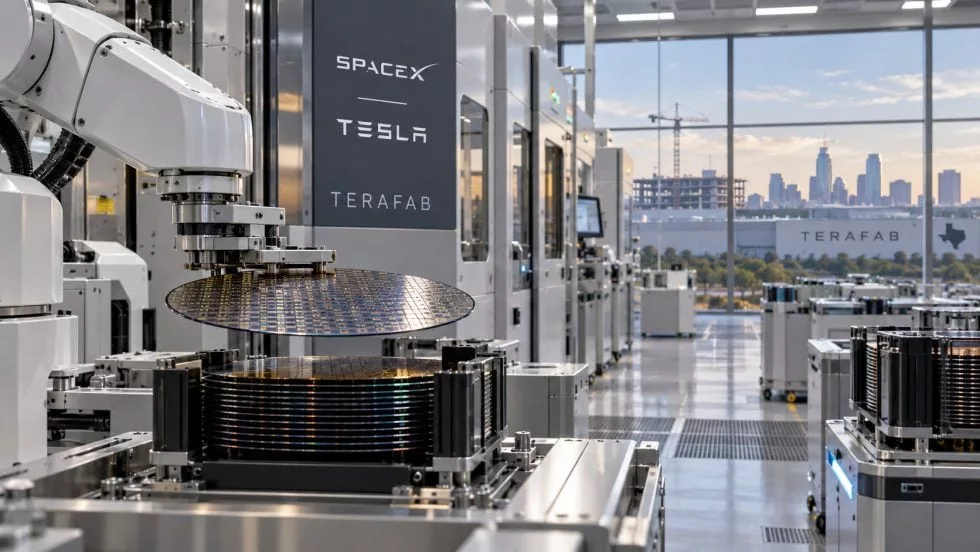
Tesla and SpaceX are looking to reduce their long-term reliance on external semiconductor manufacturers. Their joint venture, Terafab, is designed to consolidate the fabrication, packaging, and testing of modern logic and memory chips at a facility in Texas.
An Aggressive Timeline: From SRAM Testing to Mass Production
Elon Musk has set the third quarter of 2028 as the target for serial production. However, the first major technical milestone is expected much sooner: a proprietary SRAM test chip is slated to be operational in Austin by May or June 2027.
Using SRAM (Static Random-Access Memory) for early production tests is a strategic move. It allows the team to quickly verify fundamental processes, such as transistor performance, lithography, metallization, and overall yield. If the 2027 milestone is met, the window between the first working test chip and mass production is only 12 to 15 months—an incredibly rapid pace for the semiconductor industry.
Technical Hurdles and Scale
Building a modern fab is a massive undertaking that extends far beyond constructing a building. It requires a complex ecosystem of ultrapure water supplies, vacuum systems, gas abatement, and metrology tools. A significant variable remains the procurement of essential equipment; it is currently unconfirmed whether ASML EUV (Extreme Ultraviolet) lithography systems have been secured, which would be vital for advanced process nodes.
The scale of the ambition is reflected in Musk's comments regarding power consumption, suggesting a capacity that could support hardware with up to 1 terawatt of power usage annually. While this is not a standard metric for wafer capacity, it illustrates the massive scale Terafab intends to reach. The project will rely on specialized equipment from industry leaders like Applied Materials and KLA.
Partnerships and Vertical Integration
The project's ecosystem may include other major industry players. According to Reuters, Intel joined the Terafab project earlier this year, though the specific nature of this collaboration has not been disclosed. While discussions with TSMC have also occurred, Musk emphasizes that the long-term goal is to operate independently.
For Tesla and SpaceX, this vertical integration is driven by diverse hardware needs: from autonomous driving systems and robotics to AI data center accelerators and satellite-based computing platforms. By owning the manufacturing process, these companies aim to gain greater control over supply chains that are currently dominated by a handful of global foundries.
Гика
