

RTX 2080 Ti Hotspot Temperature Drops 10°C With Thermal Paste Swap
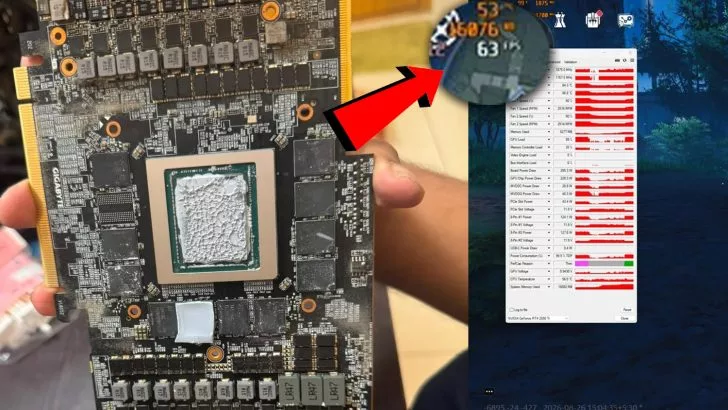
The GeForce RTX 2080 Ti, a high-end graphics card from the Turing generation, has been found to suffer from significant thermal throttling due to its hot spot temperatures. A recent investigation by QuasarZone reveals that a simple replacement of the stock thermal paste can lower these critical hotspot temperatures by approximately 10 degrees Celsius. This seemingly minor hardware maintenance step results in a dramatic performance improvement, with frame rates (FPS) nearly doubling in demanding gaming scenarios.
The core issue lies in the thermal management of the RTX 2080 Ti's GPU die. Over time, the factory-applied thermal paste degrades, losing its ability to efficiently transfer heat from the silicon to the heatsink. This degradation leads to a buildup of heat at the hottest point on the chip, known as the hot spot. When this temperature exceeds safe limits, the GPU automatically reduces its clock speeds to prevent damage, causing stuttering and lower frame rates.
The study highlights that replacing the thermal paste is not just about cleaning dust or repasting for aesthetics; it is a critical maintenance task for owners of older high-performance cards. The data indicates that this specific intervention addresses the root cause of thermal throttling in these units, allowing the GPU to sustain higher clock speeds for longer periods.
While the RTX 2080 Ti is now several generations old, it remains a popular choice for budget-conscious gamers and those looking to upgrade from integrated graphics. For these users, the cost of new thermal paste is negligible compared to the price of the card itself. The performance gain described—nearly doubling FPS in certain tests—is substantial enough to make the card viable for modern titles that might otherwise be unplayable on a throttled system.
It is important to note that this improvement is specific to the thermal interface material and cooling efficiency, not an increase in raw silicon performance. The GPU architecture remains the same; however, by removing the thermal bottleneck, the hardware can operate closer to its intended design specifications. This underscores the importance of regular maintenance for legacy hardware.
Users considering this upgrade should be aware that repasting requires opening the graphics card and applying new paste correctly. While the process is straightforward for those with experience, it involves handling sensitive components. The recommendation is specifically for owners who are comfortable performing internal maintenance or seeking to extend the lifespan of their current hardware.
In conclusion, for owners of the GeForce RTX 2080 Ti looking to squeeze every drop of performance from their existing hardware, repasting is a highly effective solution. By reducing hot spot temperatures by roughly 10 degrees, users can expect a significant boost in stability and frame rates, effectively revitalizing an older graphics card without the need for a costly new purchase.
Гика
