
Qualcomm Smartphone Chip Revenue Plummets 26% Amid Rising Production Costs
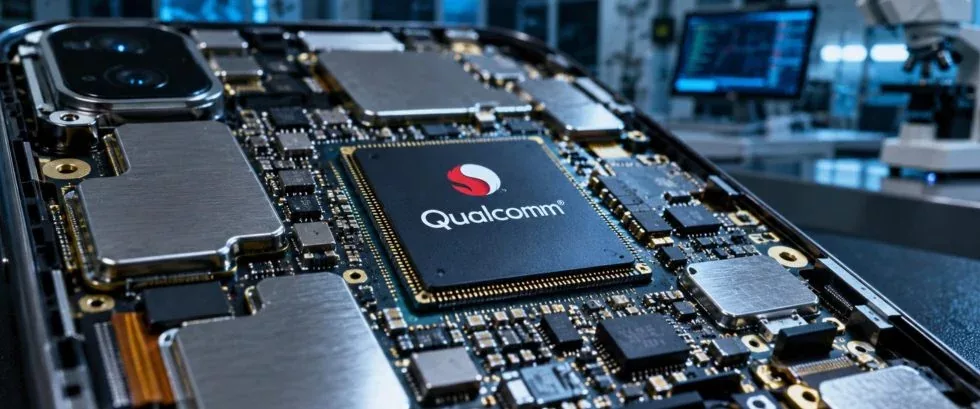
The AI boom is reshaping the semiconductor landscape, but the benefits are not distributed equally across all business segments. Qualcomm is currently feeling this divergence acutely. While the company successfully expands into new growth markets like automotive chips and future data center solutions, its smartphone processor revenue saw a significant 26% drop in the fourth fiscal quarter of 2026. This decline is compounded by rising costs for wafer fabrication, packaging, and memory, highlighting a challenging transition as the company attempts to reduce its historical dependence on the mobile market.
According to financial results released on November 4, Qualcomm reported a total consolidated revenue of $10.32 billion for its fourth fiscal quarter of 2026 (ending September 27), representing an 8% decrease compared to the same period last year. The most striking decline occurred within the Qualcomm CDMA Technologies (QCT) division. Revenue from smartphone chips fell from $6.96 billion to $5.14 billion, a 26% drop. This segment, which includes Snapdragon System-on-Chips (SoCs), modem technology, and other mobile components, has long served as the economic backbone of the company, making this contraction a critical factor for its overall profitability.
Diversification vs. Core Market Pressure
While the smartphone segment struggled, other divisions showed significant momentum. The automotive business was a standout performer, with revenue surging 89% to nearly $2 billion. The Internet of Things (IoT) segment also saw moderate growth of 4%. These figures underscore a strategic shift within Qualcomm's portfolio, though the massive growth in automotive cannot yet fully offset the losses in the mobile sector.
Supply Chain and Manufacturing Headwinds
The downturn in smartphone revenue is not solely due to weakened demand; rising manufacturing costs are placing significant pressure on margins. Qualcomm specifically cited increased costs for wafer fabrication, advanced packaging, and memory as key drivers. The high demand for AI-driven data center hardware is increasingly impacting the availability and pricing of these essential components. For smartphone manufacturers, this creates a difficult economic environment: high-end devices require not only powerful processors but also substantial amounts of LDDDR memory and fast NAND flash storage. As these component costs rise, manufacturers face the choice of increasing retail prices, cutting costs elsewhere, or accepting lower profit margins.
Qualcomm's position is further complicated by its reliance on external foundries for chip production. The escalating costs of modern fabrication processes and advanced packaging techniques directly impact the economic viability of the Snapdragon platform. CEO Cristiano Amon noted in an interview with Reuters that while Qualcomm prepared early for memory shortages, the company cannot entirely escape the volatility of strained supply chains. Consequently, Qualcomm has initiated price adjustments, though it expects the full positive impact on margins to materialize only in the second half of fiscal year 2027.
The Race for Data Center Dominance
As the smartphone market faces headwinds, Qualcomm is placing massive bets on the data center sector. The company has set an ambitious revenue target of $5 billion for the data center segment for fiscal year 2027, focusing on AI accelerators and customized platform solutions for large-scale operators. However, entering this market is a formidable challenge. Qualcomm must compete with NVIDIA, which holds a dominant position in AI accelerators and software infrastructure, and AMD, which is investing heavily in its Instinct platforms. To succeed, Qualcomm must provide not just competitive hardware, but also a robust software ecosystem and reliable long-term supply capacity.
The market's reaction to these results was immediate. Following the announcement on November 4, Qualcomm shares experienced significant volatility, dropping as much as 9% in pre-market trading according to Reuters. Analysts have pointed to the sharp decline in smartphone revenue and persistent cost pressures as primary concerns. While Qualcomm is successfully evolving into a more diversified semiconductor company, its heavy reliance on the smartphone market remains a vulnerability until its new ventures can provide a more stable and substantial contribution to the bottom line.
The financial performance of Qualcomm's core business is facing significant headwinds. Recent data reveals a 26% decline in revenue specifically from the smartphone chip segment. This downturn is not merely a result of fluctuating market demand but is being heavily exacerbated by rising operational and production costs that are putting pressure on the company's primary profit driver.
The Impact of Rising Costs
While Qualcomm continues to diversify its portfolio into automotive, IoT, and PC markets (notably with the Snapdragon X series), the smartphone division remains its foundational pillar. However, the reported 26% revenue drop highlights a growing challenge: the cost of maintaining dominance in the mobile SoC (System-on-Chip) market is increasing. These rising costs are effectively squeezing margins in the very sector that has historically funded the company's research and development and expansion into new technologies.
This financial shift occurs amidst a broader industry trend where semiconductor manufacturers are navigating complex supply chain dynamics and the massive capital requirements of advanced process nodes. For Qualcomm, the struggle to balance competitive pricing for smartphone OEMs with the escalating costs of cutting-edge silicon production is becoming a critical strategic hurdle.
Гика
