

Project G-Assist and 6GB VRAM: why local AI is becoming mainstream
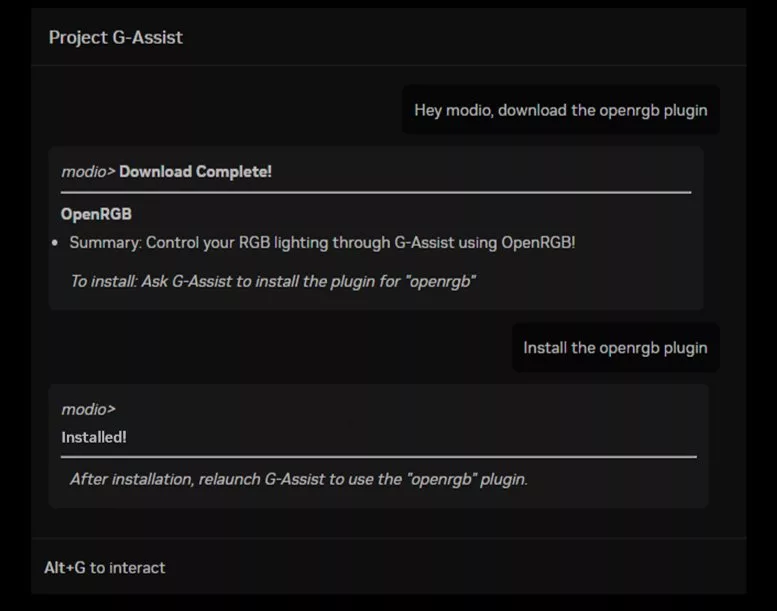
G-Assist matters not because of one feature, but because it tries to move an AI assistant into the mainstream RTX segment.
If local AI fits into a mainstream GPU, it stops being a demo and becomes a PC interface.
Why the 6GB threshold matters
Lowering the Project G-Assist threshold to RTX and RTX PRO GPUs with 6GB of VRAM is more than optimization. It is an attempt to bring a local AI interface to the mainstream segment, where players already own RTX laptops and lower-tier desktop cards.
NVIDIA describes a lightweight AI model and 40% lower VRAM usage. If independent testing confirms it, a local assistant stops being a feature for expensive GPUs and becomes part of a normal gaming PC.
G-Assist as a platform
The most interesting part is not one command, but the mod.io plug-in hub. It turns G-Assist from a fixed feature set into an extendable platform where users and developers can add workflows.
This follows a familiar ecosystem logic: value grows not only through the core app, but through small useful extensions.
Constraints of the mainstream RTX segment
6GB of VRAM is not an ocean of free memory. In a real game, VRAM is occupied by textures, upscalers, browsers, capture tools and overlays. The real G-Assist test is not launching in an empty system, but running beside a game.
For laptops, temperature, power and noise also matter. If the assistant hurts frame-time stability, users will disable it no matter how attractive the idea is.
Industry impact
If G-Assist becomes stable, it can define a template for local AI interfaces in gaming systems. Users will expect a PC to understand commands, draw charts, change settings and explain system state without manual menu hunting.
This is not a one-day revolution, but the direction is clear: AI features are moving from cloud demos into on-device system tools.
Аналитика MBG
