
Portal offers refunds for pre-installed Windows 11 licenses
The majority of new PCs arrive with Windows 11 pre-installed and licensed, a fact that frustrates many Linux enthusiasts who prefer to wipe the operating system immediately upon unboxing their hardware. To address this perceived unfairness, the Italian Linux Society and the Free Software Foundation Europe have launched Refund4Freedom, a dedicated portal designed to help consumers reclaim up to $175 for their pre-installed Windows 11 licenses.
The core mission of Refund4Freedom is to challenge the industry standard of bundling paid operating systems with hardware. The initiative asserts that consumers should have the right to purchase laptops without a specific OS and should not be forced to pay for software they do not want. Beyond simply offering refund forms, the site advocates for three key demands: manufacturers must stop imposing unwanted software on consumers, pricing should clearly reflect whether Windows is included or excluded, and vendors must provide friction-free processes for requesting refunds.
The portal warns that not all PC manufacturers are created equal when it comes to honoring these requests. According to the site's survey of major brands, Acer and Lenovo operate established reimbursement procedures for Windows licenses. In contrast, Dell and HP reportedly lack any formal reimbursement procedure for pre-installed Windows on their consumer devices. Asus is noted to have a hidden reimbursement process, but the instructions provided are heavily Italy-centric, requiring users to navigate specific Italian channels to access it.
The site provides a deliberate step-by-step guide for users who intend to reject the pre-installed software. The first rule is critical: do not format or erase the computer before attempting to claim a refund. Users are advised to power on the device and take photographs of the contract clauses or license agreements that address reimbursement rights. This evidence is essential, as manufacturers may deny claims if the original licensing terms cannot be verified.
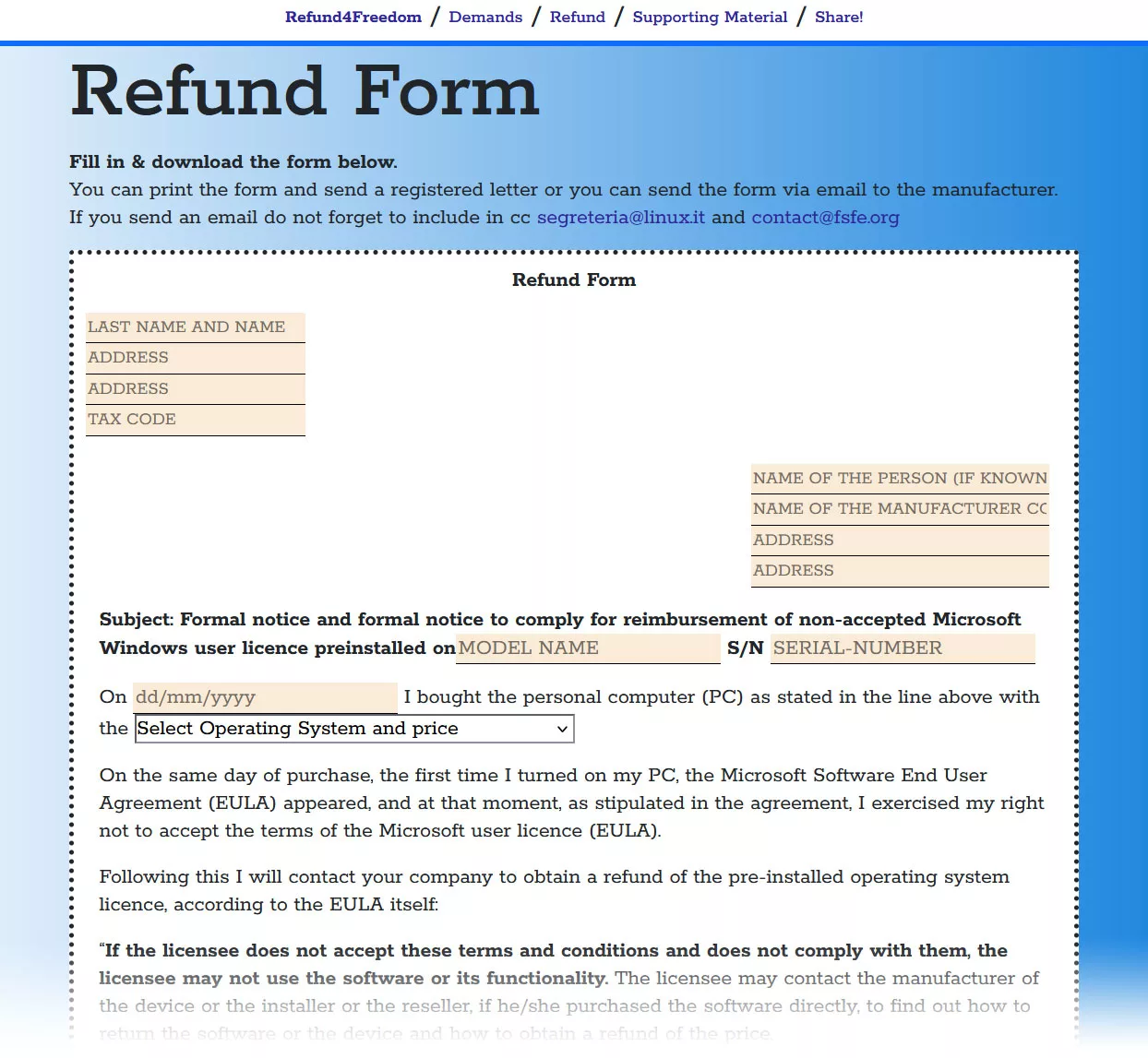
Once documentation is gathered, users should contact the manufacturer's customer service using a recordable method, such as email or messaging apps, to ensure there is a paper trail of their request. If direct contact with customer support does not yield results, Refund4Freedom offers pre-made legal forms that can be filled out and forwarded to the appropriate authorities. However, users should note that these specific forms are tailored for Italian law, referencing the Autorità Garante della Concorrenza e del Mercato (AGCM) and rulings by Judge Dr. Mirko Buratti of the Court of Monza.
For users outside Italy, the portal suggests adapting these legal templates or seeking local equivalents, though it acknowledges that swapping in different court rulings requires significant effort. The site encourages all users to report their experiences, whether successful or not, to the AGCM to help build a collective case against forced software bundling. Success stories on the site highlight that some users have recovered as much as €150 (~$175), which includes both the license reimbursement and larger legal fee refunds, though a more typical reimbursement level hovers around $60.
The initiative also highlights a growing trend in the industry where companies are increasingly using automatic Windows installers to display adware through the Microsoft Store when new hardware is installed. Refund4Freedom aims to counter this by empowering consumers with the knowledge and legal tools necessary to reject unwanted software before it becomes part of their permanent system configuration.
Гика
