

PlayStation 3 at 20: A Look Back at the All-in-One Entertainment Powerhouse
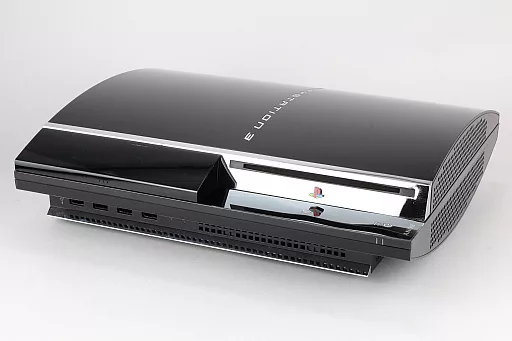
Today marks the 20th anniversary of the PlayStation 3, Sony's ambitious successor to the record-breaking PlayStation 2. Released on November 11, 2006, the PS3 arrived as a piece of cutting-edge hardware, featuring a Blu-ray drive, an internal hard drive, and HDMI output. Beyond its gaming capabilities, it was designed with a vision of becoming a central hub for digital entertainment, bridging the gap between a gaming console and a home media server.
The PS3 was a machine of grand ambitions. At its heart was the unique Cell Broadband Engine, a processor co-developed by Sony, Toshiba, and IBM. This architecture sparked the concept of 'Cell Computing,' an ambitious idea to create a distributed computing network where various devices could work together. While this vision of a global interconnected network of machines never fully materialized, the Cell processor's immense power for graphical processing found its way into other technologies, such as the 'CELL REGZA' in LCD televisions and specialized versions like the SpursEngine for laptops.
While the 'Cell Computing' dream faded, the PS3 succeeded in its goal of becoming a versatile media powerhouse. It transcended the boundaries of a traditional console, serving as a high-performance terminal for light users who didn't necessarily own a PC. It offered robust media playback, internet access via a built-in browser, and the ability to expand functionality through various apps and peripherals.
A Versatile Media Player: Supported Formats and Media
One of the PS3's most defining features was its role as a media player. It could handle everything from Blu-ray and DVD to music CDs and various digital file formats. Interestingly, the level of support varied depending on the specific hardware model. The initial CECH-A00 and CECH-B00 series supported 14 different types of media, whereas later models were streamlined to 12. The primary differences were the removal of backward compatibility for PS2 DVD-ROMs and support for Super Audio CDs (SACD) in later iterations.
Blu-ray Disc Support
The inclusion of a Blu-ray drive was a pivotal move for Sony, helping to establish Blu-ray as the standard for high-definition media in the face of competition from HD DVD. The PS3 supports several Blu-ray formats:
It is worth noting that while the PS3 was a pioneer for Blu-ray, it does not support the Ultra HD Blu-ray (UHD BD) standard introduced in 2015.
DVD and CD Compatibility
The console's DVD capabilities were extensive, including support for standard DVD-ROM, DVD+R/RW, and DVD-R/RW, as well as AVCHD and DSD formats. Notably, the PS3 featured an upscaling function for DVDs, providing a cleaner image than playing them on a standard PS2.
For audio enthusiasts, the PS3 was a significant device. It supported standard CD-DA (Audio CDs), CD-R/RW, and the high-fidelity Super Audio CD (SACD). However, SACD support was limited to the early models, making those units highly sought after by audiophiles.
External Storage and Digital Media
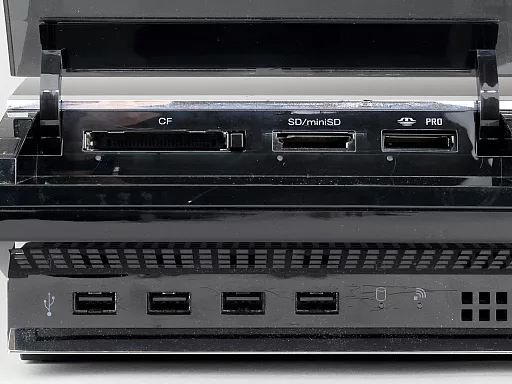
Beyond physical discs, the PS3 was designed to be a hub for digital data. It supported external HDDs, USB flash drives, and various memory cards including Memory Stick (MS), SD, and CompactFlash (CF) via the slots found on the CECH-A00 series. Users could also connect digital cameras and portable audio players. It is important to note that the system primarily recognizes the FAT32 or FAT16 file systems, with limitations on partition counts and lack of native support for exFAT or NTFS.
External and Removable Storage
The PlayStation 3 offered several ways to expand its storage or import media. Users could connect external HDDs via USB ports, similar to those used for PCs or televisions. However, since the USB ports only provide 5V of power, 3.5-inch drives required an external power source. USB flash drives were also a convenient option, allowing users to play media files directly without a card reader.
The console featured a built-in card reader supporting various flash memory formats. This included Sony's proprietary Memory Stick (MS) series, as well as industry standards like SD, miniSD, and microSD. It also supported CompactFlash (CF) Type II cards, which allowed for thicker media like microdrives. While not officially announced for all formats, some media like SmartMedia or xD Picture Cards could be used via a card reader.
For USB-connected devices, the PS3 could recognize digital cameras and portable audio players, provided they supported the USB Mass Storage Class. However, devices relying solely on PTP (Picture Transfer Protocol) or MTP (Media Transfer Protocol) were not recognized. Additionally, devices requiring proprietary software for file transfers—often due to copyright protection—could not be used.
Network and Specialized Hardware
The PS3 supported DLNA (Digital Living Network Alliance), allowing it to act as a media player for content stored on a NAS or media server over a LAN. It also supported DTCP-IP, enabling the playback of protected content recorded from television broadcasts. While DTCP-IP was not enabled by default, it could be activated in the settings.
The ecosystem was further expanded by specialized hardware. In 2010, the 'torne' service was released, consisting of a USB digital tuner and software that allowed users to record and watch terrestrial digital broadcasts on the PS3. This was followed in 2012 by 'nasne,' a standalone recorder with built-in digital tuners and an HDD. While nasne was highly popular for its ease of use and affordability, its service was discontinued in July 2019, and newer models released by Buffalo are not compatible with the PS3.
Supported File Formats
While standard Blu-ray, DVD, and CD discs played without issue, the ability to play files from external media depended heavily on the specific file format. The PS3's official documentation listed support for various types of media.
Photo Formats
- JPEG (DCF2.0/Exif2.21 compliant): The standard for digital cameras, supporting full color and metadata like shutter speed via Exif.
- TIFF: A lossless format used for high-quality printing and professional applications.
- BMP: An uncompressed format commonly used in Windows environments.
- GIF: A format supporting limited colors (up to 256) and simple animations.
- PNG: A lossless format that supports transparency, developed as an alternative to GIF.
- MPO (Multi Picture Object): A format used for 3D photos, grouping multiple JPEG images into one file.
Audio Formats
- ATRAC: Sony's proprietary lossy compression format (including ATRAC3 and ATRAC3plus). Note that the console does not support the lossless ATRAC Advanced Lossless.
- MP3: The widely used lossy format. The console also supports MP3 Surround for 5.1ch audio, though it saw limited adoption.
- MP4 (AAC): A high-quality lossy format used extensively in digital broadcasting.
- WAV (Linear PCM): Uncompressed audio providing high fidelity at the cost of large file sizes.
- WMA: Microsoft's lossy format, standard for Windows Media Player.
Video Formats
- Memory Stick Video: Sony's proprietary container for various video codecs used on PSP and other devices.
- MPEG-4 SP (AAC LC): A lightweight MPEG-4 profile.
- H.264/MPEG-4 AVC High Profile (AAC LC): The standard for high-definition video, including Blu-ray content.
- MPEG-2 TS (Transport Stream): Used for digital broadcasting and streaming, supporting various compression methods.
- AVI: A container format supporting Motion JPEG and Linear PCM/μ-Law audio.
- AVCHD (.m2ts / .mts): A high-definition format using H.264/MPEG-4 AVC and Dolby Digital/Linear PCM, utilizing the MPEG-2 TS container.
- DivX: A high-compression format based on MPEG-4 Part 2 technology.
- WMV (VC-1): Microsoft's compression standard, also used as a codec for Blu-ray and HD DVD.
Looking back, the PS3 was a formidable multimedia powerhouse, often rivaling contemporary PCs in its ability to handle high-quality Blu-ray playback and protected content via DTCP-IP. For many, it was not just a gaming console, but a central hub for all digital media. However, as the era of the PS3 concludes, users should note that PlayStation Store support for the console is being phased out, with a global shutdown scheduled for July 2027.
As the industry continues to evolve, looking back at the hardware that shaped modern gaming experiences provides essential context for where we are today. The PlayStation 3 remains a significant milestone in Sony's history, marking a period of ambitious technological leaps and diverse software offerings that helped define the seventh generation of consoles.
The legacy of the PlayStation 3 is built upon its unique architecture and the high-profile titles that pushed its capabilities to the limit. From cinematic single-player adventures to the expansion of online multiplayer ecosystems, the platform served as a cornerstone for many developers looking to transition into the high-definition era.
A Diverse Software Library
One of the most notable aspects of the PS3 era was the sheer variety of genres that found a home on the platform. While many associate the console with high-budget blockbuster titles, it also hosted experimental indie projects and niche titles that wouldn't have been possible on previous hardware. This diversity ensured that the console appealed to a wide demographic, from hardcore enthusiasts to casual players.
- Cinematic storytelling that set new standards for narrative-driven games.
- The rise of robust online multiplayer services that laid the groundwork for modern social gaming.
- A massive library of backward-compatible titles and digital distribution through the PlayStation Store.
Reflecting on this era allows us to appreciate the technical hurdles developers overcame to deliver the experiences we now take for granted. The PlayStation 3 was more than just a piece of hardware; it was a transformative period that bridged the gap between the early digital age and the highly connected, high-fidelity landscape of current-generation gaming.
Флешка
