
Odyssey and Assassin's Creed Odyssey: Why the Game Shares Its Name with an Ancient Epic
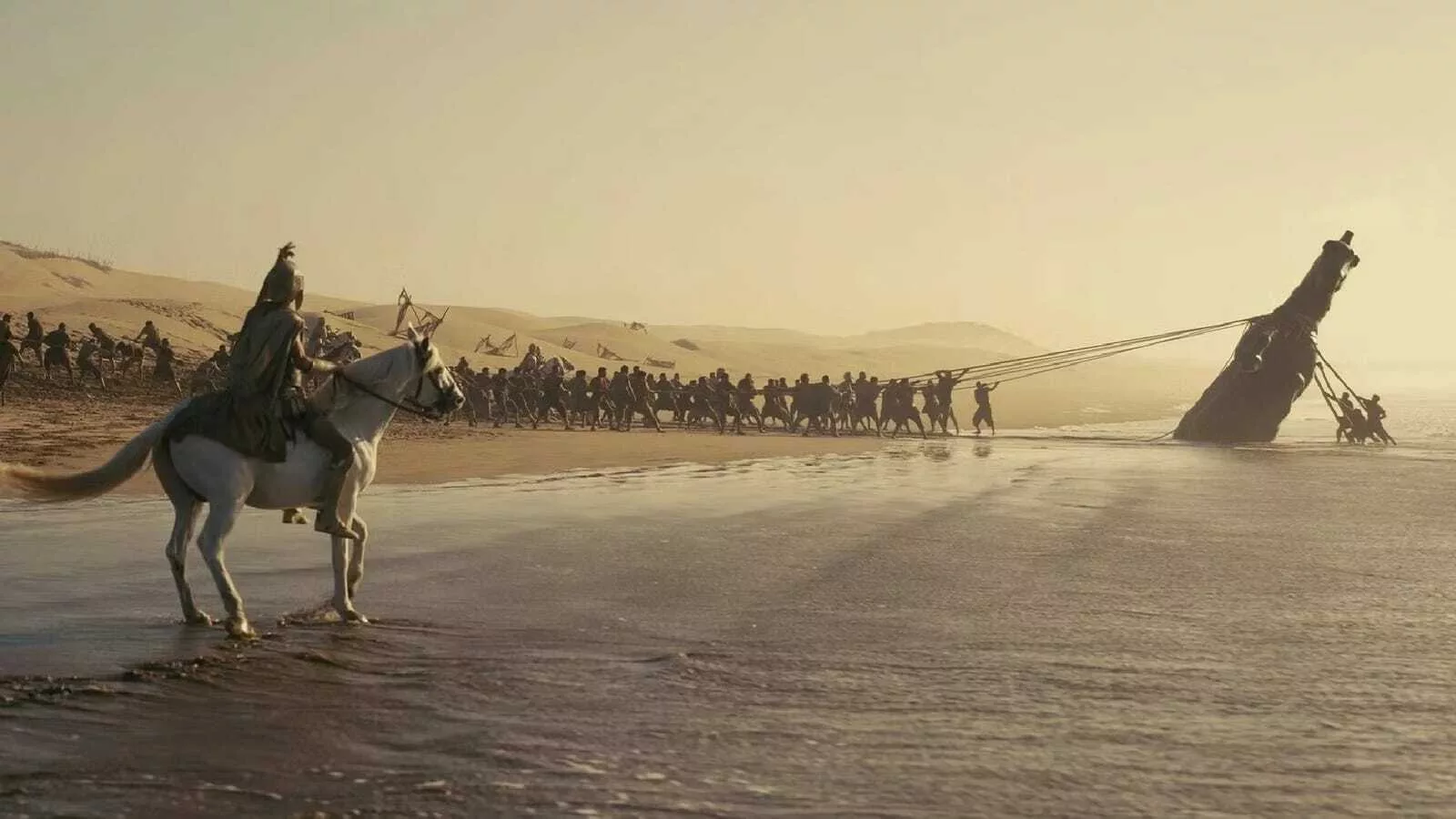
In July 2024, Christopher Nolan's film «Odyssey» hit theaters, captivating audiences with its epic scale. Just a few years prior, in 2018, Ubisoft released Assassin's Creed Odyssey. Despite the time gap, both works share a central theme: Nostos — the return home.
This article doesn't just describe gameplay mechanics or plot twists. Instead, we look "behind the scenes" of the title to understand how ancient Greek mythology, history, and philosophical concepts were woven into one of the most ambitious entries in the Assassin's Creed series.
Odysseus or Kassandra? Two Paths Home
The protagonist of the film «Odyssey» is Odysseus, who, after the Trojan War, attempts to return to his native island of Ithaca. His journey is filled with adventures, but the end goal is clear: home and family.
In Assassin's Creed Odyssey, the role of the protagonist is played by Kassandra (or Alexios, depending on player choice). Her story begins with tragedy: she lost her family due to a prophecy. Her journey is not just about returning to her homeland of Cephalonia, but a complex process of restoring a broken family and finding her place in the world.
While Odysseus returns to an existing home, Kassandra must create it anew. She gathers scattered relatives across the Aegean Sea. In the end, her "home" is not just a location on the map, but a gathering of people around one table.
The Cult of Xenia: The Law of Hospitality
Both stories are permeated by the ancient Greek concept of «Xenia» (Xenia) — the sacred law of hospitality. In Greek mythology, this rule was strict: one must accept a stranger, feed them, and protect them from any dangers.
In the film «Odyssey», this law is shown as the foundation of civilization. Violation of Xenia (such as by Polyphemus or Odysseus's suitors) leads to catastrophe. Odysseus survives precisely because he adheres to these rules.
In Assassin's Creed Odyssey, the player also encounters this theme. Kassandra travels across Greek islands as an outsider, and her relationships with locals are often determined by how well she observes or violates these ancient norms.
Mythology vs. History: The Age of Iron
One of the most interesting features of Assassin's Creed Odyssey is its approach to mythology. Unlike the film, where gods actively intervene in heroes' fates, the game places the action in an era when belief in them has waned.
Developers at Ubisoft used the concept of the "Age of Iron" from Hesiod's poem. This is a time when people no longer communicate directly with gods but live through labor and conflict. In the game, this is reflected through the idea of «Ishu» — an ancient civilization whose technologies explain many mythical phenomena (such as the existence of the Minotaur or Medusa).
Thus, the game reinterprets myths: they become not reality, but historical artifacts or results of ancient technological intervention. This allows the player to interact with a world where historical figures like Socrates and Pericles act alongside legendary heroes.
Key Plot Points
The game's plot is rich with references to the epic "Odyssey," helping players understand the depth of the world:
- Ithaca Island: At the beginning of the game, Kassandra visits Ithaca, where Odysseus's palace and Penelope's sanctuary are located. This place serves as a reminder that the mythical past still influences the present.
- The "Little Odyssey" Quest: One of the player's first tasks is to return items stolen by thieves that belonged to Penelope. This is a direct reference to the film and epic plot.
- Fate of the Family: The player can choose between different endings. In the "good" ending, Kassandra gathers the whole family around one table, symbolizing the restoration of order and harmony.
Дурик
