

Modders bring NVIDIA Smooth Motion to RTX 30 GPUs via two projects
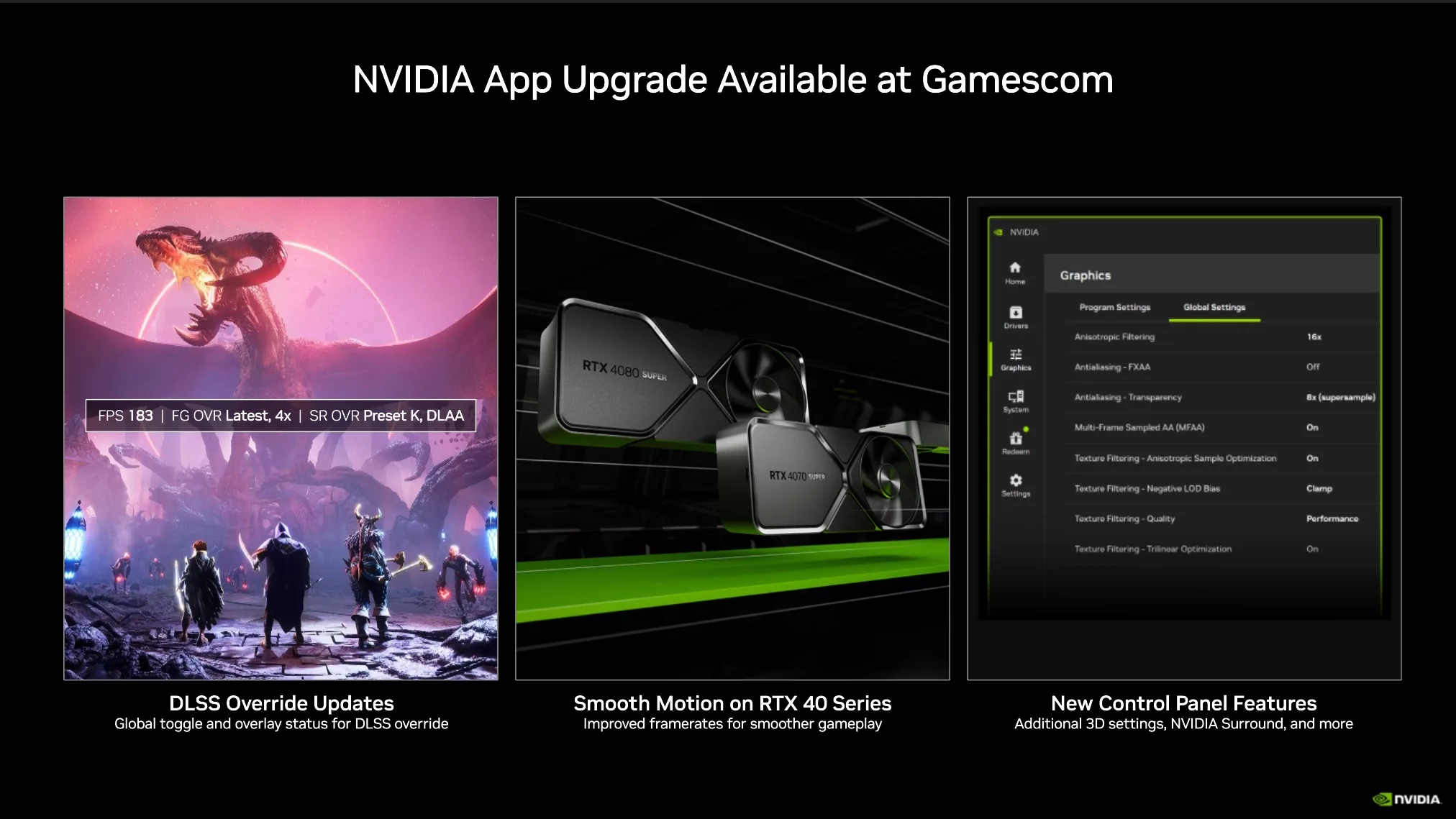
While NVIDIA focuses on promoting new features for its current series, modders are working on features that expand support to older GPUs. Through two separate community projects, Smooth Motion (driver-level frame generation) has been enabled on GeForce RTX 30 GPUs based on the Ampere architecture.
Technical Context: Smooth Motion vs DLSS
NVIDIA officially supports driver-level frame generation on GeForce RTX 40 series and newer. Unlike DLSS Frame Generation, which requires an existing implementation within a game, Smooth Motion works at the driver level. This allows the technology to support a broader range of games because it does not rely on developers implementing specific DLSS Frame Generation support.
It is important to note that these modifications are unofficial. Since they involve DLL injection, they may trigger anti-cheat systems in online games; therefore, these projects are primarily intended for experimentation in single-player titles.
Two Implementation Approaches
There are currently two distinct ways this functionality is being brought to Ampere hardware:
- The dlssg_for_sm86 expansion: Developer pipotoufikxyz-lgtm has expanded the existing dlssg_for_sm86 project by sdli1995. This version adds Multi Frame Generation modes and Vulkan support. Testing on GeForce RTX 3070 and RTX 3080 has shown it working in various games and emulators like RPCS3, DuckStation, and Yuzu, though some Steam titles have experienced crashes. Users also reported more visible artifacts on Ampere compared to newer architectures.
- NVSmooth30: Developer ItsAdeline is working on what is described as a clean-room compatibility experiment for the NvPresent64.dll path. Instead of extending the DLSS-G package, NVSmooth30 scans and patches NvPresent capability checks, intercepts the CUDA loading path, and retargets compatible SM89 kernels to SM86. It also features an experimental DirectX 11 to DirectX 12 presentation bridge.
Both projects remain experimental, with limited compatibility and the potential for software conflicts.
Гика
