

Modder pumps water directly onto RTX 2060 Super silicon — temps drop to 28°C
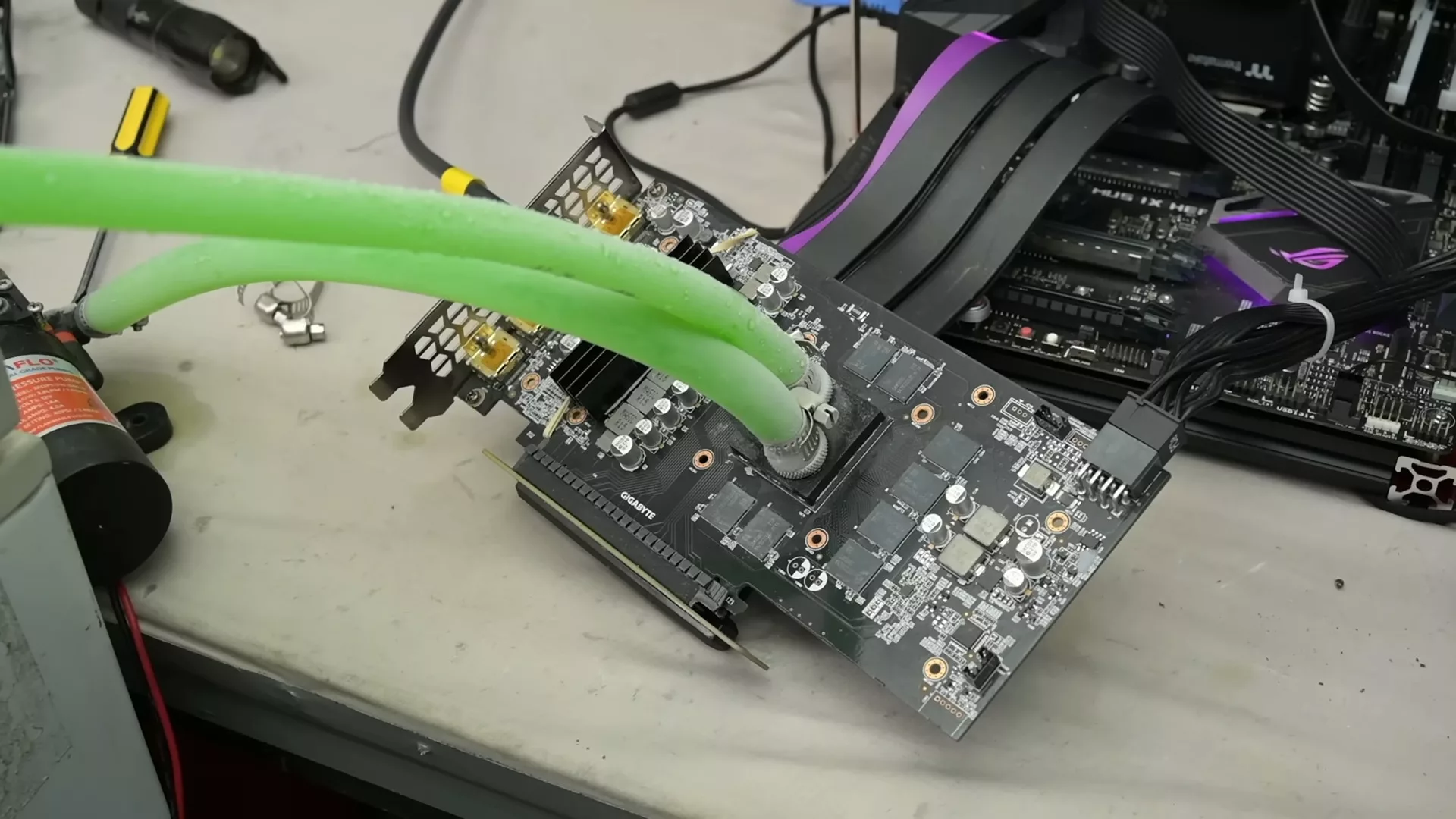
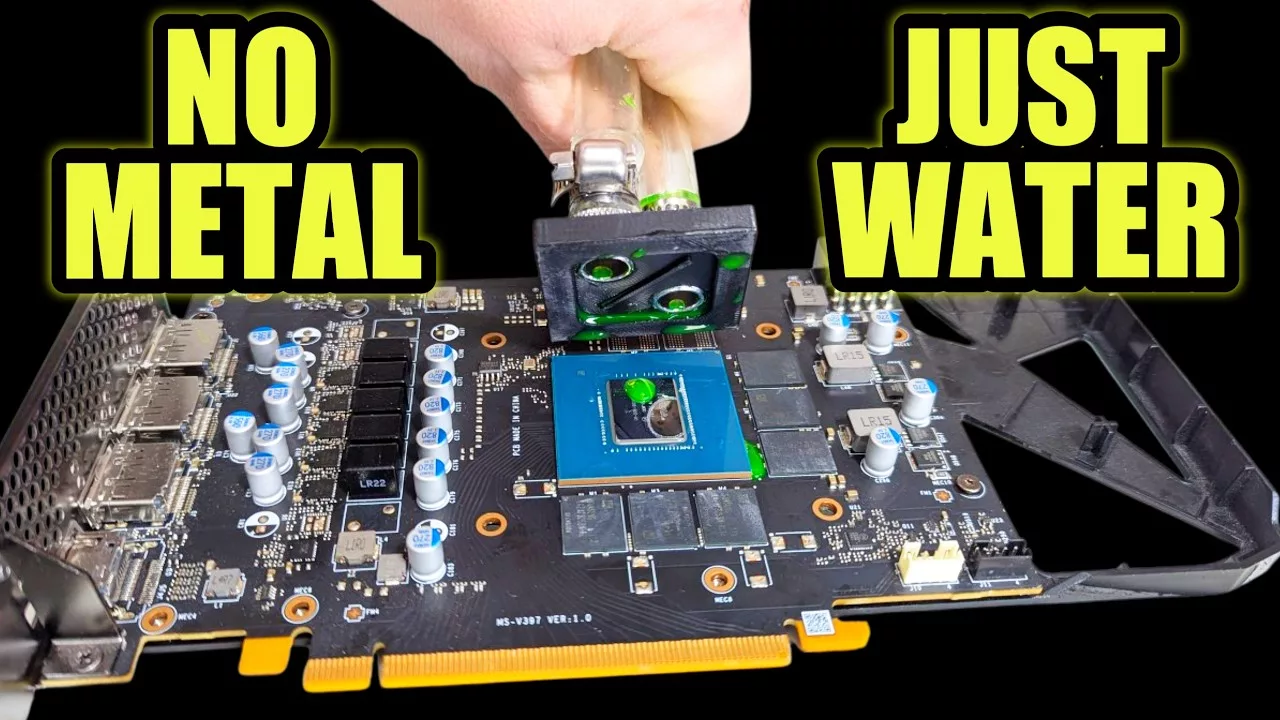
TrashBench, an Australian modder collective, has tested a radical cooling concept: eliminating the metal waterblock entirely to pump liquid directly over the bare silicon die. Using a non-functional Nvidia GeForce RTX 2060 Super, the team initially struggled with leaks but eventually sealed the 3D-printed block and fittings with epoxy. The result was striking: load temperatures fell to 28°C, outperforming even a clamped-on All-In-One (AiO) liquid cooler.
The Setup: Direct Die Cooling
The core idea was simple: why use metal as an intermediary if water can touch the silicon directly? The team 3D-printed a custom block using a Bambu Lab printer, designing channels to direct coolant straight onto the GPU die. To protect surrounding components from accidental spills or seepage, all surface-mount components adjacent to the chip were coated with nail polish.
The initial prototype leaked immediately. The team applied epoxy adhesive to seal the 3D-printed block to the GPU and later sealed the tube fittings themselves. Only after these modifications did they achieve a leak-free prototype suitable for live testing.
Performance Results
Once the leaks were resolved, the team moved to the main event: benchmarking the RTX 2060 Super. The results in the Heaven benchmark are summarized below:
- Stock Cooler: 70°C
- AiO Liquid Cooler (clamped): 36°C
- Direct Water Cooling: 28°C
The video also demonstrated running the system with coolant at -28°C, further reducing the die temperature. The team noted that chamber size is critical, but confirmed that pumping water directly over silicon is physically viable.
Skepticism and Risks
While the numbers are impressive, this method remains highly experimental and risky for general use. Experts raise concerns about long-term corrosion of chip contacts, chemical reactions between water impurities and silicon, and hydrogen ion diffusion through the die. Additionally, 3D-printed materials can be porous or have micro-cracks at the edges, leading to leaks under pressure.
This project serves as a proof-of-concept for direct thermal transfer but is not a viable solution for mass adoption without significant engineering refinements and manufacturer guarantees.
Гика
