
Metro 2039 is a game about war that actually has something to say
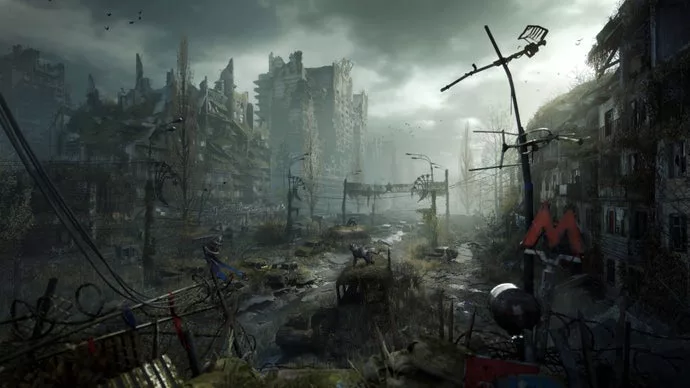
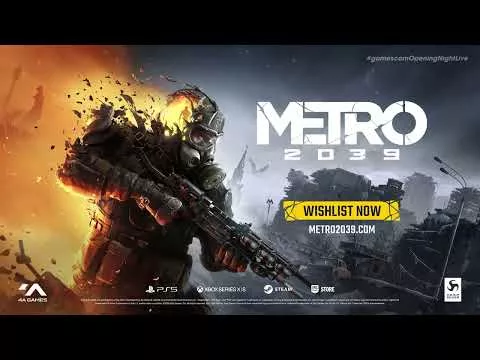
Metro 2039 is a sequel to the acclaimed post-apocalyptic shooter series, but its development has taken place under the shadow of an ongoing real-world conflict. Developed by Ukrainian studio 4A Games and published by Deep Silver, the game arrives in February 2027 for PC, PlayStation 5, and Xbox Series X/S. The project represents a significant tonal shift from its predecessors, moving away from grey morality towards a stark exploration of authoritarianism and tyranny. This preview interview with executive producer Jon Bloch and co-creative director Pawel Ulmer reveals how the studio has transformed their vision to reflect the harsh reality of creating games in a warzone.
A Shift from Prevention to Consequence
When asked about the evolution of the series, Jon Bloch, executive producer at 4A Games, notes that the landscape has changed significantly since the previous entries. The earlier games in the Metro franchise were primarily concerned with preventing war and exploring the moral cycles that trap humanity. However, the full-scale invasion of Ukraine by Russia brought war directly to the studio's doorstep.
"The previous games were about preventing war; the themes and the morals and all that supported this idea that revolved around 'how do we as humans stop the cycle that we keep finding ourselves in'. And when Russia started its full-scale invasion of Ukraine, that brought war to our doorstep," Bloch explains.
This shift has fundamentally altered the game's narrative approach. The studio is no longer exploring hypothetical scenarios or ambiguous moral choices. Instead, they are focusing on the direct consequences of war and the nature of authoritarian regimes. Metro 2039 was never intended to be apolitical, but its previous commentary was more detached and speculative. Now, the narrative has become explicit and unambiguous.
"There was more of a grey morality in the past," continues Bloch. "Players were encouraged to question all these things that were happening... But in a situation like this, as the story explores what authoritarian regimes do... there is nothing good about that. There is only evil involved in that. And so the grey morality of the past needs to be more defined now."
The Rise of the Novoreich and The Stranger
This narrative pivot has led to a major change in the game's setting and characters. For the first time in the series' history, Metro 2039 features a voiced protagonist known as The Stranger. He is a new character who begrudgingly returns to the Moscow metro tunnels to face a fresh threat.
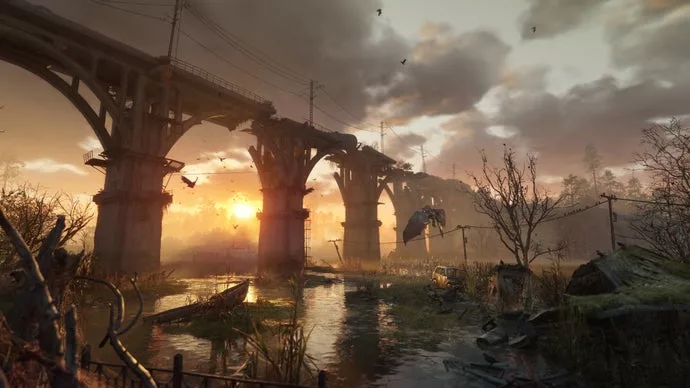
The world of the game has also consolidated. The previously divided factions have settled their differences and formed a unified, totalitarian regime under a new banner: the Novoreich. This regime is led by a charismatic figure named Hunter, who appears in the original game and book series. Hunter promises a new life for survivors above ground but will stop at nothing to achieve his ambitions.
The decision to give The Stranger a voice was intentional. Bloch states that 4A wants to be more explicit in its commentary this time around. The writing team, which includes the original author of the Metro series and exiled critic Dmitry Glukhovsky, aims to make players understand The Stranger's place in this world as he encounters the "worst of humanity".
Developing in a Warzone
The impact of the war extends beyond the narrative. Pawel Ulmer, co-creative director and lead audio designer at 4A Games, describes the studio's internal atmosphere as one of resilience amidst chaos. The team works every day without knowing if power will go out or if they will be targeted by drone strikes.
"During our lives, this has never happened before," Ulmer shrugs. "There are no parallels you can draw - no examples of how people coped with this... From what the team is experiencing, I can only emphasise the strength of spirit, body, and soul. It's enormous."
The studio jokes internally that the story of creating Metro 2039 is far more interesting and dark than the actual game itself. Ulmer notes that while they put all negativity and aggression into the product, the real-world experience of the team makes the development process extraordinary.
"I sometimes cannot understand how this is even possible myself," Ulmer laughs. "[But I think] the final game will represent what we have been through to make it."
A Totem of Resilience
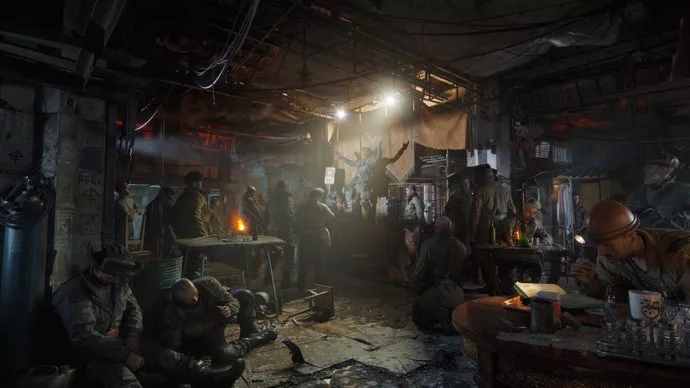
Despite the grim subject matter, the preview experience suggests that Metro 2039 is not angry or defeatist. Instead, it serves as a totem to the indomitable spirit of 4A Games. The game features hauntingly beautiful moments and tiny vignettes depicting struggling families carving out comfort in a world literally killing them.
Even in homes kitbashed from military hardware, there is a sense of cosiness and solidarity. The environment conveys a defiant message to the surface dwellers, mutants, and raiders above ground. As Ulmer puts it, "It's surreal, but the show must go on!"
The game combines competent shooting mechanics with remarkable graphics and a story inspired by the harshest real-world events. The crushing sense of claustrophobia and threat humming in the world of Metro 2039 makes previous games in the series seem almost relaxed.
Metro 2039 is scheduled for release in February 2027 on PC (Steam, Epic), PlayStation 5, and Xbox Series X/S. It stands as a testament to what can be achieved when developers refuse to let external circumstances dictate their creative output.
Зануда
