
Meccha Chameleon Review and Phenomenon Analysis: The Art of Hiding in Plain Sight
A detailed look at the surprise indie hit that stormed the charts with a simple but remarkably creative idea.

We have prepared a detailed look at this surprise indie hit, a game that stormed the charts and deserves a closer examination.
In 2026, the gaming industry witnessed the birth of one of its most unexpected and fastest-rising hits — Meccha Chameleon (Japanese: めっちゃカメレオン). The casual multiplayer indie game, created by Japanese developers Lemorion_1224 and Haganeiro, proved that blockbuster budgets are unnecessary when a game is built around a genuinely fresh idea whose brilliance lies in its simplicity.
The game, released on PC on June 10, 2026, was developed on Unreal Engine 5 in just a couple of months (four to five if you count work on assets). The result is stunning: by the beginning of July, sales surpassed 15 million copies, and the peak online reached 340 thousand concurrent players. Meccha Chameleon debuted at number one on the Steam charts, beating out heavyweight AAA titles like Forza Horizon 6 and Resident Evil Requiem.
The Core Idea: Hide-and-Seek for Artists
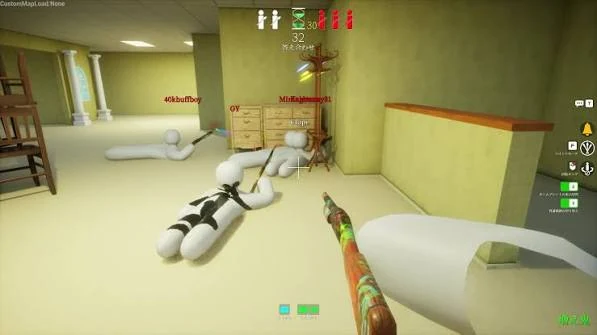
Meccha Chameleon is an asymmetrical multiplayer game in which players are divided into two teams: Hunters (Seekers) and Chameleons (Hiders).
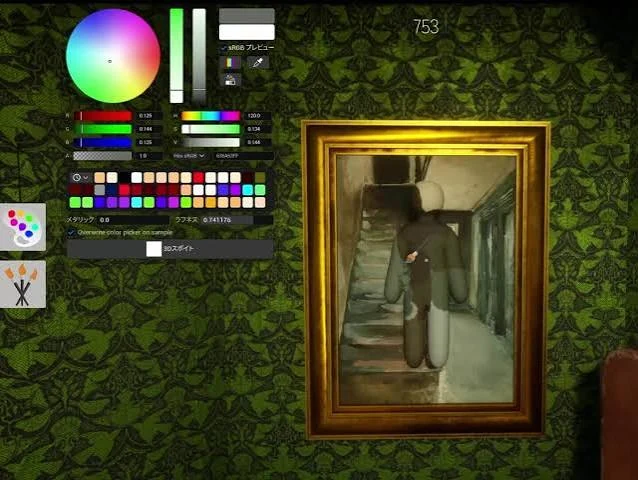
Unlike classic Prop Hunt, where you simply turn into a mug or a chair, the mechanics here are much more subtle and creative. Chameleons start the round as plain white figures. Their main task is to manually paint their bodies so that it blends perfectly with the textures of the level.
The chameleon's arsenal includes:
Advanced Color Mixer and Dropper: Allows you to copy colors and patterns of your surroundings (like brick texture or carpet pattern) with surgical precision.
Changing shape and size: you can choose a blob or cube humanoid model, and also change the scale of the character.
A system of poses: in order not to stand out, you can lie down, curl up, or take another desired shape.
Cloning: creating copies of yourself to completely confuse the Hunters.
Taunts: Risky players can make sounds (such as whistling) to give away their approximate location and taunt the seeker.
The Hunters' task is prosaic but challenging — to find all the "artists" before the timer runs out.
Game modes and content
In addition to classic hide and seek, Meccha Chameleon offers several additional modes:
Infection: classic “infection” — any chameleon caught joins the Hunters.
Double: A mode where all players first hide and then all become hunters. The winner is the one who finds the the most opponents in their hiding places.
Reverse Chicken Race: A distinctive mode built around a preview phase. Players are given time to disguise themselves, after which their painted models are displayed on a pedestal. Hunters memorize the patterns and then try to find them on a map.
The game supports public and private servers (from 2 to 12 players), and the base set of maps includes the Mansion, Sewers, Penguin Hotel, a map set in a map set in a map set in Osaka, Japan, and even the creepy Backrooms. Integration with Steam Workshop gives the project particular value — the community is already actively creating its own maps, such as “Art Gallery” and “Viking Market”.

MBG Mini-Guide: How to win at Meccha Chameleon
Success in the game does not depend on your reaction speed, but on your attentiveness, spatial thinking and, as the developers themselves say, “artistic skills.”
Tips for Chameleons
The “Box” Meta: The cubic body shape (particularly at 1.7x scale) is particularly popular in the gaming community. The sharp corners of a cube are much easier to fit into the geometry of rooms, furniture and architecture than a rounded model.
Do Not Merely Hide — Blend In: The most common mistake newbies make is hiding in a dark corner. The best strategy is to become an extension of the flat texture. Find a wall with a non-uniform pattern, copy the color transitions with an eyedropper and stand close to it.
Use the Free Camera: While in cover, chameleons can activate Free Camera mode. Constantly monitor the Hunter's movements to understand how thoroughly he checks your sector.
Hide in clone textures: Create several clones and paint them in random colors, leaving them in plain sight. The hunter will decide that this is a decoy and may ignore this area — while you, perfectly camouflaged, will hide right between them.
Tips for Hunters
Look for geometric distortions: Because chameleons have physical volume, they will bulge slightly on flat walls or floors. Look out for irregular shadows and bumps where they shouldn't be.
Test Suspicious Spots: If the wall seems a little “blurred” in one particular place, or the wallpaper pattern is interrupted, do not hesitate to attack this area.
Listen to your surroundings: Players often use whistling to taunt you. Play with good stereo headphones (the game supports surround sound) — this will help you quickly pinpoint the player taunting you.
Conclusion
Meccha Chameleon is a breath of fresh air in the party game genre. It encourages creativity and ingenuity, generating a huge number of hilarious situations for group streams and playing with friends.
Редакция MBG
