
Homebrew magnetic core memory USB drive transfers files via sneakernet
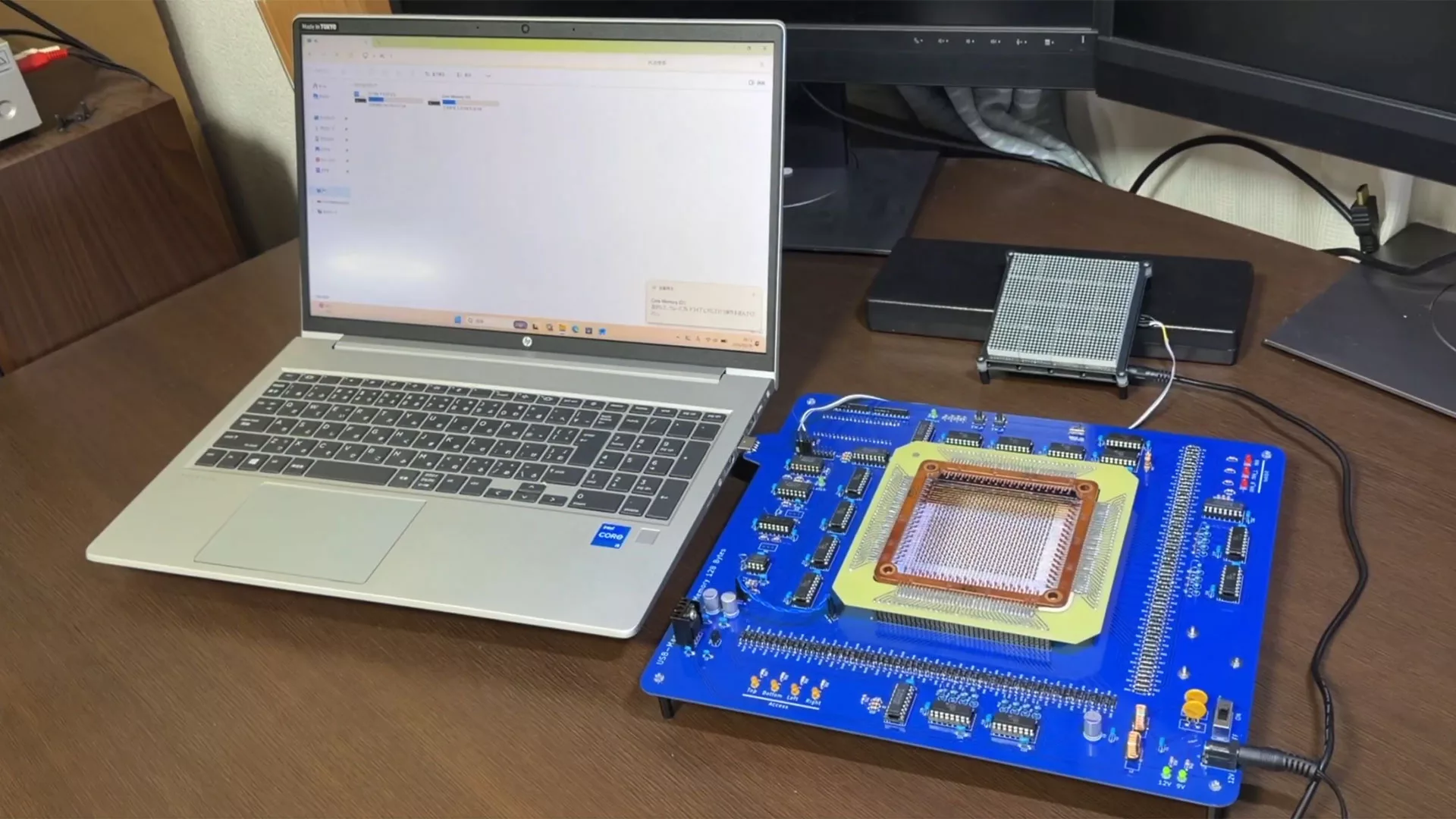
A homebrew project has successfully demonstrated the transfer of text and image files between two PCs using a USB drive built from magnetic core memory technology, marking what researchers describe as perhaps the world's first use of this archaic storage medium for a "sneakernet" operation. The device, constructed by Japanese researcher @dydt_Nao, is roughly dinner-plate-sized and utilizes 128 bytes of actual data storage capacity, with an attached LED array visualizing the state of each magnetic core in real-time.
The Return of Magnetic Core Memory
While modern computing relies on NAND flash memory for USB drives, this unique gadget revives a technology from the Apollo era. The device is not a standard USB stick but a custom-built storage unit that physically resembles a small circuit board with an attached LED matrix. It connects via a standard USB Type-A connector to function as a mass storage device within modern operating systems like Windows.
Technical Specifications and Constraints
The most striking limitation of this prototype is its storage capacity: it holds exactly 128 bytes of data. For context, a single tweet or short text message can easily exceed this limit. The device uses magnetic cores—tiny ferrite rings that store data magnetically—to achieve this storage. When the drive is read, the magnetic state of these cores changes, effectively erasing the stored data during the transfer process. This means the "sneakernet" method requires physical movement of the drive to copy files from one computer to another, as the original content cannot be retained on the source machine after reading.
Visualizing the Data Transfer
A unique feature of this build is the 32 x 32 LED array attached to the device. Each of the 1,024 LEDs corresponds to an individual magnetic core, glowing vivid red when active or in a specific state. This provides a visual representation of the data transfer process, turning what would otherwise be invisible magnetic switching into a visible light show. The controller for this logic is handled by a Raspberry Pi Pico board embedded within the device.
Practical Application and Limitations
Although the drive reports a capacity of roughly 6.5KB to the operating system (likely due to the controller's overhead), the usable data space remains strictly at 128 bytes. This makes it unsuitable for transferring large files, software installers, or media content. However, it serves as a fascinating proof-of-concept for secure, air-gapped data transfer in environments where network connectivity is restricted or compromised. The project highlights the enduring creativity of hardware enthusiasts who continue to explore and revive obsolete technologies.
Future Plans
The creator intends to showcase this device at Maker Faire Tokyo 2026, scheduled for September 5-6 at Ariake Gymnasium EX. The demonstration will likely focus on the visual spectacle of the LED array and the successful transfer of small text files, emphasizing the educational and nostalgic value of magnetic core memory in a modern context.
Гика
