

Compact powerhouse with the 2 nm M6 SoC - Apple Mac mini 2026 Review
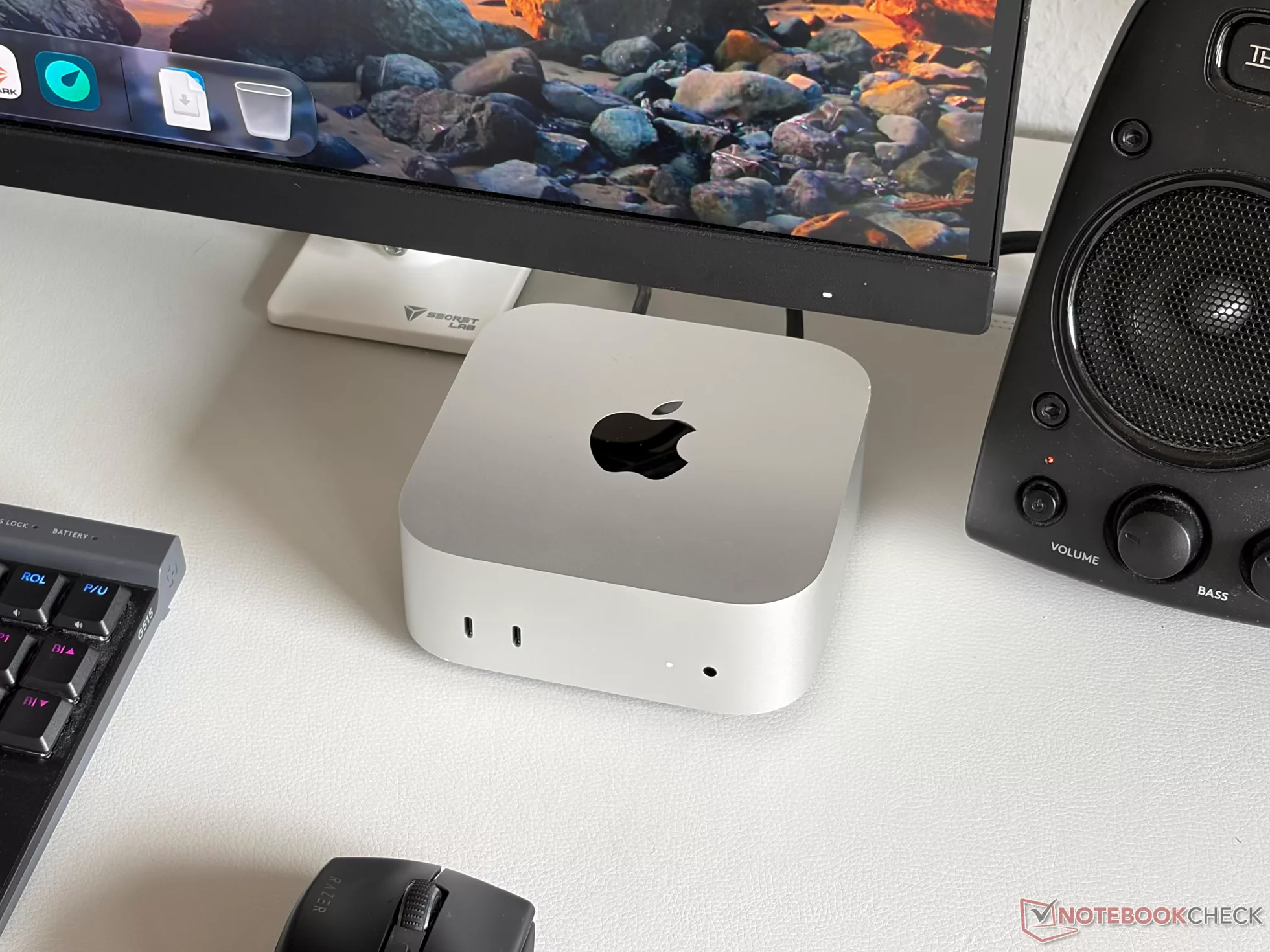
Apple has introduced the updated Mac mini 2026, featuring their first-ever 2 nm SoC, the M6. This compact desktop is more than just a refresh; it is a significant leap in both performance and efficiency, leaving competitors from AMD, Intel, and Qualcomm in its wake.
Next-Gen Architecture: The 2 nm Leap
The core of this update is the transition to the N2 process by TSMC. The M6 SoC features a dual-cluster CPU design: a performance cluster consisting of two Super cores and four Performance cores, and an efficiency cluster with six Efficiency cores. The Super and Performance cores reach clock speeds of up to 4.78 GHz, while the Efficiency cores run at 2.94 GHz. Additionally, the M6 incorporates two Neural Engines, an upgrade over the single engine found in the M5 generation.
Our test unit was equipped with 24 GB of LPDDR5x unified memory and a 512 GB SSD. It is worth noting that memory bandwidth scales with capacity: it reaches 153 GB/s for 16 GB configurations and up to 170 GB/s for the 24 GB and 32 GB models.
Performance: Single-Core Dominance
In single-core performance, the M6 continues to set the industry standard. Benchmarks in Cinebench 2024 and Geekbench 6 show a 25% improvement over the M4 and a 10% boost over the M5. When compared to the competition, the M6 is over 30% faster than the top-tier Snapdragon X2 Elite Extreme and more than 70% faster than Intel Panther Lake and AMD Zen 5 architectures.
Multi-core performance is equally impressive, outperforming Intel Panther Lake and Gorgon Point chips. The M6's capabilities approach those of AMD Strix Halo systems, which typically command a much higher price. For users requiring even more headroom, Apple offers the M5 Pro configuration, which supports up to 64 GB of RAM.
Efficiency and Thermal Management
The 2 nm process delivers substantial efficiency gains. While Apple does not expose CPU power draw via powermetrics in this specific system, our independent measurements indicate a multi-core TDP of approximately 30 W—comparable to the M5 but higher than the M4. Single-core efficiency has improved by 13–15% compared to previous generations.
The Mac mini chassis remains unchanged. The system is exceptionally quiet during standard tasks and only becomes audible under heavy CPU or GPU loads, though even then, the fan noise remains non-intrusive. However, the design retains some legacy issues, such as the inconveniently placed power button on the bottom rear and the lack of internal upgradeability.
Connectivity and Ports
The device features Wi-Fi 7 (with Bluetooth 6 support), though the Wi-Fi bandwidth is capped at 160 MHz, limiting throughput to roughly 2 Gbps. Rear connectivity includes three Thunderbolt 4 ports, HDMI, DisplayPort, and a 2.5 Gbps Ethernet port (with a 10 Gbps option available for $100). The front panel provides two USB-C ports and a 3.5 mm jack. Notably, the M5 Pro variants support the newer Thunderbolt 5 standard.
Verdict
The Mac mini 2026 with the M6 chip is an incredibly powerful and compact workstation. Despite minor grievances like the Wi-Fi limitation and the power button placement, the technological leap provided by the 2 nm architecture makes this one of the most compelling desktop options for users seeking high-performance computing in a small footprint.
Зануда
