
Intel shifts production capacity from consumer to server CPUs to meet AI demand
Facing unprecedented AI demand, Intel is reallocating manufacturing resources. Some Intel 18A capacity intended for Panther Lake client CPUs will be diverted to Intel 3-based server products.
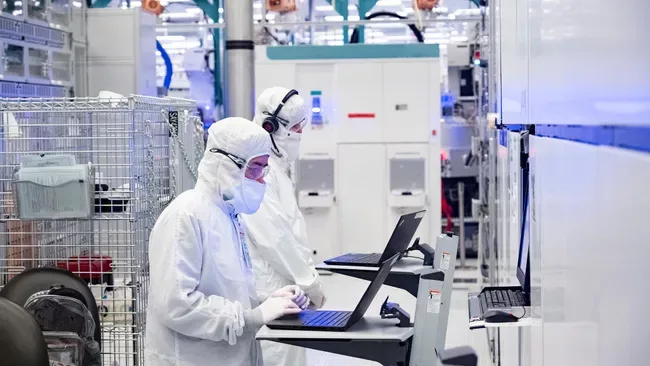
While the consumer PC market faces a contraction, Intel is pivoting to meet a much larger opportunity. The company is navigating what leadership calls one of the most significant supply shortages in history, driven by the massive demand for AI infrastructure. To keep pace, Intel is reallocating production capacity from its client platforms to its data center and AI divisions.
Intel's Data Center and AI (DCAI) segment is seeing massive growth, with revenue hitting $7.3 billion in Q3 2026—a 17% sequential increase and an 80% jump year-over-year. This surge is fueled by the industry's need for massive compute power to handle agentic and inference workloads. To capitalize on this, Intel is shifting its manufacturing priorities to ensure it can meet the growing demand for server-grade silicon.
Prioritizing Xeon and Intel 3
A major focus for Intel is ramping up production of Xeon 6 'Granite Rapids' processors, which utilize the Intel 3 process technology. To accelerate this, the company is making a strategic trade-off in the consumer space. CFO Dave Zinsner noted that some manufacturing resources in Oregon, originally slated for Intel 18A-based Panther Lake client processors, will be redirected to produce Intel 3 server wafers. This additional capacity is expected to come online in the second half of 2027.
Demand for Granite Rapids continues to outstrip supply. In response, Intel is focusing on improving manufacturing yields and reducing cycle times. The company reported that the production cost for the Intel 3 process has already decreased by approximately 15% since the first quarter of 2026.
The Substrate Bottleneck
Increasing wafer production is only part of the solution. Intel is also facing constraints in the supply of advanced organic substrates required for its advanced packaging technologies, such as EMIB and Foveros 3D. These substrates are essential for the multi-chiplet designs used in Granite Rapids and the upcoming Clearwater Forest Xeons. Intel is working with suppliers to expand capacity, aiming for a 40% increase in substrate availability by the second half of 2027.
The company's expansion involves massive capital expenditure, with CapEx expected to reach $20 billion in 2026. This includes accelerating equipment installation at Fab 62 in Arizona and expanding Fab 24 in Ireland. However, due to the lengthy nature of equipment qualification and manufacturing cycles, Intel expects supply constraints to remain particularly severe through the first half of 2027.
Гика
