
Intel Nova Lake Xe graphics to get SR-IOV support in Linux
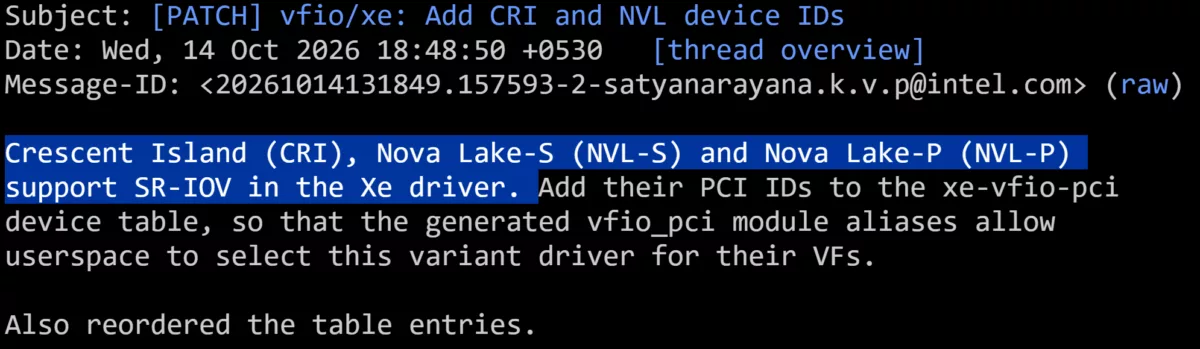
Intel is expanding virtualization capabilities for its upcoming Nova Lake processors. A recent Linux kernel patch confirms that the integrated graphics for both desktop (Nova Lake-S) and mobile (Nova Lake-P) variants will support SR-IOV via the Xe graphics driver.
Understanding SR-IOV
SR-IOV (Single Root I/O Virtualization) allows a single physical GPU to present multiple virtual functions. This enables several virtual machines to have direct, simultaneous access to the same graphics processor. This is a significant departure from traditional PCIe passthrough, which typically requires assigning the entire GPU to a single VM, making SR-IOV essential for efficient cloud computing and high-performance virtualization.
The patch, submitted by an Intel engineer, adds device IDs for three specific families to the xe-vfio-pci driver: Nova Lake-S (NVL-S), Nova Lake-P (NVL-P), and Crescent Island (CRI)—the latter of which is marketed as the Intel GPU D Series. These will join existing entries like Battlemage, Panther Lake, and Wildcat Lake in the VFIO device table.
Implementation Details
It is important to note that this specific update focuses on device matching within the driver rather than introducing the underlying SR-IOV capability itself. The groundwork for Nova Lake virtualization has been laid previously, with Intel submitting Xe driver changes for these processors earlier this year.
This trend toward hardware-level virtualization is not exclusive to Intel. AMD is also working on SR-IOV support for its next-generation Ryzen AI NPUs (specifically the AIE4 accelerator). While AMD's focus is on neural processing units and Intel's is on integrated graphics, both moves signal a broader industry push to bring robust virtualization support to future consumer-grade silicon.
Гика
