

Intel details Xe3P GPU architecture, Crescent Island gets up to 480GB memory and 350W PCIe variant

Intel has officially detailed its new "Xe3P" GPU architecture at Hot Chips 2026, revealing the specifications for the Crescent Island accelerator. This device represents a significant shift in Intel's strategy, moving away from traditional gaming graphics to focus entirely on high-capacity AI inference and agentic workloads.
The core of this announcement is the Xe3P architecture itself, which Intel positions as its third-generation Xe technology. While the previous Xe3 generation powers Panther Lake processors, Xe3P is designed specifically for compute-heavy tasks. The architecture introduces substantial upgrades to AI capabilities by moving XMX units from a four-deep systolic design (found in Xe2 and Xe3) to a much deeper 16-deep configuration. Additionally, the chip now supports FP8 and FP4 precision formats, doubles the general register file to 1MB per Xe core, and increases local L1/SLM memory to 512KB per core.
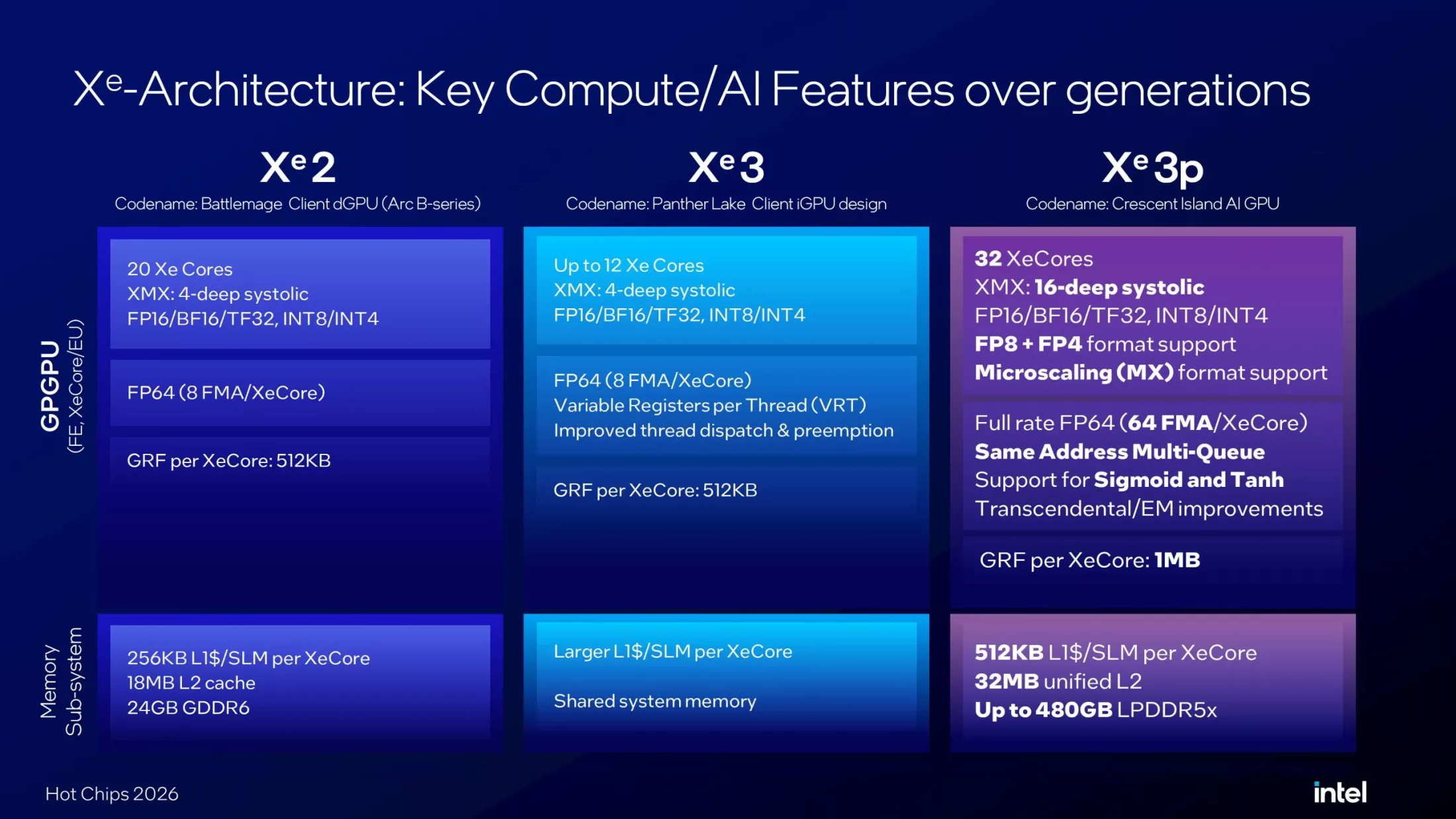
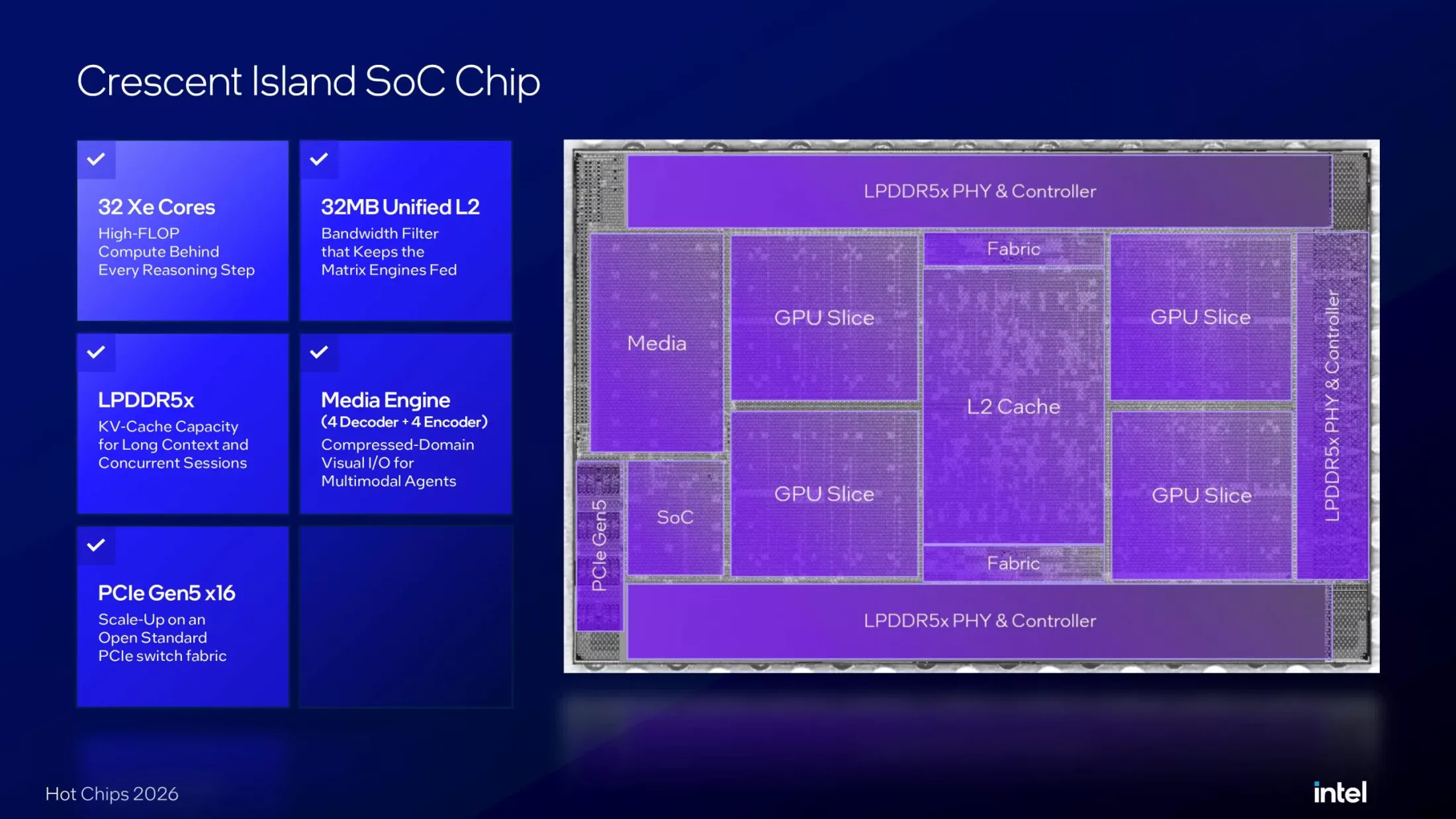
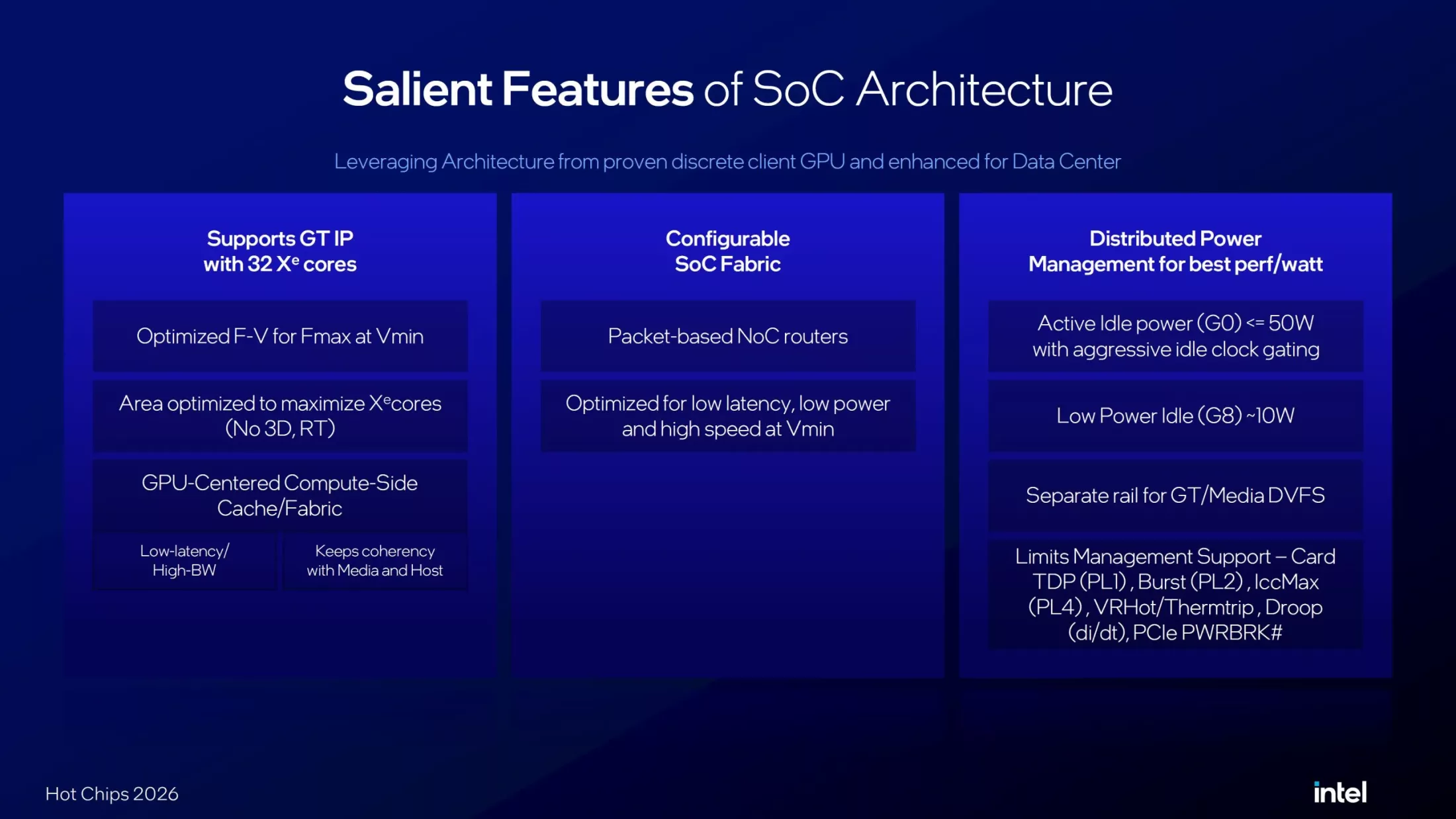
Crescent Island is built specifically for compute rather than gaming. To dedicate more silicon area to these new Xe cores and AI processing units, Intel has removed dedicated 3D rendering and ray-tracing hardware from the design. The accelerator features 32 Xe cores, each containing eight Vector Engines and eight XMX Engines, resulting in a total of 256 of each across the GPU. It utilizes a PCIe Gen5 x16 interface and includes 32MB of unified L2 cache.
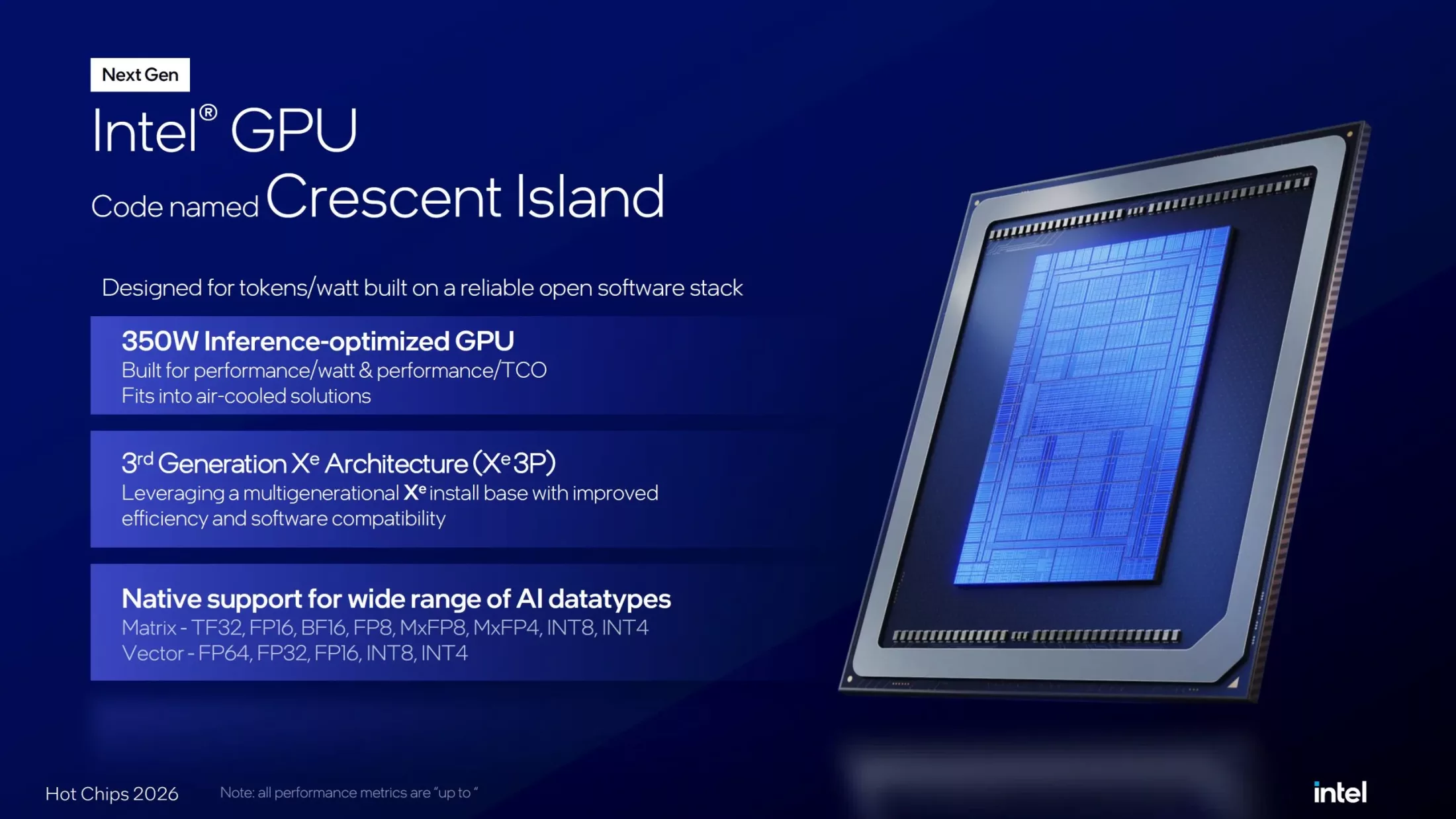
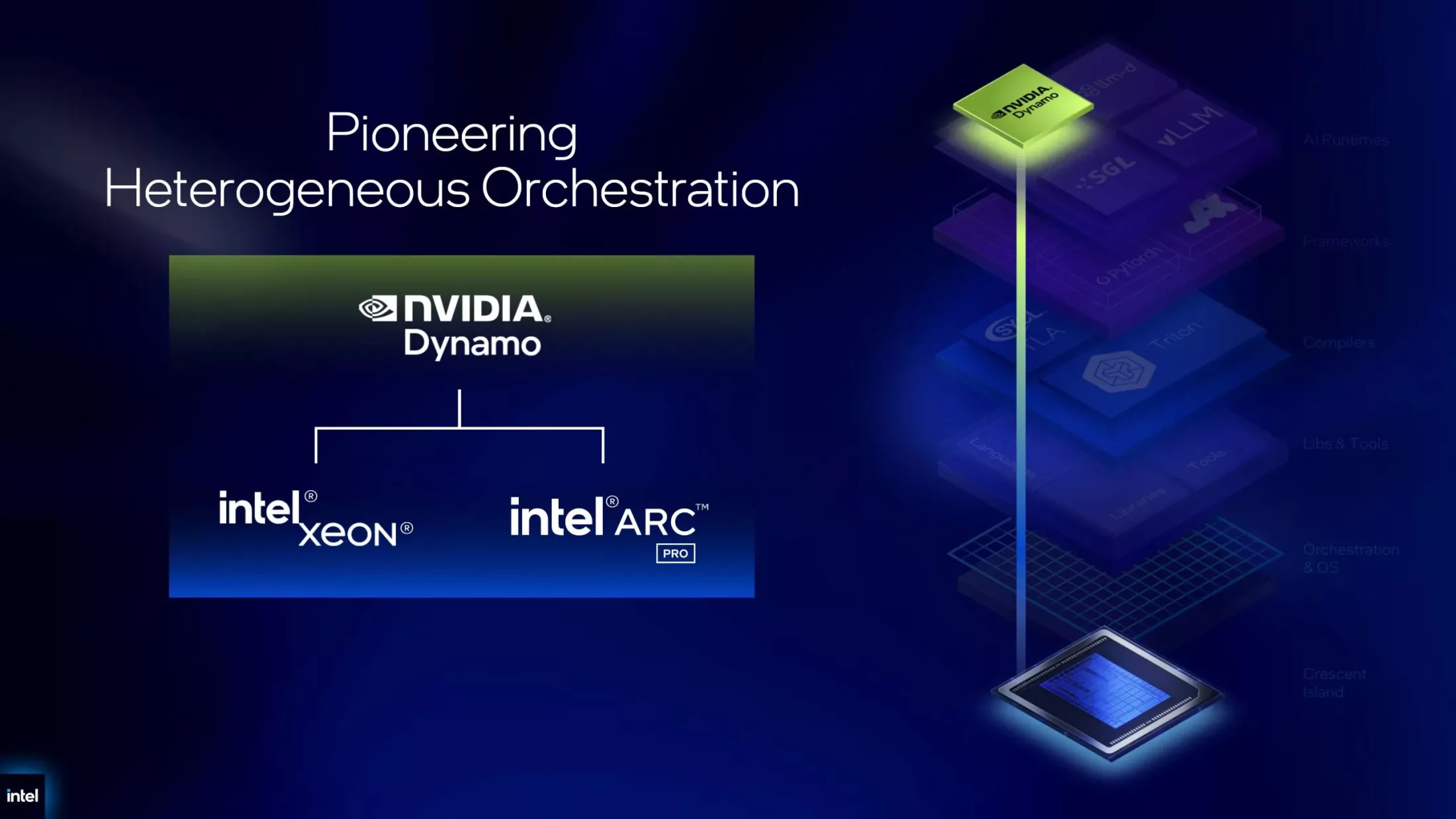
Memory capacity is a defining feature of this new architecture. Intel's own reference card will ship with 160GB of LPDDR5X memory, but the design supports partner configurations with up to 480GB. This massive capacity is intended to handle long-context AI workloads, store KV cache, and run multiple concurrent inference sessions simultaneously. The device is air-cooled via a PCIe slot and is rated at 350W.

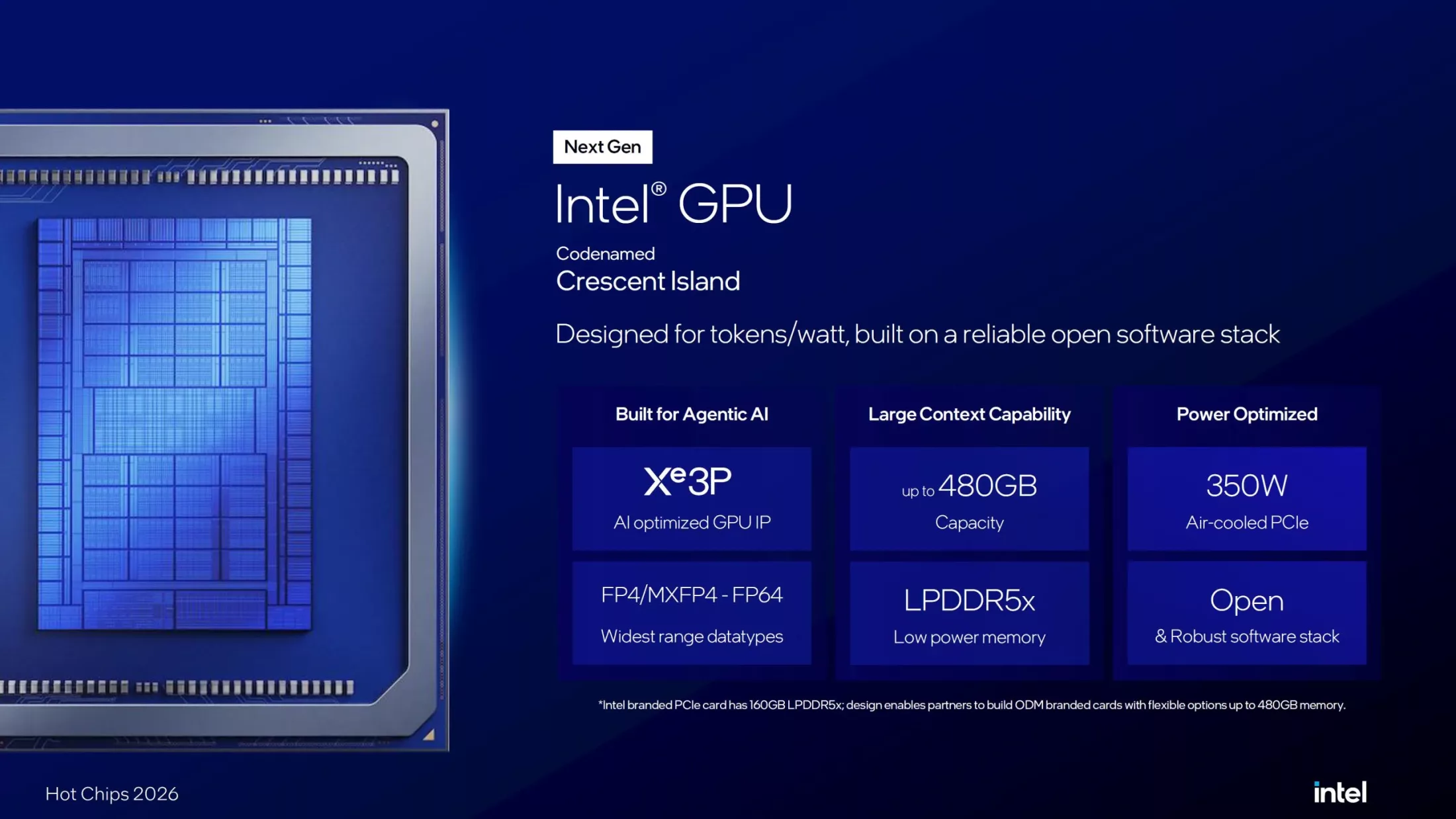
In terms of software support, Intel confirmed that Crescent Island will support major frameworks including vLLM, SGLang, and notably NVIDIA Dynamo. This compatibility suggests a focus on interoperability within the broader AI ecosystem. However, it is important to note that Crescent Island is not a preview of a future gaming card; it is a dedicated compute accelerator that Intel plans to extend into its "Next Gen PC" platform alongside other products for data centers, edge devices, and workstations.
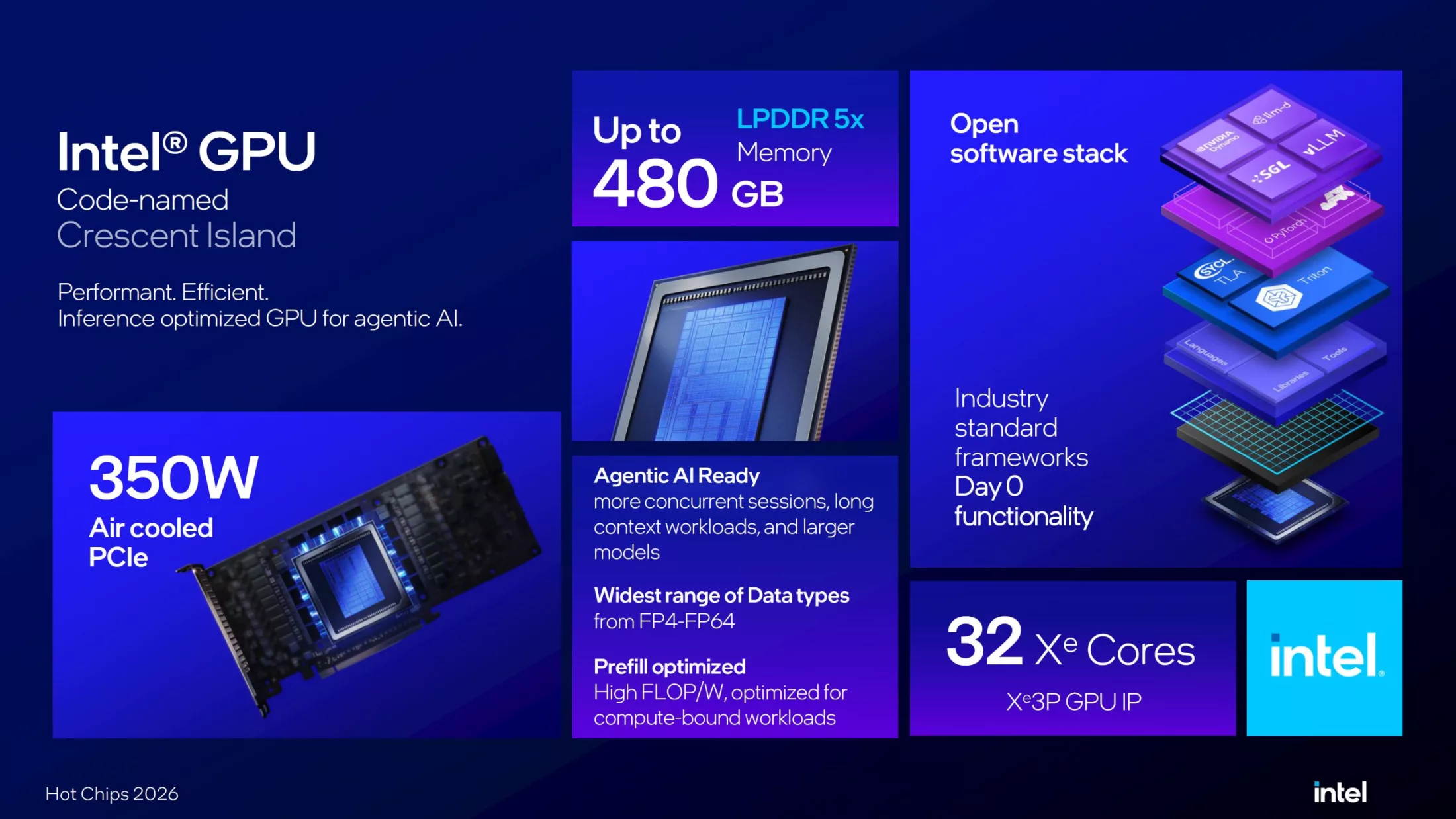

While the technical specifications are impressive, the practical implications for the consumer market remain somewhat theoretical at this stage. The removal of gaming-specific hardware like ray-tracing cores means this chip will not be suitable for traditional 3D rendering or high-fidelity gaming. Instead, it targets a niche of developers and enterprises requiring massive memory bandwidth and capacity for large language models. The ability to support up to 480GB of memory in a single PCIe card is a significant leap forward for local AI inference, potentially allowing users to run larger models without relying on cloud services.
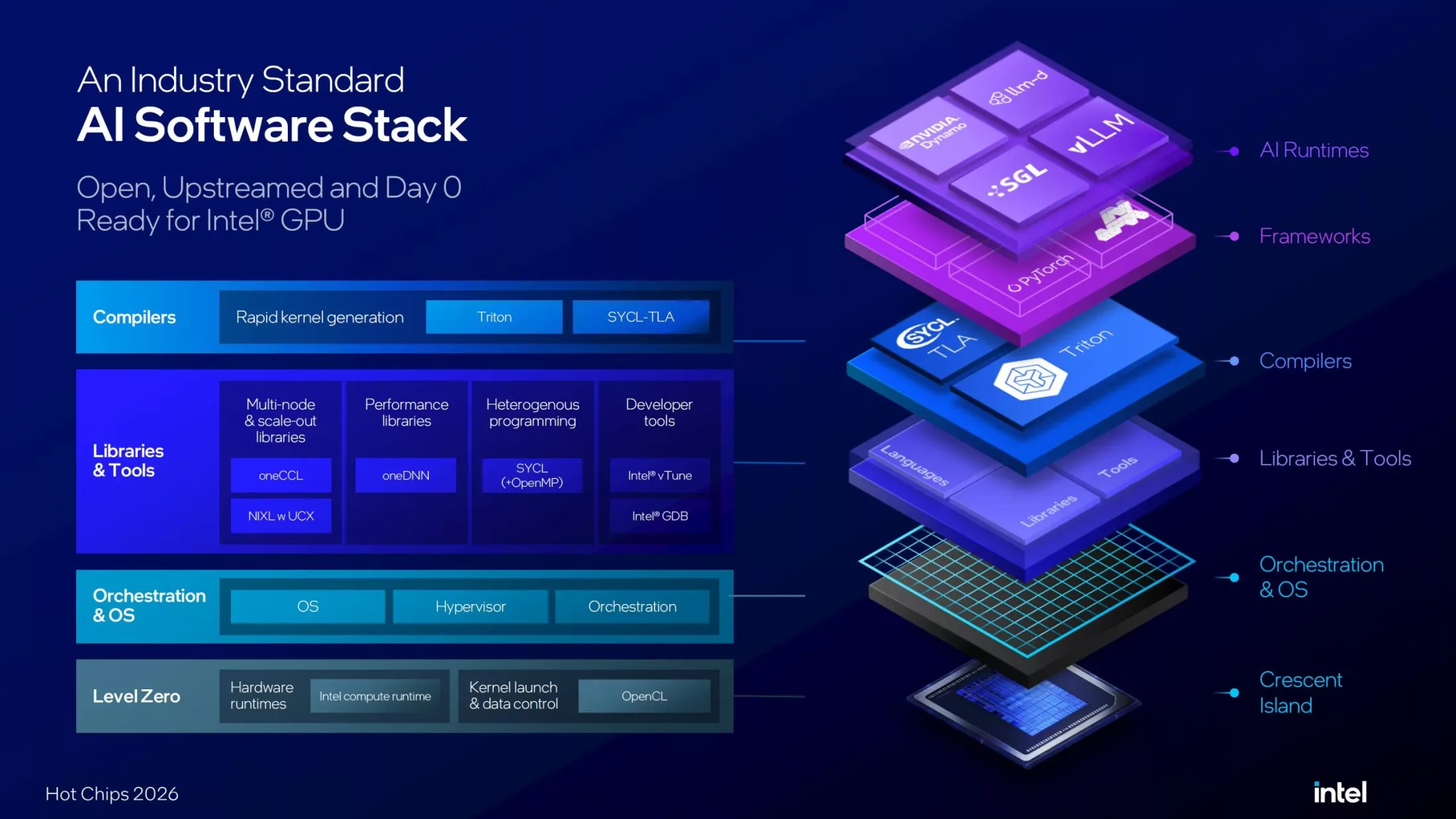

Intel's roadmap indicates that Xe3P will appear in PC, data center, edge, and workstation products. The inclusion of NVIDIA Dynamo support is particularly noteworthy, as it implies Intel is aiming to integrate its hardware more deeply into workflows currently dominated by NVIDIA software stacks. As with any new architecture, the final performance gains in real-world AI tasks will depend on how effectively developers can utilize the new FP4/FP8 precision and the deep XMX pipelines.
Гика
