
G.Skill Trident Z5 NeoX: AMD EXPO ULL Delivers Boost Without Manual Tweaks
Review of G.Skill Trident Z5 NeoX RGB memory with AMD EXPO Ultra Low Latency support shows 4% performance gain on Ryzen without manual BIOS tuning.
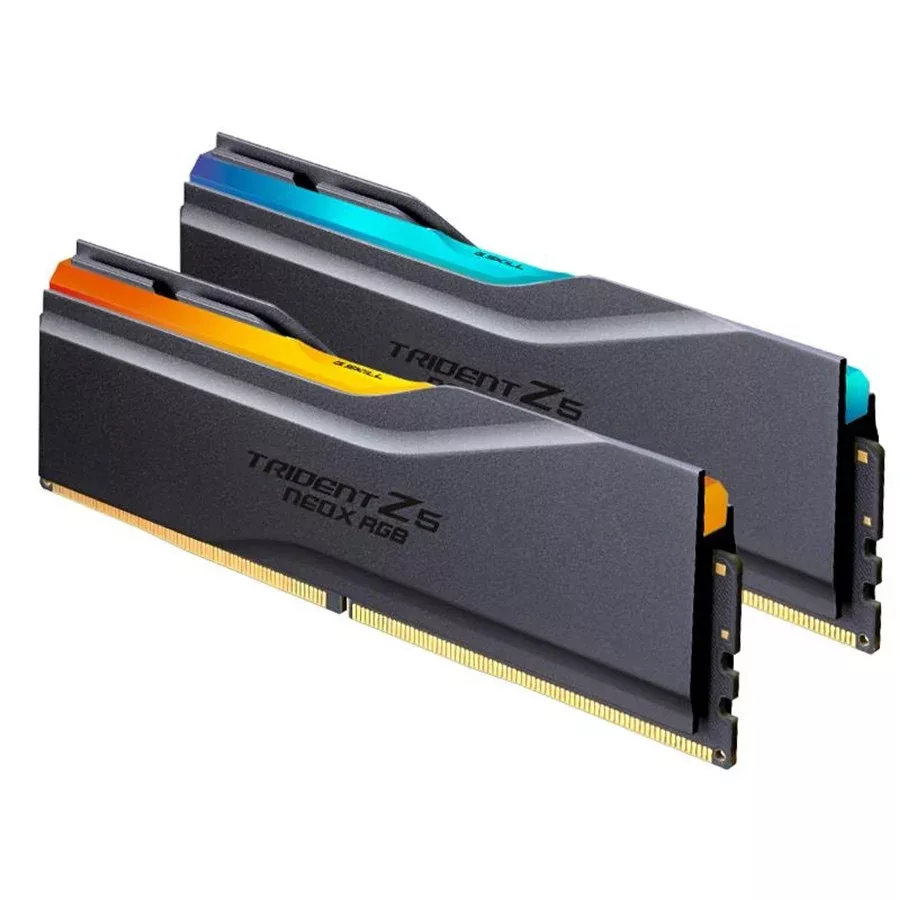
G.Skill has released new Trident Z5 NeoX RGB DDR5 kits supporting AMD EXPO Ultra Low Latency (EXPO ULL). The manufacturer claims that enabling the profile in BIOS delivers up to a 4% performance boost without manual configuration. Editors at KitGuru verified this claim on an AMD AM5 platform.
What is EXPO ULL?
The EXPO ULL (Ultra Low Latency) technology optimizes not just frequency but also secondary memory timings. The profile includes tuned sub-timings that deliver greater performance on supported hardware and BIOS configurations. It is the ideal solution for PC enthusiasts building high-performance AM5 platforms for gaming or content creation.
Testing Results
The test system featured AMD Ryzen 7 9700X and "9850X3D" CPUs, an MSI MAG X870 Tomahawk WiFi motherboard, and a PowerColor RX 9070 XT Red Devil graphics card. Testing was conducted on 32GB kits running at 6000 MT/s.
Synthetic Benchmarks
In the Geekbench 6.7 Multi Core test, the EXPO ULL profile showed a small advantage over regular EXPO settings on Ryzen 7 CPUs.
The AIDA64 Memory Copy test confirmed stable operation with the low-latency profile enabled.
Gaming Performance
In Assassin's Creed Mirage (1440p), the EXPO ULL profile delivered around a 3% performance boost on a standard Ryzen 7 CPU. On 3D CPUs like the Ryzen 9850X3D, the gain was minimal, confirming developer claims about reduced benefits for chips with 3D-V-Cache.
Conclusion and Pricing
The EXPO ULL technology works as advertised: it provides a useful boost over standard EXPO, with all configuration handled automatically via BIOS. However, the main drawback remains the high cost of DDR5 memory in current market conditions. Experts note that widespread adoption of this technology is likely only possible when building a new PC or performing an extensive upgrade, perhaps coinciding with the launch of Zen 6 architecture early in 2027.
Флешка
