
Graphics Card Market Q2 2026: NVIDIA Holds Around 90% Share
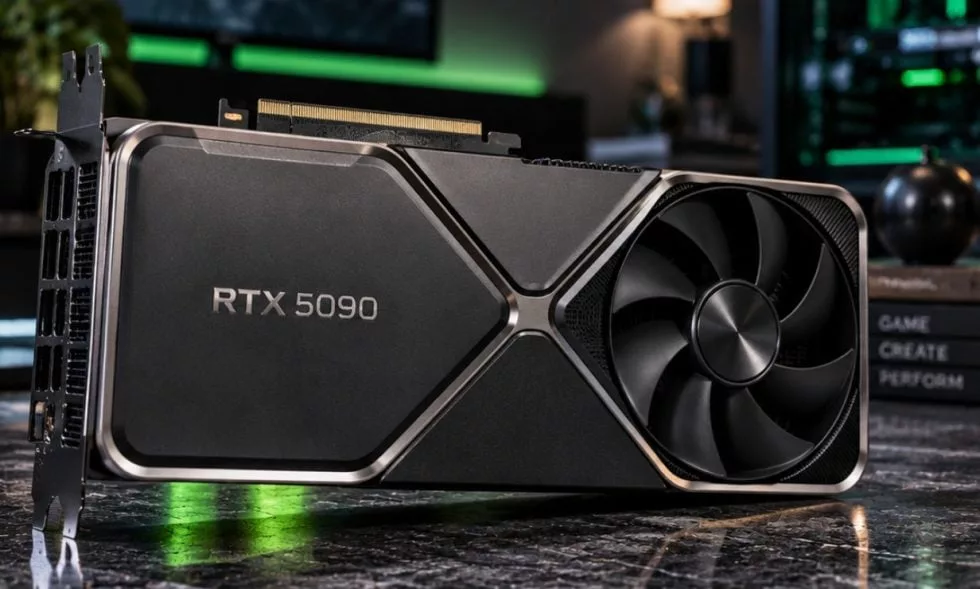
The graphics card market in Q2 2026 has shown an unexpected surge in shipments, reaching the highest volume since early 2022. According to the latest report from Jon Peddie Research, approximately 12.5 million discrete desktop Add-in Boards (AIBs) were shipped worldwide, marking a 10% increase compared to the previous quarter and a 6.6% rise year-over-year.
Market Dynamics and the AIB-Attach Rate
The current market trend presents a peculiar phenomenon: desktop GPU shipments are rising while the desktop CPU market is shrinking. Jon Peddie Research reports that roughly 14 million desktop processors were shipped in Q2 2026, a decrease of 10.5% from the previous quarter and 33% compared to the same period last year. This divergence has resulted in an AIB-attach rate of 89%, meaning that a significantly high proportion of shipped CPUs are being paired with discrete graphics cards, likely driven by the upgrade market rather than new system builds.
The shipment volume of 12.5 million units is a notable milestone. Based on NVIDIA's dominant market share, this translates to approximately 11.25 million units for the company, which Tom’s Hardware identifies as the highest desktop shipment volume for NVIDIA since the third quarter of 2017.
Market Share Distribution
Despite the overall market growth, the competitive landscape remains heavily skewed toward a single player. NVIDIA maintains a commanding presence with approximately 90% of the market share. The remaining portion is split between AMD, which holds about 8%, and Intel, which has reached roughly 2%.
- NVIDIA: ~90% market share
- AMD: ~8% market share (approx. 1 million units)
- Intel: ~2% market share (approx. 250,000 units)
While Intel saw a slight increase of 0.3 percentage points compared to the previous quarter, the overall market shift is minimal. NVIDIA, AMD, and Intel saw negligible changes in their total market share percentages, suggesting that while the total number of units sold is increasing, the competitive balance between manufacturers remains largely unchanged.
The High-End Paradox and Economic Factors
One of the most striking observations from the JPR report is the performance of the high-end segment. Typically, rising prices lead to declining sales volumes, but the current data suggests the opposite: sales in the premium segment have increased despite higher price points. Jon Peddie Research president Jon Peddie suggests that this might be driven by consumer anticipation of further price hikes. Factors such as memory shortages, supply chain volatility, and geopolitical uncertainties may be prompting buyers to purchase hardware now to avoid even higher costs in the future.
However, this trend remains an interpretation of market researchers rather than a confirmed consumer motivation. While the data confirms increased demand, it does not definitively prove that
Гика
