
GeForce RTX 5070 Ti Memory Gets Overclocked To 39 Gbps
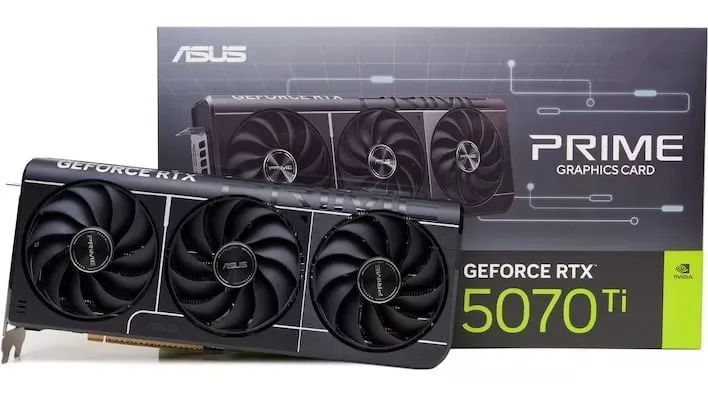
Enthusiast testing suggests that the GDDR7 memory used in GeForce RTX 50 series GPUs may possess significantly more overclocking headroom than NVIDIA's official specifications imply. A user successfully pushed Samsung GDDR7 memory on a Gigabyte GeForce RTX 5070 Ti Windforce from its stock 28 Gbps to a staggering 39 Gbps, representing a 39% increase.
Technical Nuances of GDDR7 Overclocking
The achievement was made possible using the mVolt+ Extreme overclocking tool, which reportedly bypasses the memory frequency limits typically imposed by standard GPU tuning software. Understanding the math behind this is key: the reported +5500 MHz offset refers to an intermediate data rate. Due to the 16-bit per clock design of GDDR7, this translates to an actual data rate of 39 Gbps.
This jump has massive implications for bandwidth. With its 256-bit memory bus, the stock GeForce RTX 5070 Ti delivers 896 GB/s of theoretical bandwidth. At 39 Gbps, this climbs to 1,248 GB/s. This bandwidth leap not only surpasses the GeForce RTX 5080 but also brings the card within striking distance of the GeForce RTX 5090 D V2 (the version tailored for the Chinese market).
Real-World Performance and Stability
While the bandwidth increase is massive, the actual gaming performance gains are much more modest. In Cyberpunk 2077 with path tracing enabled, the tester reported roughly 5–6 FPS of additional performance at the +5500 MHz offset. Similarly, 3DMark Speed Way tests showed only a 1.5% to 2% increase when moving from a +3000 MHz to a +5000 MHz offset. This is largely because GDDR7 is already so fast that most modern GPUs are rarely bandwidth-bound in standard scenarios.
Stability remains a significant hurdle. While the +5500 MHz offset held up for 30 minutes in Cyberpunk 2077, pushing the offset to +6000 MHz caused immediate driver restarts. Other users reported lower stability ceilings around +4500 or +5000 MHz, with some encountering visual artifacts beyond the +5500 mark, suggesting that results vary heavily between individual cards and specific memory batches.
Interestingly, high-end GeForce RTX 5090 cards do not seem to scale as well in these tests. Users in the Overclock.net "RTX 5090 Owners Club" reported driver resets at approximately +4000 MHz. It remains unclear why the RTX 5070 Ti shows such superior headroom, though it could be attributed to the lower strain on the power delivery subsystem compared to the flagship 5090.
Гика
