

Five predictions for the next decade

The video game industry is currently navigating a period of significant uncertainty, with many observers drawing parallels to the 1983 market crash. However, a closer look at the data suggests that the current situation is not a catastrophic collapse, but rather a complex transition driven by intersecting economic, technological, and geopolitical factors. While the mood is apprehensive, the fundamental health of the medium remains intact, and several key trends are likely to shape the next decade.
The prevailing sentiment in the industry is one of trepidation. From Amir Satvat's keynote at Gamescom Dev to the discussions among industry luminaries in Edge magazine, the focus is squarely on what comes next. The framing of a potential "Crash 2.0" has gained traction, invoking the spectre of the 1983 videogame crash. Yet, it is crucial to distinguish between the current turmoil and the historical event it is compared to. The industry has a habit of raising dramatic alarms at the first sign of market turbulence, but the underlying reality is different.
Contextualizing the 1983 Crash
To understand the current situation, it is helpful to briefly revisit the past. The 1983 crash was not merely a downturn or a market rebalancing; it was a near-total collapse of industry revenues. Figures show a drop from over $3 billion in 1983 to a mere $100 million by 1985. At that time, analysts genuinely questioned whether video games were a passing fad that would fade into obscurity. The market was immature, had narrow appeal, and was flooded with low-quality products, ultimately tipped over by a price war in the neighboring home computer market.

The current landscape is fundamentally different. While the industry is facing challenges, headline revenue numbers remain robust. Games are a firmly established medium with a massive global audience. The idea that video games might disappear is no more sensible than suggesting that people will soon lose interest in listening to music. The current difficulties are not a sign of the medium's demise, but rather the result of a complex set of factors coming to a head simultaneously.
The Intersecting Factors of 2026
The woes of 2026 are not attributable to a single cause. Instead, they stem from an intersecting set of factors. Some are obvious and frequently discussed. The most immediate is the wild rise in the price of hardware components crucial to every gaming device. This inflation shows no sign of easing in the near term, forcing console price hikes and making PC upgrades prohibitively expensive for many consumers.

Development costs have also skyrocketed. Budgets of over $100 million are now routine, with $300–400 million budgets becoming relatively common at the high end of AAA development. For instance, Marvel's Spider-Man 2 is alleged to have had a budget of around $300 million, according to documents leaked in 2023. This financial pressure is compounded by market concentration, where a smaller set of gigantic games monopolizes an increasing share of revenue and attention on every platform. The business models of these titles are often increasingly focused on extracting more revenue from existing players rather than acquiring new ones.
However, other factors are less visible but equally significant. The industry began to convulse with massive layoffs right around the time when interest rates, which had held close to zero since the 2008 financial crisis, shot upwards in 2022. Financing dried up as investors reconsidered the risk profile of video game projects. Companies reeled in expensive speculative ventures that had been launched when money was practically free. The boom around generative AI delivered the coup de grace, sucking up potential tech investment money that was instead thrown at the very data centers making gaming hardware unaffordable.
Geopolitical shifts also play a role. China has become a major force in game development and publishing, a fact often overlooked in the West. One could argue that Sony's failed attempt to pivot to live service games was less about wanting the next Fortnite and more about wanting the next Genshin Impact, developed by the Chinese studio miHoYo. Additionally, the industry suffers from a foundational malaise that has troubled the entire tech sector for the past decade: the failure of every attempt to introduce a new technology with the same transformational potential as smartphones in the late 2000s or the internet a decade before that. Concepts like VR, AR, or the metaverse have largely failed to make a dent in the mass market.
Prediction 1: Budget Growth Slowing
While budgets have not stopped growing, the rate of growth is slowing. Raph Koster, CEO of Playable Worlds and an MMORPG legend, cited figures in Edge suggesting that inflation-adjusted budgets for games have risen from around $1 million in the mid-nineties to $10 million by 2005, and eventually to $100 million by 2015. By that growth rate, one might expect to routinely see billion-dollar budgets at this point. However, the budget for GTA 6, which is speculated to be one of the most expensive games ever made, is considered an eye-popping outlier rather than the norm.

Budget inflation has slowed because it is running into mechanical limits. Few companies can finance budgets at this scale, and even among those that can, the risk profile is unappealing. The idea that a game could make hundreds of millions of dollars and still lose money is enough to start putting a ceiling in place over all but the biggest, surest bets. Nevertheless, market forces are pushing in the opposite direction. Few, if any, other games will ever justify a budget on the scale of GTA 6, but that game will establish player expectations. On some level, every other game, especially those in an adjacent genre or setting, will be compared to it for years to come. The arms races for graphical fidelity, environmental detail, or open world size will continue to drive inflation at the very top end.
The slow-down of the hardware upgrade cycle, forced by the component pricing crisis, will offer some breathing room. Many companies will put off tooling up for the next generation for several years past their original plans. Figuring out creative ways to do more with less, in terms of both finance and hardware, is already a hugely valuable skill in the industry. Teams that can deliver polished-looking titles at budgets in the tens rather than hundreds of millions will be greatly in demand. Short-cuts will prove disappointing in the end. Generative AI tools will likely become a fixture of very specific, ringfenced parts of development, notably on the programming side, but will do little to reduce team sizes or cut budgets, and in the short term might actually have the opposite effect.
Prediction 2: AI's Impact on UGC
It is almost a certainty that the AI investment bubble, which is vastly over-inflated and driven by increasingly wild financial projections and impossible science fiction promises, will either pop or deflate in the coming months or years. Once the turmoil passes, the foundational technology of generative AI will continue to exist, and much of it will be usable on consumer-grade hardware, which will likely become affordable again once the bubble bursts. Once the desperate hope of a trillion-dollar IPO no longer rests on convincing the world that AI can do anything and everything, the more realistic set of things it can actually do will come into focus.
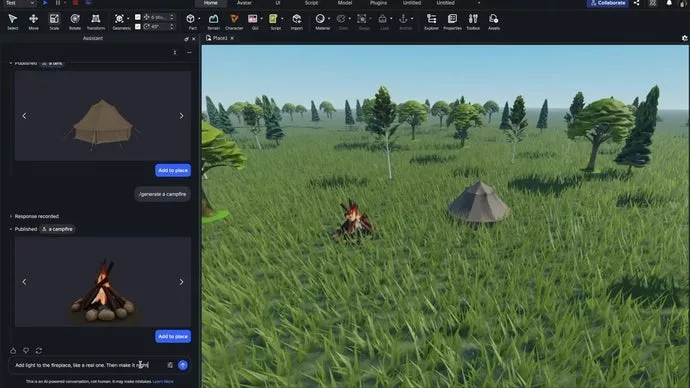
For the games business, AI's biggest impact will not be in development, where its uses will be quite limited, but in user-generated content (UGC). The great barrier to UGC at present is that more powerful tools that can create more varied and interesting content tend to become exponentially harder to use, with a learning curve that is off-putting for ordinary users. AI tools that can interpret a user's natural language prompts to coordinate those tools and build levels, minigames, and other content are a natural and reasonably low-cost application for LLMs. This will spur a major boom in UGC-driven titles as adoption becomes more widespread.
Existing titles like Roblox, which has already added some agentic AI creation tools, will have a platform advantage. However, we will see a glut of new UGC games emerging to try to carve out a slice of this market. The real difficulty will lie in solving discoverability and ecosystem issues. LLM-driven creation will democratize content creation on these platforms, but at the cost of making it increasingly difficult for any user's content to rise above the crowd. The real break-out titles of this kind will be those that take a different approach to UGC, stepping away from the "be your own game developer" concept and instead leaning into allowing players to create content aimed at customization and personalization of in-game appearances, experiences, and interactions.
Prediction 3: Shift in Industry Center of Gravity
The past few years of mass layoffs in western countries, especially North America, and extensive hiring in China have already shifted the industry's center of gravity towards Asia to some degree. However, the broader effects have been limited by the relatively closed nature of China's own market. The global importance of Chinese games and investments has grown, but the importance of the Chinese market itself, despite its scale, remains muted.
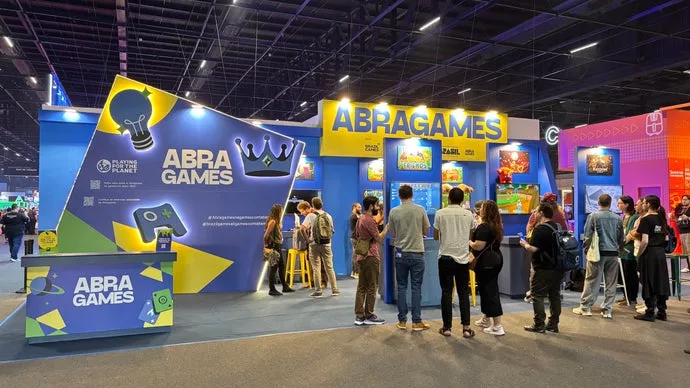
Short of a major policy reform in China, that won't change much in the coming years. Instead, companies from all around the world, including China, will find themselves in heated competition for stakes in major emerging markets. As audience sizes in mature markets stagnate, developing markets in Southeast Asia, Latin America, and elsewhere, which are tipping over into having a sizeable middle class, will be the industry's best source of growth. Local tastes and engagement patterns will require significant adaptation, and western companies won't have a special head start. For young people in those regions, games from Chinese companies like miHoYo and NetEase are as relevant and hold as much cachet as western or Japanese IPs.
However, one should not overestimate the market's geographical shift. Whatever geopolitical and economic strife we may see in the coming years, the sheer market sizes of North America and Europe will remain dominant for the foreseeable future. The cachet of the United States as the world's cultural center also won't be toppled easily. Companies will want to retain a foothold in the US, even if the cost of developing games there means the actual work is increasingly being done overseas. Consequently, we will end up in a situation where many of the industry's most high-profile creators are US-based, but few full-scale AAA development studios exist there any more.
Prediction 4: Increased Concentration
In his Gamescom Dev keynote, Amir Satvat noted that 50–60% of the industry's revenue is going to just the top 20 games. It is hard to think of a scenario where this becomes more fragmented and equitable. A few years ago, former Xbox head Phil Spencer lamented that losing the PS4/Xbox One generation was a near-unrecoverable blow, because that was the generation where people built up large digital game libraries. This created a massively powerful platform lock-in effect when they were choosing their next console. That is increasingly the case not just for platforms, but for individual games.

Gacha games are a straightforward example of this. How much of the repeat playing of gacha-style games is down to the fact that players have already invested a lot of time and money on their in-game accounts? Moving from a gacha game, where you've expended considerable resources on getting high-level characters and desirable customizations, to one where you're starting from zero creates an incredible level of friction that ordinary games have never had to overcome. Now consider the boom in UGC expected to arise from LLMs being integrated into creative tools, and ask yourself how hard it would be for a user to step away from a game which is filled not only with things that they bought, but things that they made, or at least feel like they made. These kinds of mechanisms will concentrate attention and revenue in a shrinking pool of games that have locked players deep in their ecosystems.
Prediction 5: Indie Breakouts
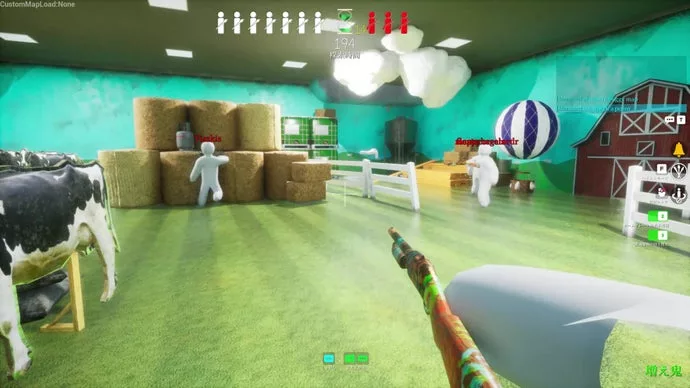
At the other end of the scale and budgetary spectrum, the potential for independently developed games to skyrocket to massive success will also grow. Indie-style titles, whose definition has become a bit blurred in recent years, already occupy most of the various tiers that used to exist under AAA. Big, breakout hits that recoup massive multiples of their budgets will be very prominent on the landscape. Meccha Chameleon was a huge breakout hit this year, selling well over 15 million units.
This will create some false hopes. Discoverability will be as tough as ever, and the median indie success will still look more like a well-executed genre title that pulls in predictable revenues from its niche market, rather than a runaway hit. Any kind of hopes, however, will help to attract investment to the sector, and big commercial successes will spur the logic of grassroots venture capital. In other words, investors will invest relatively small amounts in lots of things on the hope that one of them will be the unicorn hit, earning mountains of money that more than make up for their losses elsewhere.
Those indie hits will also start being the prevailing winds of the industry's creative direction. We already see this to some extent, but major indie breakthroughs will increasingly set the patterns that will be followed by massive AAA titles a few years down the line. Hollywood has followed this playbook for years, with many movies taking cues from indie successes. Games will follow suit, treating the indie scene as a creative incubator where risk is not only possible, but encouraged.
These five predictions offer a glimpse into the next decade. The industry is not facing a crash, but a transition. The paths ahead are visible, though they are complex and intertwined. As the dust settles, the winners will be those who can adapt to the new economic realities, leverage AI for user empowerment, and find new audiences in emerging markets.
Цифра
