Fenris Creations adds CORTAO rendering to open-source Carbon engine
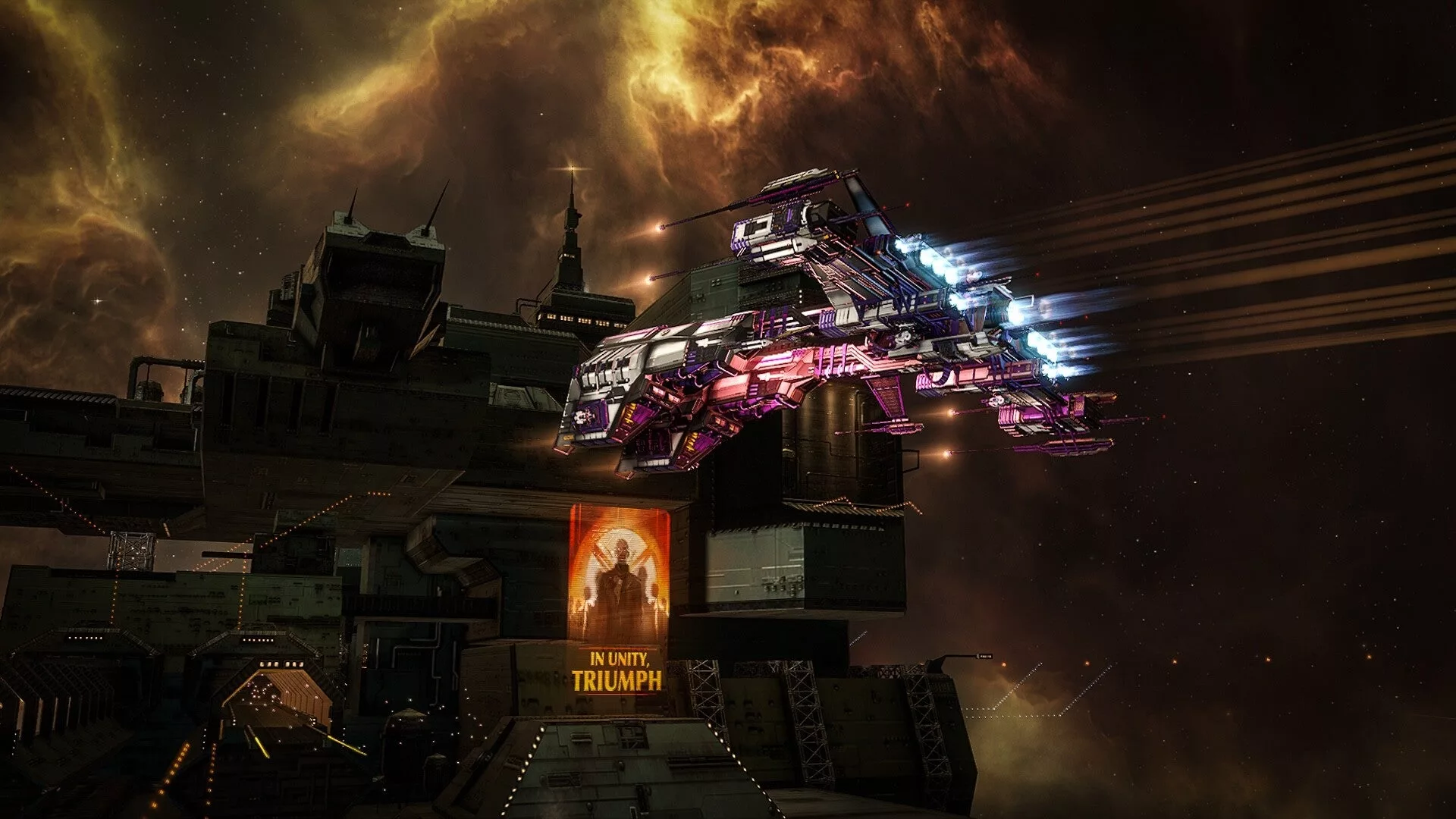
Fenris Creations, the studio behind Eve Online, is expanding the capabilities of its open-source Carbon engine with a significant technological addition: CORTAO. This new rendering technique aims to provide more accurate shading and greater visual depth while maintaining low rendering costs, marking a major step forward for the engine's open-source evolution.
CORTAO, which stands for Circular Occluder Ray-Traced Ambient Occlusion, was born from a personal project by Fenris graphics programmer and rendering engineer Daniel Isheden. Driven by a desire to solve limitations in current state-of-the-art techniques, Isheden developed the method to address issues regarding environmental shading, particularly in complex scenes involving vegetation—an element not heavily featured in Eve Online but vital for broader engine utility.
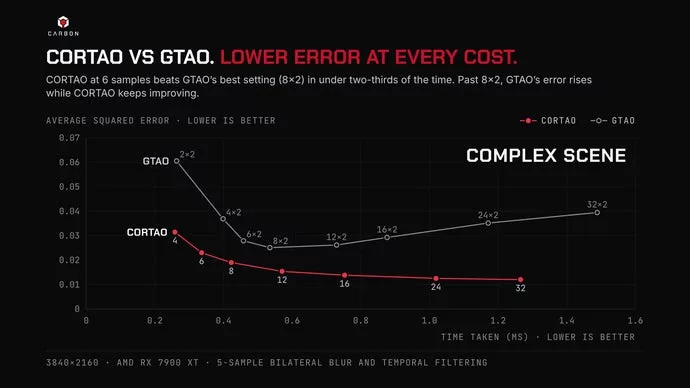
The motivation behind the project was a technical frustration with Ground Truth Ambient Occlusion (GTAO). Isheden noted that while GTAO is the current industry standard, it often fails to converge to the actual 'ground truth' in certain scenarios. He sought to find a way to achieve a mathematically correct result by utilizing available scene information more effectively.
A different approach to screen-space rendering
Most modern ambient occlusion techniques are Screen Space Ambient Occlusion (SSAO) methods, meaning they are limited to the information currently visible on the player's screen. This makes them rough approximations. CORTAO, however, utilizes screen-space ray tracing. By shooting up to 32 rays per pixel and calculating light based on whether those rays are occluded, the technique can approximate the correct lighting result much more closely than traditional methods, even without full hardware ray tracing.
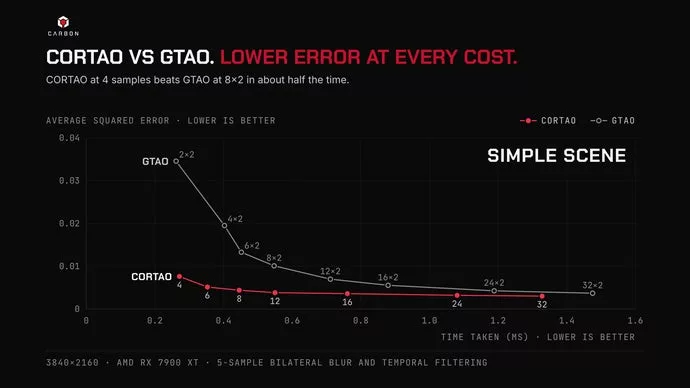
The primary technical breakthrough lies in how it handles surfaces. Traditional techniques often focus on 'horizontal angles,' which leads to inaccuracies on sloped or non-flat surfaces. CORTAO bypasses this limitation, allowing for much better handling of depth discontinuities. According to Isheden, the technique can achieve the same results as existing methods with roughly a quarter of the square error, or match current quality levels while offering significantly better performance.
Two versions for the open-source community
Fenris Creations is releasing CORTAO in two distinct forms. The first is Isheden's original reference implementation, which will be released under the MIT license. The second is a specialized version integrated directly into the Carbon engine. This version is tailored to meet the specific requirements of Eve Online, which involves massive depth ranges—from tiny ships directly in front of the player to mega-structures located hundreds of kilometers away.
Ben Hunter, Senior Development Director at Fenris, emphasized that the company encourages such internal innovations. He noted that while Isheden's project started as a side endeavor, it has been 'battle-tested' within a real production environment. This process ensures that the technology is robust enough for professional use before being shared with the wider community.
The evolution of Carbon's open-source journey
Since making the Carbon engine open-source earlier this year, Fenris has seen significant community engagement. Hunter reported over 70 forks of the repositories, with high interest specifically in the rendering components. The community has also contributed 60–65 submissions, including bug fixes, security updates, and feature improvements. There is also notable interest from developers working toward adding Linux support.
Looking ahead, the release of Carbon's development tools has been moved up from late 2026 to the first quarter of next year. This acceleration is due to a new plugin architecture designed to allow developers—including artists and designers using LLMs—to easily extend and modify the tools, a trend that has already seen internal interest from various game teams within the studio.