

EverQuest Legends: Rebuilding a Classic MMORPG for Solo Play
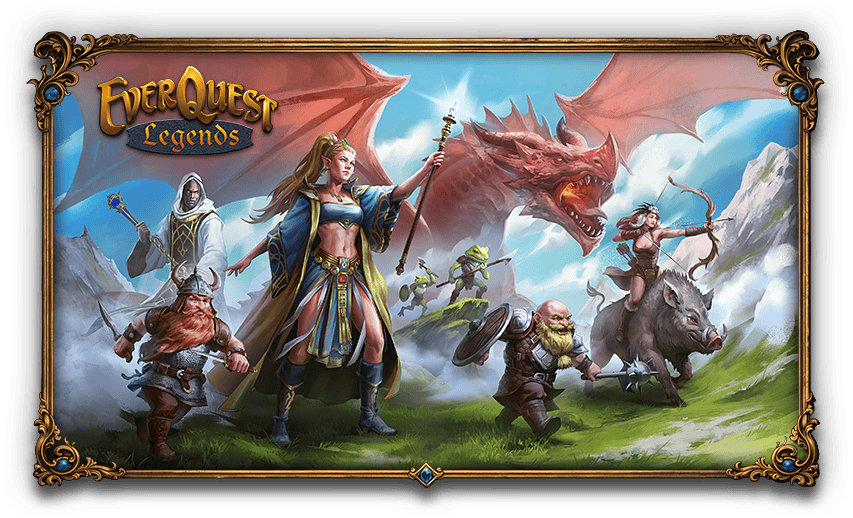
EverQuest Legends launched for PC on July 28, 2026. The Daybreak Games and Game Jawn project does not replace the live EverQuest service: it is a separate reimagining of the classic era built for complete solo progression, shorter co-op sessions, and smaller raids.
A Different Route Through Norrath, Not a Museum Copy
EverQuest Legends uses familiar zones, music, models, spells, and loot while removing early EverQuest's reliance on a large permanent party. The developers say the entire game can be completed solo. Cooperative play remains available, with groups of up to four players and raids of up to eight.
That scale changes the rhythm. Players do not need to wait for a full roster before entering every dangerous area, and friends can join a journey already in progress. Legends is therefore closer to a self-contained RPG in a shared world than a strict recreation of the 1999 MMORPG's social economy.
The Launch Version of Norrath
The launch world covers Antonica, Faydwer, and Odus, representing the geography before The Ruins of Kunark. Its character list is broader than the historical launch roster: 15 playable races are advertised, including Iksar, Froglok, and Kerran. The game deliberately combines a classic map with later character options.
Zones keep recognizable layouts and presentation, while the interface, ability handling, and everyday quality-of-life systems are modernized. Preserved content and a new wrapper should not be confused: Legends is not marketed as exact emulation of the original client or balance.
Three Active Classes Instead of One
A character can maintain up to three active classes and move between their tools. The official example combines Rogue, Paladin, and Wizard. Across 15 races, the system offers 560 valid class combinations, although each choice still follows the game's compatibility rules.
The design moves some party flexibility into a single hero. A player may prepare damage, survival, and magical support options, but three classes do not imply unrestricted simultaneous use of every skill. A practical build still depends on selected abilities, equipment, and the encounter.
Equipment as a Long-Term Construction Kit
Items can be upgraded to +10. Beyond basic statistics, players can swap and combine focus, click, and proc effects. A valuable item is therefore defined by more than rarity: its effects need to support the selected classes and current objective.
That matters in a solo-focused structure. Where a classic party covered weaknesses by distributing roles, Legends allows a build to compensate for some gaps. Specialization still exists, and a configuration suited to exploration may be less effective against a particular boss.
What Remains of the MMO
A shared world, parties, and raids retain EverQuest's social foundation while lowering headcount requirements. Four players are easier to assemble for an evening session, and an eight-player raid can support multiple roles without demanding the organizational overhead of older large rosters.
Smaller groups also make mistakes more visible because one missing participant cannot disappear inside a crowd. Legends is not automatically an easy game. It improves organizational access, while the difficulty of an encounter still comes from mechanics, character preparation, and coordination.
What the Launch Does Not Promise
The game is distributed as a separate PC download through its official site. Console and mobile editions have not been announced. Kunark is described as the intended first expansion direction, but that does not place its zones in the launch build or guarantee a scene-for-scene copy of the original expansion.
EverQuest Legends is defined by the tension between memory and accessibility. It retains classic places, imagery, and item logic while designing a route one person can finish without a large guild's calendar. Sources: EverQuest Legends official site; Daybreak Games; Game Jawn.
Аналитика MBG
