
CXMT LPDDR6-Produktion for Xiaomi 18 Fold
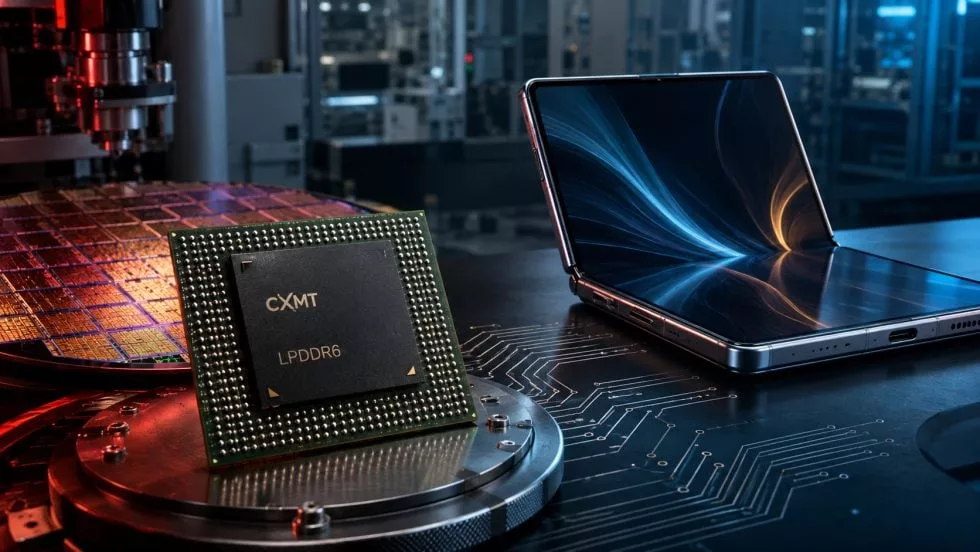
CXMT has begun mass production of its first LPDDR6 memory, with the Xiaomi 18 Fold confirmed as the initial device to feature the new standard. The foldable smartphone is scheduled for release in September 2026, making CXMT the first manufacturer to publicly link LPDDR6 mass production to a specific commercial end-product.
The Chinese memory maker ChangXin Memory Technologies, known as CXMT, has started mass production of its first-generation LPDDR6 chips. According to reports, the Xiaomi 18 Fold will be the first confirmed device to use this new mobile memory. The launch of the foldable smartphone is planned for September 2026. This places CXMT in a unique position among memory manufacturers: while Samsung, SK Hynix, and Micron are also developing LPDDR6 products, none have yet confirmed a combination of announced mass production and a specifically named retail device.
Technical specifications and performance
LPDDR6 represents a fundamental redesign compared to LPDDR5X. The standard utilizes four 24-bit wide subchannels and supports data rates ranging from 10,667 to 14,400 MT/s. This architecture increases parallelism and available memory bandwidth, while new power-saving mechanisms aim to reduce energy consumption in mobile devices. CXMT's first-generation LPDDR6 is reported to reach speeds of up to 12,800 MT/s.
In the Xiaomi 18 Fold, the memory is reportedly initially operating at 10,667 MT/s. Paired with Xiaomi's in-house Xring-O3 processor, manufactured on a 3 nm process, the system is expected to achieve a memory bandwidth of approximately 113.8 GB/s. This additional bandwidth is particularly beneficial for the integrated graphics unit and local AI applications. Large language and image models require continuous loading of extensive weight data from memory; a higher transfer rate can therefore reduce processor wait times and accelerate local AI processing.
Industry context and limitations
This announcement marks a significant step for the Chinese semiconductor industry. In May 2025, CXMT began mass production of its own LPDDR5X chips. Just about 15 months later, the company is moving to the next memory generation. However, the start of production does not automatically mean that CXMT has technologically surpassed its international competitors.
The company has not yet disclosed specific production volumes or yield rates for functional chips. Additionally, the maximum speed of 14,400 MT/s is not reached with the first generation. The Xiaomi 18 Fold is a relatively exclusive device with limited production numbers, serving initially as a technical and commercial entry point for CXMT. The critical factor will be whether the manufacturer can subsequently supply LPDDR6 in larger quantities and with consistent quality to other smartphone, PC, and vehicle manufacturers. While CXMT has not definitively outpaced every competitor in internal production, it is the first manufacturer to publicly confirm LPDDR6 mass production alongside a specific commercial end-product.
Гика
