
Corsair Cove Review: A Pirate City Built on Logistics
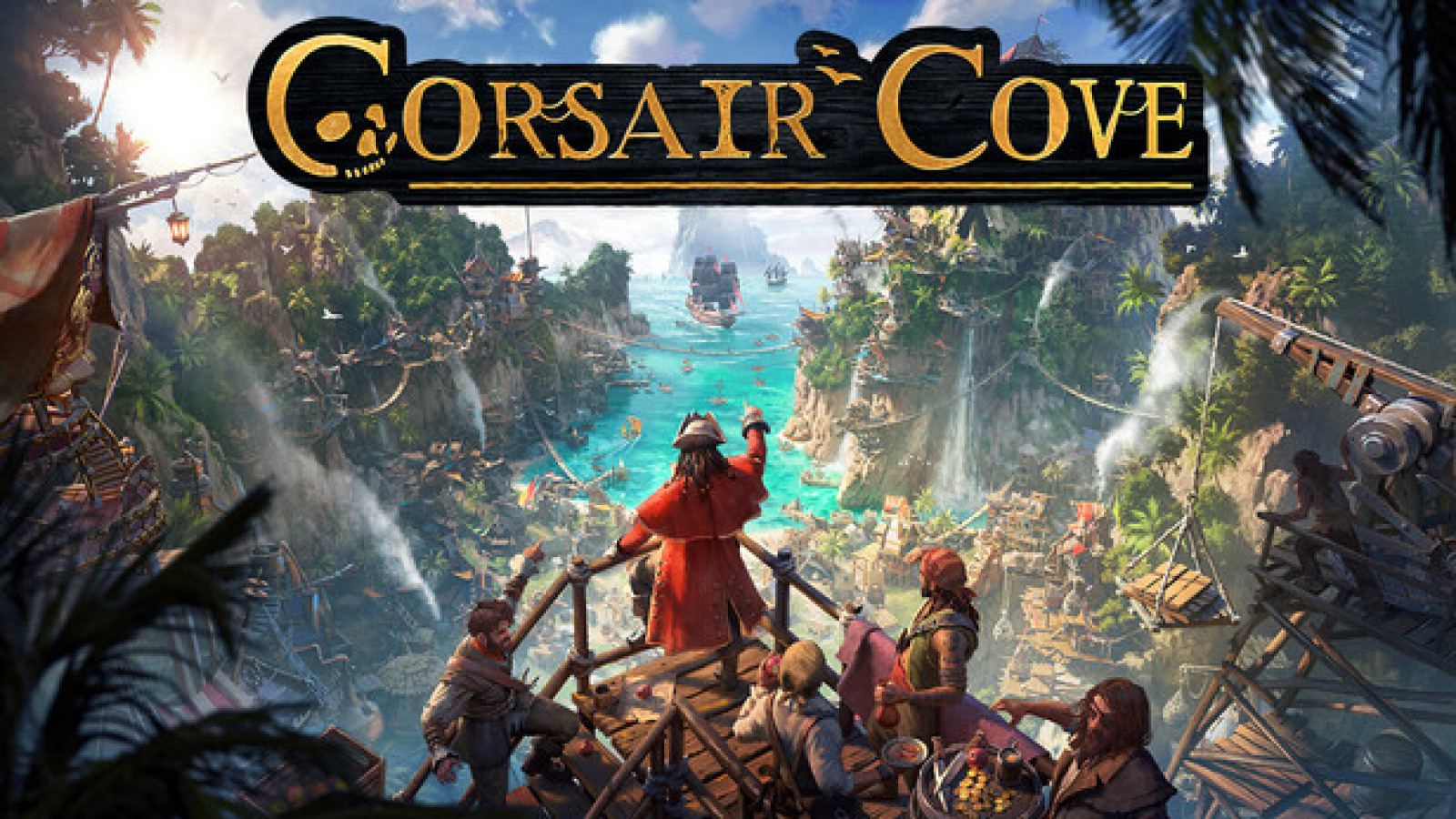
Corsair Cove launched for PC on July 31, 2026. Limbic Entertainment uses piracy as more than decoration for a conventional city builder. Limited island space forces construction upward, bridges and ziplines connect separate levels, and maritime adventures feed resources and upgrades back into the settlement economy.
A Vertical City as a Logistics Puzzle
The settlement clings to the cliffs of Skull Rock, so a conventional street grid quickly becomes inadequate. Production buildings occupy different elevations and the route taken by every good becomes a design problem. Bridges, ropes, ziplines, and elevators matter because they determine supply speed.
The game offers several ways to repair a bottleneck. A faster descent can be added, a second source can feed the same destination, or a building can collect directly from a producer instead of a warehouse. Optimization therefore has several viable answers rather than one prescribed layout.
Production Chains and Pirate Needs
The basic cycle is familiar: harvest raw material, refine it into a product, meet residents' demand, and reinvest wealth in expansion. Pirate identity appears through the goods and activities themselves, from ale and flintlock pistols to entertainment that keeps a rowdy crew content.
The central constraint is Cohesion, a measure of colony stability. It acts like settlement health but is also spent by random events and decisions to accept new pirates. Early progress can consequently pause because population and Cohesion do not grow through a simple passive system.
Why the City Sends Ships to Sea
A ship receives a captain and crew whose statistics shape its performance. Abilities appear as cards used during compact maritime adventures. Treasure searches, ship hunting, smuggling runs, and other tasks ask the player to evaluate risk before departure.
This layer is not detached from the city. Loot unlocks upgrades and supports production, while a stronger colony outfits more capable expeditions. Deeds bind the layers even more tightly: some demand efficient island routes, while others send the crew onto the ocean.
Pacing, Mistakes, and Recovery
Corsair Cove becomes demanding when every principle is developed at once. Additional pirate types, ships, and buildings multiply simultaneous needs, and a supply failure can eventually trigger mutiny. The systems reward deliberate specialization before broad expansion.
Most crises still leave room to recover. Shortages provide time to react, and the logistics tools supply alternatives. Early scarcity of Cohesion and people is the exception, because the player may occasionally have to accelerate time and wait for the right opportunity.
Who Corsair Cove Is For
This is a vibrant and approachable city builder that preserves the appeal of complicated chains. It requires more attention than a cozy sandbox but less household micromanagement than the genre's heaviest simulations. The main pleasure comes from the quality of connections between city levels rather than the city's footprint.
Its weakness is early reliance on Cohesion and irregular opportunities to expand the population. Its strength is the range of understandable ways to repair logistics without demolishing half the island. The release version feels coherent because construction, seafaring, and progression continuously support one another. Sources: Limbic Entertainment; Hooded Horse; Steam; PC Gamer.
Редакция MBG
