

CESA's TGCA at gamescom 2026: The Art of Indie Support
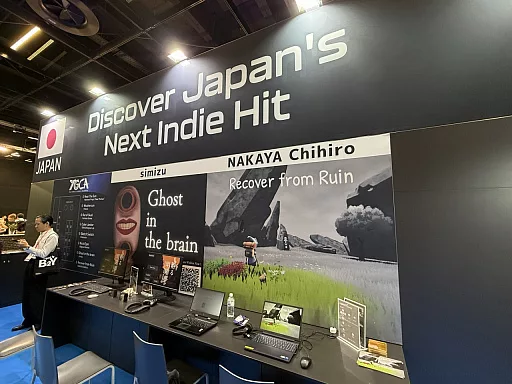
At gamescom 2026, the Top Game Creators Academy (TGCA) program brought eight Japanese indie titles to the show floor. But the event was less about pitching games to publishers and more about a different kind of support: mentors who advise, but ultimately wait for the creators to find their own direction.
In the indie area of gamescom 2026, a steady stream of titles from around the world filled the booths. Among them stood a coordinated group of eight Japanese projects, all part of the Top Game Creators Academy (TGCA), a talent development program run by the Computer Entertainment Supplier's Association (CESA). Each team traveled to Cologne to present their work directly to visitors, marking the program's first appearance at the event.
Eight titles, one program
TGCA is a two-year initiative launched in April 2025, developed in partnership with Japan's Agency for Cultural Affairs and the Japan Arts Council. Its first cohort selected ten individual creators and teams, eight of whom exhibited at gamescom 2026. The lineup spanned a wide range of genres and mechanics:
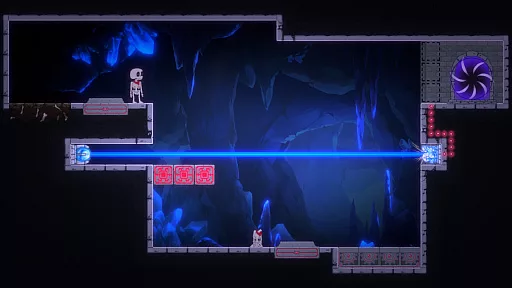
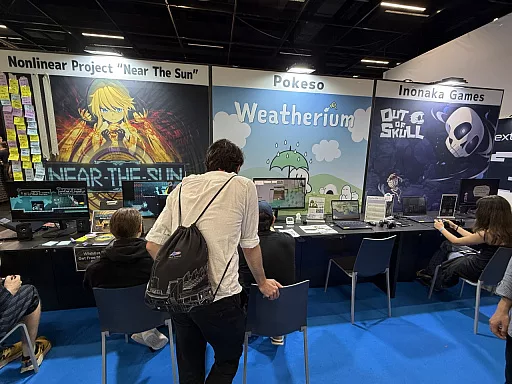
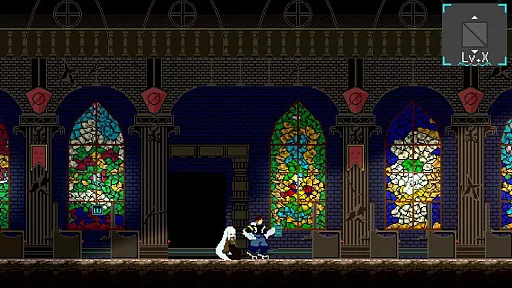
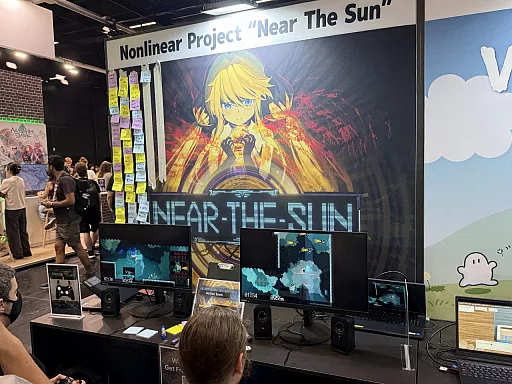
- Near The Sun by Nonlinear Project: a 2D stealth action-metroidvania set in an underground world ruled by robots.
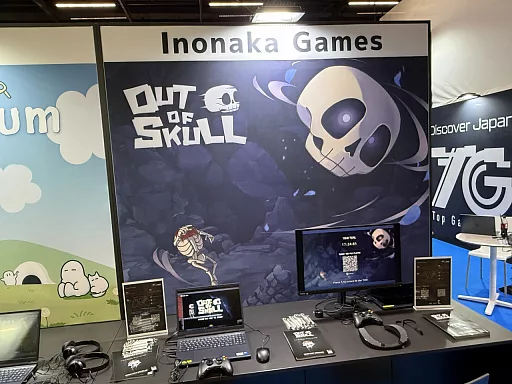
- Out of Skull by Inonaka Games: a puzzle action game where players throw their own skull to possess other bodies and solve mysteries.
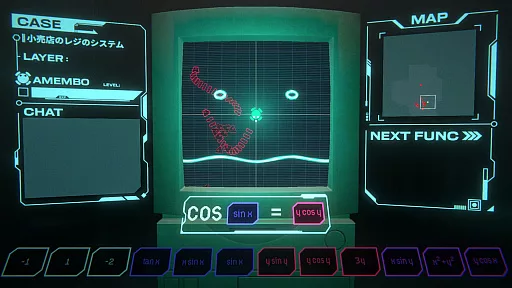
- Cyber Janitor by TAKKAN Digital Lab: a simulation game where mathematical functions serve as weapons against digital pathogens.
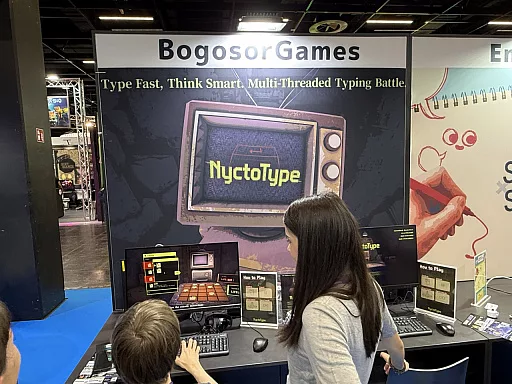
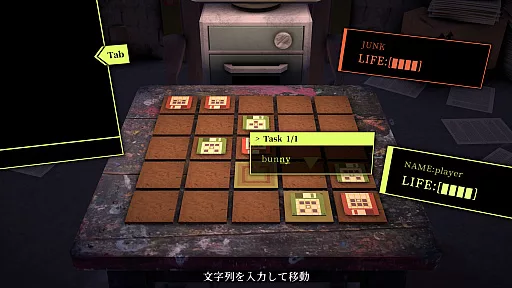
- NyctoType by BogosorGames: a competitive typing strategy game combining typing speed with board-game-like tactics.
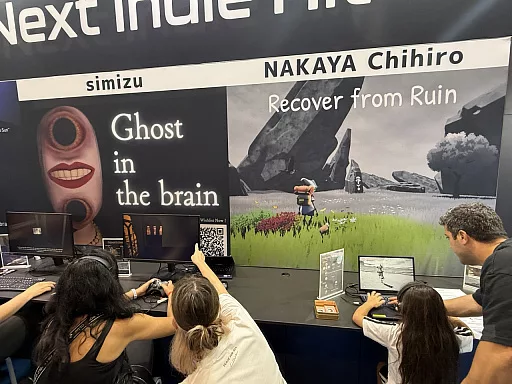
- Ghost in the brain by simizu: a horror adventure about escaping monstrous entities while recovering lost memories.
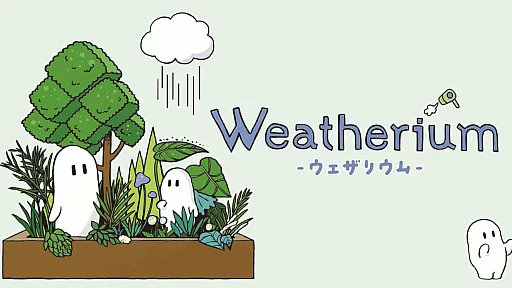
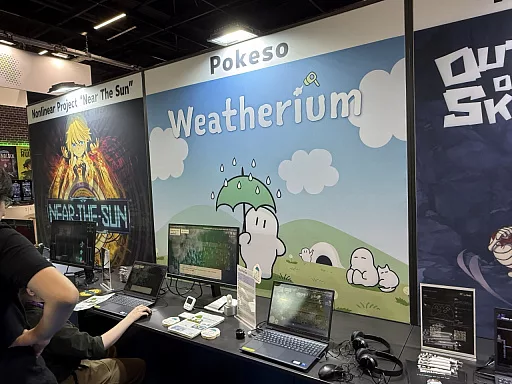
- Weatherium by Pokeso: a simulation game focused on controlling weather to build a livable world.
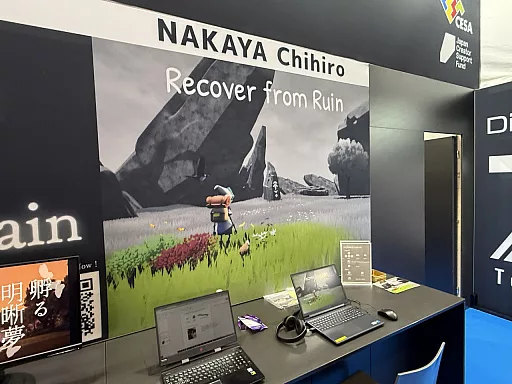
- Recover from Ruin by NAKAYA Chihiro: an action adventure where players operate robots to purify a polluted planet.
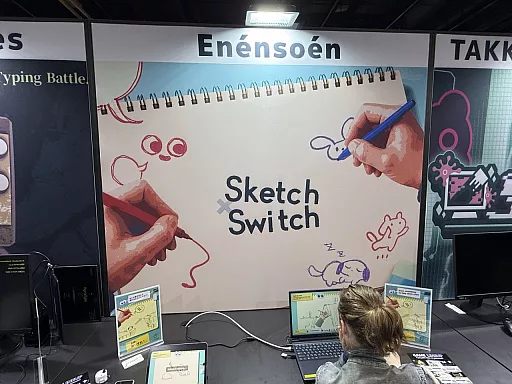
- Sketch Switch by Enén Soén: a creation game where drawn elements are animated by AI to build collaborative play experiences.
The program's support structure rests on two main pillars. First, active creators serve as dedicated mentors, meeting with groups of two or three participants roughly once a month via online sessions. Second, the program facilitates exhibition at domestic and international events, creating opportunities for direct player feedback and industry networking. The journey began at Tokyo Game Show 2025, continued at Taipei Game Show in January 2026, and reached gamescom 2026, with another Tokyo Game Show appearance planned for September. The program itself runs through March 2027.
The art of waiting
During interviews with CESA's Shunsaku Harada, who oversees TGCA operations, and participating creators, a recurring theme emerged: the mentors' role is not to provide answers, but to help creators find them. Harada explained that mentors are encouraged to suggest alternative approaches—"perhaps you could try this method"—rather than making decisions on behalf of the developers. The final call always rests with the creator.
Harada also referenced a session at CEDEC 2026 where a dedicated mentor described the concept of "waiting." Rather than handing over solutions immediately, mentors wait for creators to establish their own axis and derive answers from it. This approach, while simple in theory, proved challenging in practice. The boundary between offering advice and overstepping is not always clear, and Harada acknowledged that the team still grapples with this balance in real time.
At gamescom 2026, the way creators used the event varied significantly. Some actively pitched their games to companies to build business connections. Others focused on gathering immediate player reactions, planning to return to development and implement changes right away. For titles nearing release, the priority might be building awareness and driving Steam wishlist adds rather than collecting granular feedback. Even within the same booth space, the goals and methods differed from team to team.
Changing how creators think
TGCA does not set a uniform goal of "completing a game within two years." The program prioritizes the acquisition of skills, ideas, and experience over a specific deliverable. While this freedom is a strength, it also creates ambiguity. Without a clear endpoint like release or completion, participants and mentors sometimes struggle to define what constitutes progress or success.
Despite this, the impact on creators has been profound. One participating team, which started as a university club project driven by the desire to make something they loved, described a significant shift in mindset. Before joining TGCA, they questioned how useful the program would be. After roughly a year and a half of mentorship, they noted that their game had changed beyond recognition. More importantly, their approach to game development itself had evolved.
Instead of learning specific technical or artistic techniques, they gained perspectives on how to build a game, how to evaluate it as a product, and what is needed to reach an audience. This shift influenced even small details, such as tutorial design. Rather than simply conveying controls, they now focus on ensuring that first-time players understand and enjoy the experience. This mindset, they noted, also connects to the commercial aspect of delivering a product to players.
As support programs for indie games multiply—offered by companies, government bodies, and industry groups—their content varies widely. Some provide funding, others offer development advice, and some focus on exhibition opportunities. TGCA's approach, as described by Harada and the creators, is defined by its refusal to impose a single "correct" path. Recognizing that creators come from diverse backgrounds and have different goals, the program attempts to tailor support to individual needs, a process that is inherently complex and ongoing. For developers evaluating such programs, understanding not just the resources offered, but the philosophy behind the support, may be key to finding the right fit.
Дурик
