
AMD Reveals RDNA5 Architecture and Plans Flagship GPU Return
AMD employees submitted patches for the new DCN6 display engine, confirming RDNA5 development. Launch expected in early 2028.
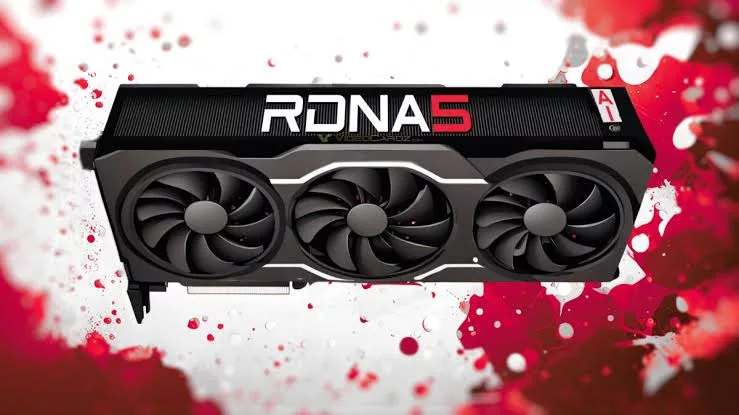
While AMD continues to strengthen its CPU lineup with Zen 6, the gaming GPU segment has disappointed fans: flagship models based on RDNA4 are effectively discontinued, and the transition to the next generation is delayed. However, code found in Linux drivers reveals evidence of a new architecture — RDNA5.
RDNA5 Confirmed via Driver Code
AMD employees submitted 41 patches to the amd-gfx mailing list for the Linux kernel. These updates introduce the new display engine DCN6 (Display Core Next 6), replacing the current DCN4.2. The code contains approximately 129,000 lines and affects clock management but does not include changes to 3D rendering.
Mapping this code against version GC 13.0.1 indicates that RDNA5 is the successor to GFX13 (the RDNA4 architecture). This confirms AMD’s development of a new generation GPU architecture named RDNA5.
Launch Timeline and Positioning
Earlier rumors suggested a mid-2027 release, but recent reports push the launch to early 2028. This implies a gap of at least two and a half, possibly three years, between current RX 9000 cards and the new architecture.
AMD plans to return to the flagship market, supporting platforms like Xbox and PS6. The RDNA5 lineup will include at least three variants:
Alpha Trion — for gaming PCs;
Orion Pax — for PlayStation 6;
Ultra Magnus — for Xbox.
Technical Features and Performance
Key upgrades focus on AI and Ray Tracing. In collaboration with Sony, three technologies were announced:
Neural Array — groups of compute units working as a unified AI engine;
Radian Core — hardware acceleration for Ray Tracing and Path Tracing;
Universal Compression — a system to compress data within the GPU, reducing memory bandwidth usage.
The RX 10000 series (e.g., RX 10090 XT) will feature 24–96 compute units (CU), a 50% increase over current RX 9070 XT models. GDDR7 memory of 24–36 GB is expected.
The flagship RX 10090 XT performance targets:
Ray Tracing: 3x faster than RX 9070 XT;
Rasterization: 165% faster.
These figures are comparable to the NVIDIA RTX 5090, but do not surpass it.
Price and Competition
The recommended retail price (MSRP) for the flagship RX 10090 XT will range from $1,000 to $1,200. This is roughly double the current RX 9070 XT price but significantly cheaper than the RTX 5090 ($1,999).
However, the arrival of the NVIDIA RTX 6000 series will make direct price-performance competition difficult. AMD may need to maintain its value-for-money strategy even in the flagship segment.
Гика
