AMD EPYC Embedded 9006: Zen 6 with up to 256 Cores, PCIe 6.0, and 7-Year Availability
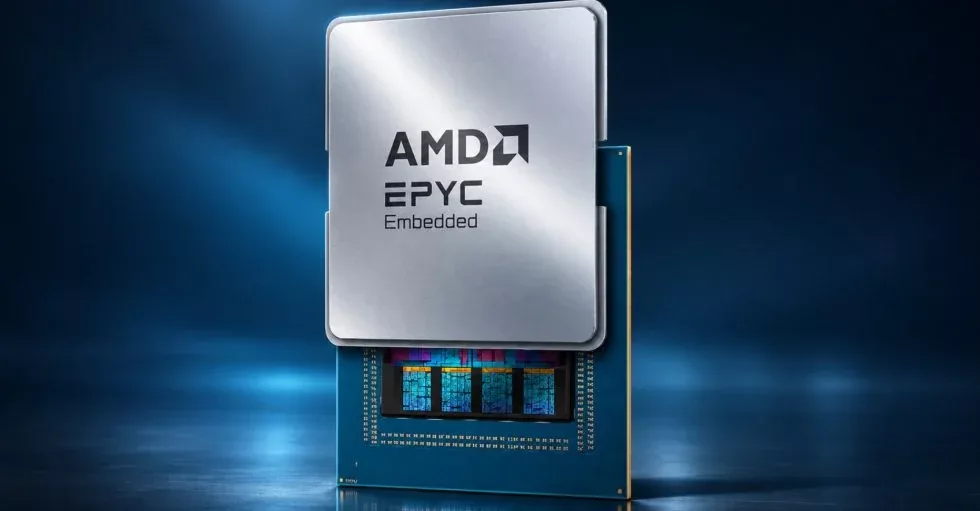
When AMD announces a processor with 256 cores, it might sound like overkill for a standard industrial PC. However, the newly unveiled EPYC Embedded 9006 Series is not designed for small control boards, but for high-density data processing environments like semiconductor testing facilities, high-performance network firewalls, and centralized storage controllers. Built on the Zen 6 architecture and utilizing the SP7 socket, this series focuses on massive throughput, long-term reliability, and advanced I/O capabilities.
Announced on November 10, 2026, the EPYC Embedded 9006 Series brings the Zen 6 architecture to specialized industrial sectors. Unlike standard server processors destined for general-purpose data centers, these embedded chips are tailored for systems that must operate reliably in fixed configurations for many years. To meet these demands, AMD is promising a seven-year product availability, alongside specialized firmware updates and long-term software support. It is important to note, however, that this seven-year commitment applies to the processors themselves; the longevity of a complete system will still depend on the lifecycle management of the motherboard, firmware, and operating system.
Massive Core Counts and Memory Bandwidth
The technical specifications of this embedded platform are remarkably expansive. The series offers a range of models with 64 to 256 CPU cores, providing up to 512 threads. To feed these cores, AMD has implemented a 16-channel DDR5 memory subsystem. According to manufacturer data, the platform supports RDIMM modules at up to 8,000 MT/s and MRDIMM modules at up to 12,800 MT/s. In a fully populated configuration with DDR5-8000, this results in a theoretical maximum gross bandwidth of 1,024 GB/s, while DDR5-MRDIMM at 12,800 MT/s could theoretically reach 1,638.4 GB/s. AMD claims this represents up to a 2.7x increase in memory bandwidth compared to the previous generation, though this comparison accounts for different platform configurations and memory types.
Next-Gen I/O: PCIe 6.0 and CXL 3.1
Connectivity is a major pillar of the 9006 series. The processors provide up to 96 PCIe 6.0 lanes, each operating at a transfer rate of 64 GT/s. Since PCIe 6.0 effectively doubles the nominal transfer rate per lane compared to PCIe 5.0, this bandwidth is critical for high-speed SSD testing and connecting multiple high-speed network adapters. Additionally, the inclusion of CXL 3.1 support allows for more efficient memory resource management and the connection of compatible memory expansion devices, provided the specific platform implementation and software support are in place.
Performance Claims and Benchmarks
AMD has provided several performance metrics comparing the new series to the 5th generation EPYC, though these figures require context. The company reports an 1.8x increase in general throughput, a 1.3x improvement in firewall applications, and a 1.5x gain in the ISA-L memory benchmark. However, it is crucial to examine the test conditions. For the general throughput comparison, AMD compared two dual-processor systems where the new setup utilized 512 cores compared to 384 cores in the previous generation, while also benefiting from different memory configurations. This suggests that the performance jump is a result of both the Zen 6 architecture and the increased core/bandwidth scale. Similarly, the firewall benchmark used the DPDK-L3FWD test with a 400 Gbit/s aggregate bandwidth, but again, the results reflect the potential of the entire platform under specific configurations rather than the CPU alone.
Targeted Industrial Applications
AMD has identified three primary use cases for this series. In semiconductor testing, the combination of PCIe 6.0 and high core counts allows for the simultaneous testing of multiple high-speed SSDs and memory chips. In the networking sector, the processors are designed to handle the massive data rates of 400 and 800 Gbit/s networks, managing complex security rules and data streams. Finally, in the storage domain, the increased compute and bandwidth support intensive tasks like NVMe drive management, compression, and RAID administration. AMD is already working with partners such as Samsung Electronics, Lanner, IEI, and Portwell to integrate these processors into industrial platforms.
Security and Availability
For long-lived embedded systems, platform security is just as critical as raw performance. To address this, AMD is integrating several security components into the new lineup. The AMD Root of Trust serves as the foundation for secure system boot, alongside the AMD Security Processor. Additionally, the implementation of Caliptra—an open security standard—allows for verifying device authenticity and platform integrity. While these hardware mechanisms enhance security, the actual effectiveness in a deployed system depends on the manufacturer's implementation and ongoing software maintenance.
The rollout of the EPYC Embedded 9006 series is expected to begin on November 15, 2026, starting with a 128-core model. The full range, spanning from 64 to 256 cores, will follow throughout the year. While specific pricing for the embedded variants has not been disclosed, the series represents a significant shift in how high-performance computing is delivered to industrial sectors that prioritize long-term stability and massive I/O throughput.
The EPYC Embedded 9006 series marks a significant shift in how AMD approaches the embedded segment, moving far beyond traditional industrial PCs. Featuring the Zen 6 architecture, these processors are designed for high-performance, long-lifecycle environments such as semiconductor testing facilities, high-speed networking nodes, and specialized storage controllers. The series offers a massive scale, with models providing up to 256 cores and 16 memory channels, bringing data-center-grade capabilities to mission-critical industrial applications.
Security and Platform Integrity
For long-lived embedded systems, platform security is as vital as raw performance. AMD is integrating a multi-layered security approach to protect these specialized environments. The AMD Root of Trust provides a foundation for secure system boot and supports quantum-resistant firmware signing methods. Additionally, the AMD Security Processor manages protection mechanisms for virtualized environments. The series also incorporates Caliptra, an open-source, industry-standard security approach that enables verification of device identity and platform integrity. It is important to note that while these hardware features enhance security, they do not replace the need for regular security updates or proper configuration by the device manufacturer.
Availability and Roadmap
AMD is implementing a staggered release for the 9006 series. The first model, featuring 128 cores, is scheduled to become available starting November 15, 2026. Other variants, ranging from 64 to 256 cores, are expected to follow by the end of 2026. While AMD has not disclosed the pricing for these embedded processors, the series is backed by a commitment to seven-year product availability, providing the long-term predictability required by industrial sectors.
Technical Context and Analysis
The technical specifications of the EPYC Embedded 9006 series are remarkably expansive. The platform supports 16 channels of DDR5 memory, with RDIMM modules reaching up to 8,000 MT/s (theoretical bandwidth of 1,024 GB/s) and MRDIMM modules reaching up to 12,800 MT/s (theoretical bandwidth of 1,638.4 GB/s). AMD claims this represents up to a 2.7x increase in bandwidth compared to the previous generation, though this comparison involves different memory configurations. Furthermore, the transition to PCIe 6.0—offering up to 96 lanes at 64 GT/s per lane—effectively doubles the per-lane bandwidth of PCIe 5.0, which is critical for high-speed I/O tasks.
While AMD's performance benchmarks show significant gains—such as a 1.8x increase in general throughput and a 1.5x gain in the ISA-L benchmark—these figures require careful interpretation. Much of the reported improvement stems from scaling the number of cores and memory bandwidth; for instance, the throughput comparison involved a dual-processor setup with 512 cores compared to 384 cores in the previous generation. Ultimately, while these specs are impressive, the real-world advantage in specific embedded applications will depend on independent testing and the specific implementation of the platform.