

Xsight Labs E1L: Programmable 200 Gbps DPU with 25–40W TDP
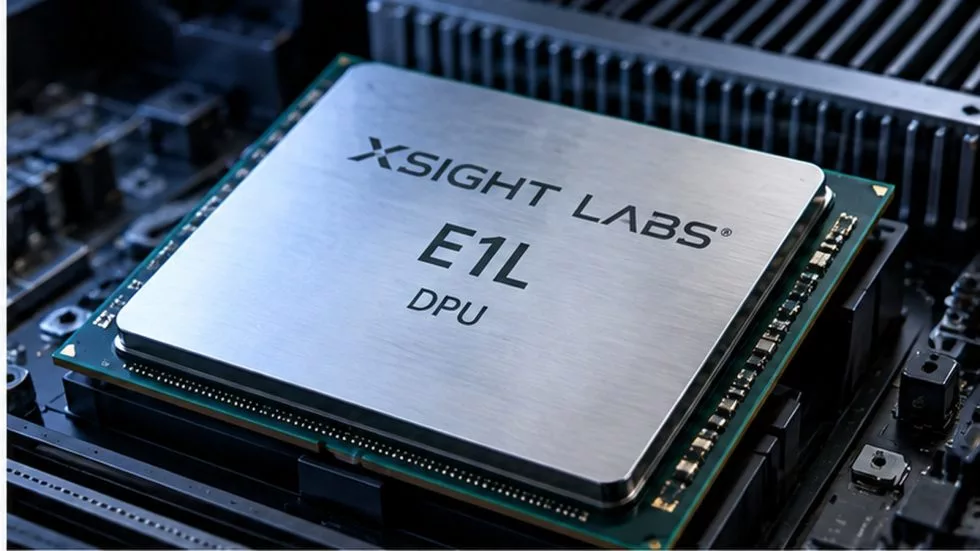
Xsight Labs is expanding its E-Series with the introduction of the E1L. This programmable Data Processing Unit (DPU) is specifically positioned for Edge, embedded, and other power-constrained systems, focusing on high efficiency in environments with limited thermal budgets.
Architecture and Performance Tiers
The E1L is built on Arm Neoverse N2 cores and is manufactured using the TSMC N5 process. The company offers three distinct configurations based on core count and network throughput. The entry-level version features 8 cores, providing 100 Gbps throughput with a 25W TDP, while the smallest variant is expected to operate at approximately 15W. Higher-end models can scale up to 22 cores and 200 Gbps throughput, with a TDP ranging between 25W and 40W.
This series is distinct from the flagship E1 platform. While the E1 is designed for hyperscale data centers—offering up to 64 cores, 800 Gbps throughput, and a typical power consumption of around 70W—the E1L is a purpose-built solution for the Edge. Rather than being a mere scaled-down version, it is optimized for scenarios where passive cooling or compact thermal management is essential.
Software Ecosystem and Offloading Capabilities
A DPU's primary role is to offload intensive tasks from the host CPU, including network processing, storage offload, encryption, virtualization, and security functions. By handling these processes directly, the DPU frees up the main CPU or AI accelerators for primary computational workloads.
A significant differentiator for Xsight Labs is its approach to software. Unlike many competitors, such as NVIDIA BlueField or AMD Pensando, which often require proprietary SDKs, the E1L is designed to run standard Linux software. It supports widely used frameworks like XDP, DPDK, and SPDK, as well as Arm SystemReady. This openness aims to lower the barrier to entry for developers who want to avoid vendor lock-in.
While the hardware specifications are compelling, the ultimate success of the E1L will depend on ecosystem adoption. The ability of developers to migrate their infrastructure to this platform remains to be seen, and real-world benchmarks will be crucial to validate its performance in industrial Edge servers and telecommunications infrastructure.
Гика
