
The Legend of Zelda: Ocarina of Time Remake: Changing the Visuals, Preserving the Experience
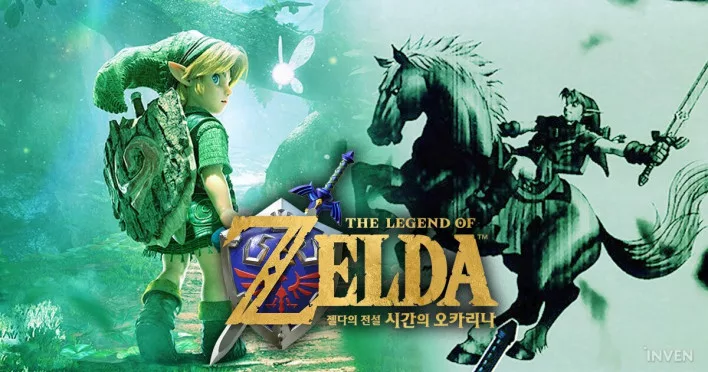
As one of the most anticipated releases alongside GTA 6, the upcoming remake of The Legend of Zelda: Ocarina of Time for Nintendo Switch 2 is more than just a technical update. In a recent 'Ask the Developer' interview, the core team—including producer Eiji Aonuma and director HokWai Ng—revealed the delicate balancing act required to rebuild a masterpiece: how to leverage modern hardware to enhance the visuals while strictly preserving the fundamental experience that defined a generation.
The catalyst for this full remake was the series' 40th anniversary. For producer Eiji Aonuma, the project was driven by a desire to see how a new generation of developers, many of whom only know recent open-air titles like Breath of the Wild, would interpret the structure and development style of the original. He wanted them to experience the joy of a guided adventure—where understanding and progression build upon one another—by rebuilding the game from the ground up.
A Philosophy of Preservation
The development was guided by a strict principle established by director HokWai Ng: "In the original, the visuals may change, but the experience does not." Ng, who played the original on Nintendo 64 as a high school student, emphasized the importance of protecting the unique 'miniature-garden' charm of Hyrule, which differs significantly from the seamless, vast landscapes of modern Zelda games. Program director Hiroki Taguchi echoed this, warning that changing too many elements simply for the sake of being a remake could result in something that is no longer the game players remember.
This commitment to preservation is evident in several key design choices:
Redefining Hyrule with Modern Density
Art director Aya Shida aimed for a world that feels high-density and realistic through the power of Switch 2, but without sacrificing the game's dreamlike atmosphere. The team adopted a visual style inspired by "puppet shows" and "practical effects" (tokusatsu)—a look that feels convincing and tangible without being a literal reproduction of reality. This approach was intended to bridge the gap between the original's charm and modern graphical fidelity.

The level of detail extends to the smallest elements. The team researched museum archives to create realistic fabric prototypes for the Kokiri Forest children, ensuring the textures felt authentic rather than machine-woven. Similarly, the environment was designed to manage player perception; landmarks like the castle and windmill were rendered larger to act as visual guides, while unreachable areas were rendered as distant views to prevent confusion about where the player could actually travel.
Refining Controls and Dungeons
While the game was built from scratch rather than using the original code, the team worked to ensure the controls felt familiar yet modern. A significant change is the implementation of a universal jump, allowing players to jump anywhere—a departure from the original's automatic jump mechanic. Additionally, to accommodate different playstyles, the game includes both the original single-button Jump Attack and the newer two-step method.
Dungeon design also underwent a refinement process focused on clarity. In the Water Temple, for example, the team modified the structure to prevent players from getting lost. By using lattice-like walls that allow players to see into adjacent rooms and smoothing out the item-swapping process, the goal was not to make the dungeon "easy," but to ensure the player's sense of direction remained intact.
Дурик
