

Samsung Galaxy Z Fold 8 Ultra Review
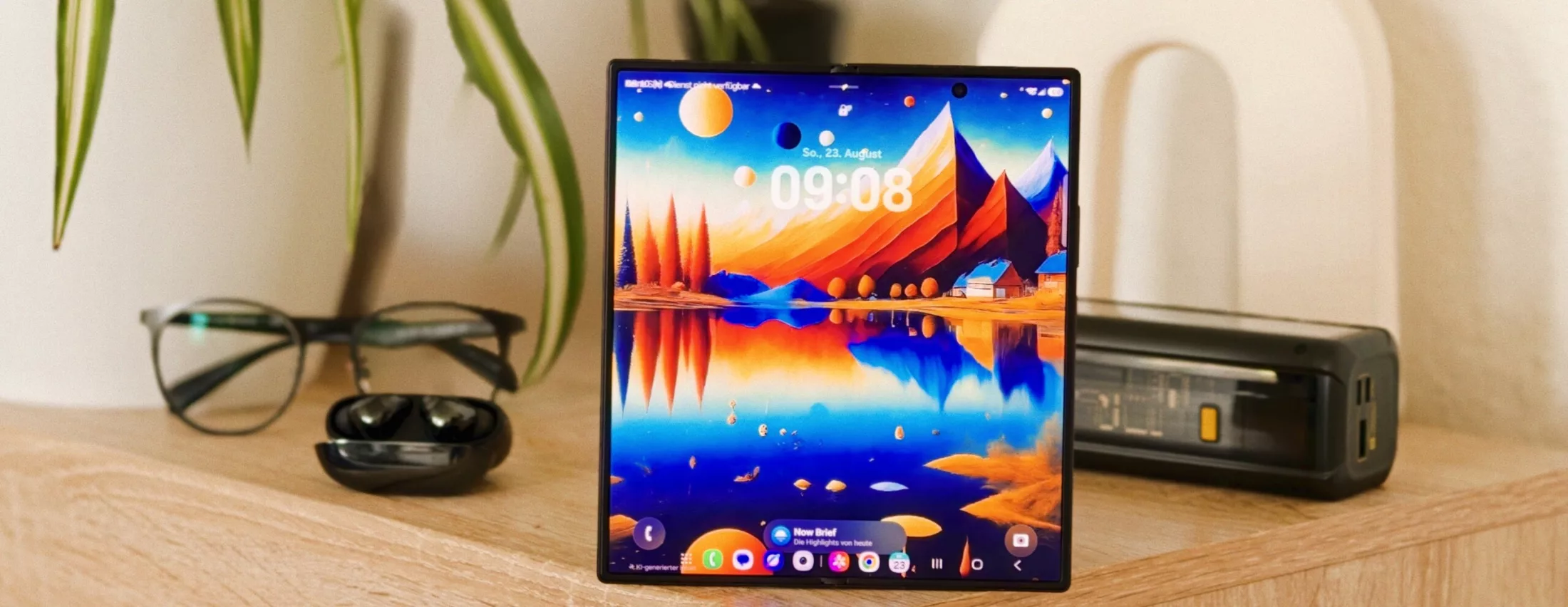
Samsung has introduced the Galaxy Z Fold8 Ultra, its thinnest and lightest foldable smartphone to date, positioning it as a direct competitor to the rumored iPhone Ultra. Despite the aggressive "Ultra" branding, Notebookcheck finds that the technical leap from the previous generation is modest, with the device lacking key features like stylus support and high-frequency PWM dimming that users might expect at a price point exceeding $2,000.
Design and Build Quality
The Galaxy Z Fold8 Ultra makes a distinctly high-quality impression, primarily due to its ultra-thin profile. When unfolded, the device measures just 4.1 millimeters, making it one of the thinnest foldables currently available on the market. Even when folded, it maintains a thickness comparable to a typical Android flagship, while weighing a remarkably light 215 grams. The hinge mechanism operates smoothly and precisely, allowing the device to stay reliably in place at various opening angles. However, the reviewers noted a persistent weakness carried over from the Galaxy Z Fold7: due to the camera module, the phone wobbles significantly when closed and lying on a flat surface.
The device carries an IP48 certification, which offers good water resistance but does not completely keep out fine dust. Given the complex hinge mechanism, this remains a risk factor during use in environments like the beach, where small sand particles could potentially impair mobility over time. The build quality is described as top-notch, with the new hinge being "beyond reproach" in terms of durability and feel.
Display and Usability
The main attraction of the Galaxy Z Fold8 Ultra is its 8.0-inch OLED screen, which features a new anti-glare coating and is marginally sharper than the display on the Galaxy Z Fold7. The panel offers a resolution of 2504 x 2256 pixels, resulting in a pixel density of 421 PPI. While the display is top-notch and a pleasure to look at, Samsung still does not offer high-frequency PWM dimming. In oscilloscope measurements, the base frequency was recorded at 240 Hz, with PWM dimming reaching only 480 Hz. This is a notable limitation for users sensitive to OLED flicker, as competitors like the Motorola Razr Fold and Vivo X Fold6 offer different PWM characteristics, though the Galaxy Z Fold8 Ultra remains competitive in brightness and color accuracy.
The 6.5-inch AMOLED cover display in a 21:9 aspect ratio has nearly the same characteristics as the main screen. The crease of the Dynamic AMOLED 2X panel is barely noticeable, a significant improvement in usability for those accustomed to the unusual square aspect ratio. However, neither the external panel nor the main display supports stylus input, a feature that Notebookcheck argues should have been a given for an "Ultra" model, especially given the productivity focus of the foldable form factor.
Camera System
In terms of photo quality, the Galaxy Z Fold8 Ultra does not represent a real leap forward from the Galaxy Z Fold7, as virtually nothing has changed in terms of hardware. The only notable upgrade is the ultra-wide-angle camera, which received a minor sensor size increase from 1/2.55" to 1/2.52". The primary camera features a 200-megapixel sensor with a 1/1.3-inch size and OIS, delivering very good photos in daylight. While contours appear slightly oversharpened, the colors are spot-on for a smartphone. Despite the relatively small sensor for an "Ultra" model, low-light shots are of very high quality.
The inclusion of a periscope telephoto lens with 3x optical zoom is not something to be taken for granted in such a thin phone. This lens allows for sharp photos with beautiful portraits. Beyond the 3x zoom, however, images quickly become blurry and lack detail. The camera setup lacks the high-end configuration of the Galaxy S26 Ultra, instead offering a minor camera update that is nonetheless remarkable for such a thin device.
Performance and Battery Life
Powered by the Qualcomm Snapdragon 8 Elite Gen 5 for Galaxy, the Galaxy Z Fold8 Ultra offers high performance, though the increase in pixel density on the display reduces the performance advantage of the latest "Qualcomm" GPU in on-screen benchmark results. The device features 12 GB of LPDDR5x memory and 256 GB or 512 GB of UFS 4.0 storage. In terms of battery life, despite the small 5000 mAh battery, the runtimes are excellent, with Notebookcheck measuring over 17 hours of usage. This shows that efficient power management, such as that found in One UI, can largely compensate for a battery capacity deficit on paper compared to competitors from China. Under light load, the Galaxy phone remains below 2 watts in measurements.
The device supports Wi-Fi 7, including the 6-GHz band, and achieves very high data rates when paired with a reference router. In Notebookcheck's tests, the Galaxy Z Fold8 Ultra achieved transmit speeds of up to 3931 MBit/s and receive speeds of up to 3723 MBit/s, significantly outperforming the Motorola Razr Fold and Vivo X Fold6. The phone also supports Bluetooth 6.0 and a wide range of cellular frequencies, offering good voice quality.
Price and Availability
The Galaxy Z Fold8 Ultra is available in Graphite, Cream, and Violet Shadow, as well as Green Shadow (exclusive to Samsung). The starting MSRP is $2,099, with prices varying by region and storage configuration. For example, the 512GB Graphite model is listed at $1,999.99, while the 256GB Violet Shadow and Graphite models are priced at $1,709.99. The device is available for purchase on platforms like Amazon.de and other retailers.
Notebookcheck concludes that while the Galaxy Z Fold8 Ultra is a top-tier foldable phone with excellent build quality and long-term update support, the "Ultra" designation feels like a strategic preemptive move against Apple's competition, even though the iPhone Ultra hasn't even been unveiled yet. The lack of stylus support and significant throttling are notable cons, but the device remains a strong contender in the foldable market.
Гика
