

Oppo Pad 6 Review: Wi-Fi 7 Issues
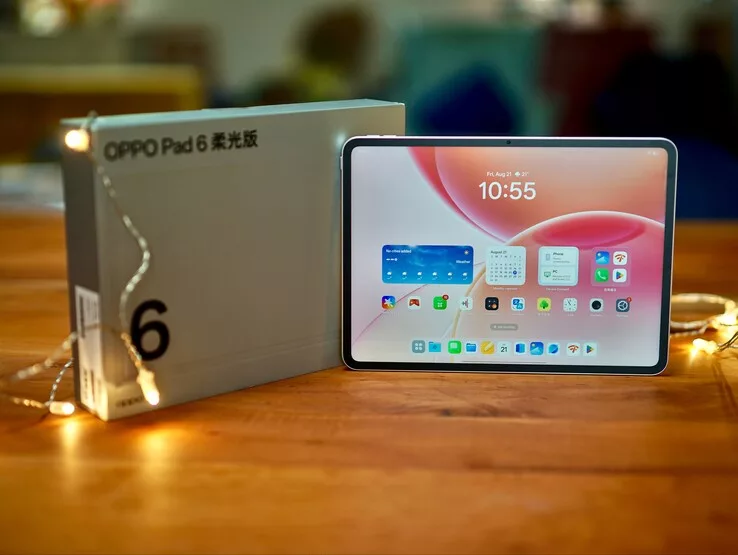
The Oppo Pad 6 arrives as a significant hardware upgrade over its predecessor, pairing a high-refresh-rate matte display with a powerful new processor. However, independent testing reveals a persistent Wi-Fi instability issue that limits its real-world networking performance, alongside the absence of 5G support and concrete software update commitments.
Design and Build Quality
The Oppo Pad 6 features a minimalist metal chassis that feels sturdy and durable in hand. Weighing 577 grams and measuring just under 6 millimeters in thickness, the tablet sits comfortably within the standard weight and size range for devices in this price category. The front is characterized by thin display bezels, which contribute to a modern aesthetic while still allowing users to hold the device securely without accidentally touching the touchscreen. The device is available in silver, dark gray, and light blue color options.
One notable omission is the lack of an IP rating for dust and water resistance, a feature that is increasingly common in competing tablets. The rear of the device includes a pill-shaped camera module in the upper right corner. Connectivity is handled via a single USB 3.1 port, which supports DisplayPort output for connecting to external displays. A unique feature of this model is the ability to connect to two hotspots simultaneously via tethering, allowing the tablet to use the 5G connections of two smartphones at once for internet access.
Display Performance
The tablet is equipped with a 12.1-inch LCD panel with a resolution of 3000 x 2000 pixels, offering a slightly higher pixel count than the previous generation. The screen features a matte finish, which helps reduce reflections in bright environments. In terms of brightness, the display achieves a peak of 821 cd/m² when displaying full-screen white, a level that is considered good for this price range. The contrast ratio is measured at 1747:1, with a black level of 0.47 cd/m².
Color accuracy is a strong point for the Oppo Pad 6. Measurements using a Calman colorimeter show a ColorChecker deltaE of 1.49, which is indistinguishable from the ideal to the naked eye. The gamma is set to 2.293, and the color temperature is 6391 K. Because the panel is LCD rather than OLED, there is no Pulse-Width Modulation (PWM) flicker detected at low brightness levels. This is a significant advantage for users who are sensitive to screen flicker, as it reduces the risk of eye strain during long reading sessions.
When compared to competitors, the Oppo Pad 6 offers a balanced display performance. While it does not reach the peak brightness levels of OLED-equipped rivals like the Honor MagicPad 4, it provides a stable and color-accurate viewing experience. The response time for grey-to-grey transitions is 17.2 ms, which is adequate for general use but slower than OLED alternatives.
Connectivity and Networking
Despite supporting the Wi-Fi 7 standard on paper, the Oppo Pad 6 exhibits significant issues in real-world testing. In a controlled environment using an Asus RT-BE96U router, the tablet failed to establish a stable connection using the latest Wi-Fi 7 standard. The speeds achieved were low and fluctuated significantly throughout the test, with transmit speeds averaging 380 MBit/s and receive speeds at 396 MBit/s. These results are notably lower than those achieved by other smartphones and tablets in the same setup.
A second test using a FritzBox 6690 Cable router also failed to produce faster or more stable data transfers. This issue is not new to the current generation; the previous Oppo Pad 5 exhibited similar Wi-Fi instability. The inconsistency in networking performance is a major drawback for users who rely on the tablet for high-bandwidth tasks such as video streaming or large file transfers.
The tablet also lacks a 5G version, which has been discontinued for this model. This limits its mobile connectivity options to 4G LTE, which may be a consideration for users who require the fastest possible mobile data speeds. Additionally, the device does not support satellite positioning, a feature that is becoming more common in high-end mobile devices.
Software and Updates
The Oppo Pad 6 ships with ColorOS 16, which is based on Android 16. The operating system supports multiple languages, making it accessible to a global audience. However, Oppo has not provided concrete promises regarding the length of software and security updates for this device. While there are general indications that tablets will receive security patches for at least three years, the exact duration remains uncertain. This lack of clarity is a concern for users who prioritize long-term software support.
In terms of sustainability, the packaging does not use plastic film, which is a positive step. However, there is no further information provided regarding the environmental impact of the device or its manufacturing process.
Cameras
The Oppo Pad 6 features 8-megapixel cameras on both the front and back. These cameras are sufficient for taking snapshots and scanning documents, but they are not designed for serious photography. The front camera produces decent selfies and is suitable for video conferences, although external webcams often offer superior image quality. The rear camera is primarily intended for basic photo and video capture, with no advanced features or high-resolution options.
Performance and Battery Life
Powered by the MediaTek Dimensity 9500s processor, the Oppo Pad 6 offers a significant performance boost over its predecessor. The chip features an 8-core configuration with a top clock speed of 3.7 GHz, providing ample power for multitasking and demanding applications. The tablet is equipped with 12 GB of RAM and 256 GB of UFS 3.1 storage, which is sufficient for most users' needs.
The battery capacity is 10,420 mAh, which supports long usage times. The device supports fast charging at up to 67 watts, allowing for quick top-ups when needed. The combination of efficient hardware and a large battery makes the Oppo Pad 6 a reliable companion for extended use, whether for work, entertainment, or productivity.
Price and Availability
The Oppo Pad 6 is currently only available as a Chinese import. The price is US$ 685 at the partner retailer TradingShenzhen, which includes relatively low shipping costs and no additional fees such as customs duties or value-added tax. This pricing is competitive with comparable tablets in Western markets, although the lack of official availability in these regions may be a barrier for some buyers.
It remains to be seen whether the Oppo Pad 6 will be officially released in Western countries. If it does, it is possible that the international version may feature significant downgrades, similar to the situation with the Oppo Pad 5. For now, the tablet is a viable option for users willing to import the device from China, offering a fast and attractive design with long battery life, albeit with some connectivity and software support caveats.
Гика
