NVIDIA Unveils Rubin HPC GPU: 50,000+ CUDA Cores and NVLink 7
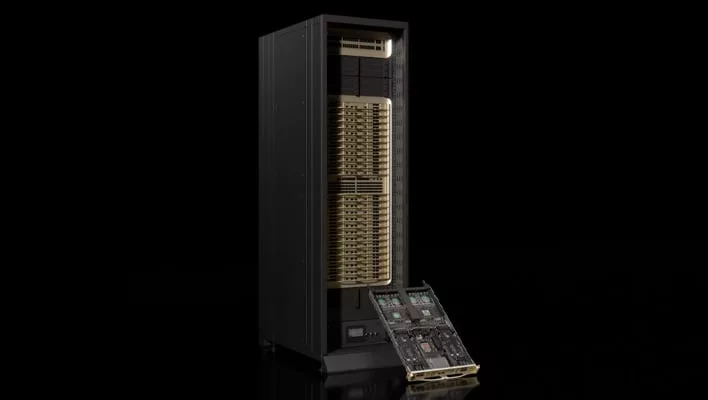
NVIDIA has pulled the curtain back on its next-generation high-performance computing (HPC) powerhouse: the Rubin HPC GPU. Unveiled at the SC26 supercomputing conference, this new entry to the Vera Rubin platform is designed to push the boundaries of massive-scale scientific simulations, featuring a staggering core count and a leap in interconnect technology.
The headline figure for the Rubin HPC is its sheer scale. NVIDIA confirmed that the single-processor accelerator will pack more than 50,000 CUDA cores. To put that number into perspective, it significantly outclasses the standard Vera Rubin GPU, which features 28,672 CUDA cores and 224 streaming multiprocessors. Even when compared to high-end consumer hardware like the GeForce RTX 5090, which boasts 21,760 CUDA cores, the Rubin HPC represents a massive leap in parallel processing density.
NVLink 7 and the HPC Focus
While raw core counts grab the headlines, the architecture's ability to feed those cores is equally critical. NVIDIA introduced seventh-generation NVLink connectivity for the Rubin HPC to manage the massive data throughput required by such a large array of cores. While specific bandwidth figures for NVLink 7 remain undisclosed, it follows the trajectory of NVLink 6, which provided 3TB/s of bandwidth per GPU.
Unlike the primary focus of many current NVIDIA accelerators on training and running large-scale AI models, the Rubin HPC is specifically tailored for high-performance computing workloads. This includes complex scientific simulations and heavy engineering calculations where efficient movement of massive datasets is just as vital as the processing power itself. NVIDIA's vision for this hardware involves a symbiotic relationship with AI, where AI agents utilize these high-speed simulations to rapidly iterate and evaluate scientific hypotheses.
Availability and Missing Details
Despite the impressive announcement, several key technical specifications remain under wraps. NVIDIA has yet to disclose the memory capacity, memory bandwidth, or the expected power consumption of the Rubin HPC. For those looking to integrate this into supercomputing clusters, the wait will be significant: NVIDIA expects the Rubin HPC GPU to arrive in 2028.