

NVIDIA App Update Fails to Block DLSS MFG Mod on RTX 40
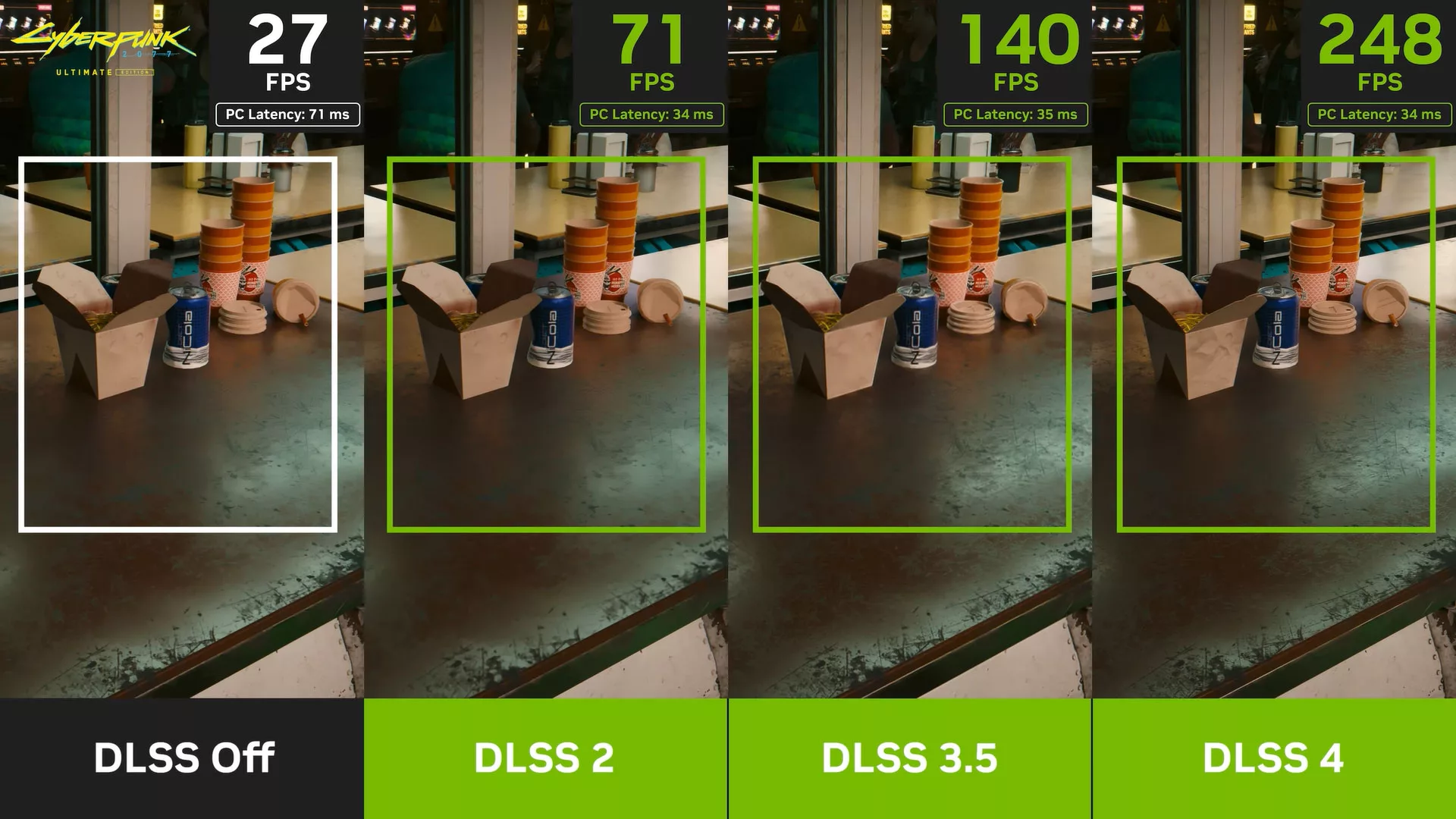
NVIDIA pushed an update to the NVIDIA App intended to block unofficial mods that enable DLSS Multi-Frame Generation on GeForce RTX 40 series GPUs, but community modders restored functionality within hours. The incident highlights the technical feasibility of running Blackwell-exclusive features on Ada Lovelace hardware, despite official statements suggesting otherwise.
When NVIDIA launched the GeForce RTX 50 series, a significant portion of the marketing focus was on DLSS Multi-Frame Generation (MFG). The company officially restricted this feature to the new "Blackwell" architecture, stating that previous-generation RTX 40 series cards could not support it. The technical justification provided was that Ada Lovelace GPUs rely on a hardware optical flow generator that is incapable of producing multiple interpolated frames per rendered frame. In contrast, Blackwell introduced a software-based optical flow method executed directly on the GPU shader cores, bypassing the need for the dedicated hardware unit.
This explanation raised immediate questions among technically proficient users: if the software method works on Blackwell, why can it not be applied to Ada Lovelace GPUs to bypass their hardware limitations? NVIDIA did not provide a definitive answer, leading many to assume that the limitation was a hard technical barrier rather than a software lock. However, recent developments suggest that the feature is technically possible on the older architecture, but was intentionally disabled through software restrictions.
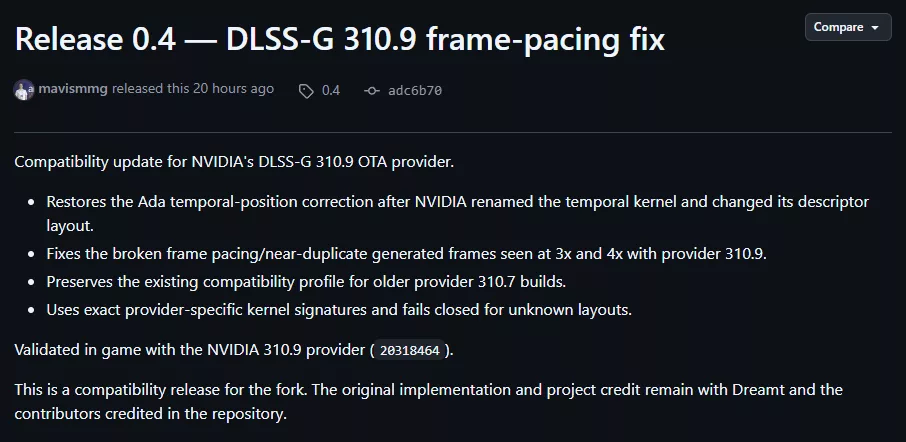
Modders have been working on unlocking DLSS Multi-Frame Generation for RTX 40 series cards for some time. NVIDIA appears to be aware of these efforts, as it recently deployed an over-the-air update via the NVIDIA App with changes specifically targeted at blocking these modifications. The update seemed designed to prevent the execution of the software-based optical flow pipeline on Ada Lovelace hardware. However, as noted by user Sebastian Castellanos on X, the block was ineffective. Within hours of the update's release, modders had identified workarounds and restored support for the feature across multiple games.
The core issue lies in the openness of the PC platform. While NVIDIA can implement software checks to restrict features, users retain the ability to modify the software running on their own hardware. At least three distinct mods have emerged to unlock DLSS Multi-Frame Generation on RTX 40 series GPUs. These modifications effectively bypass the software roadblocks implemented by NVIDIA, allowing the Blackwell-exclusive pipeline to function on Ada Lovelace cards.
One user shared a video demonstrating the mod's effectiveness on an RTX 4060 GPU, testing it in Resident Evil 9 and Forza Horizon 6. The user reported that, aside from an increase in latency, the feature worked extremely well. This anecdotal evidence supports the technical argument that the hardware in RTX 40 series cards is capable of handling the workload, provided the software restrictions are removed.
The situation has sparked debate in the community. Some users argue that NVIDIA's initial claim of technical impossibility was misleading, intended to drive sales of the RTX 50 series. Others point out that while the feature now works on RTX 40 cards, the RTX 50 series still offers significant performance advantages and other architectural improvements. The controversy underscores the tension between vendor-imposed feature locks and the modding community's ability to circumvent them on open platforms.
It is important to note that using unofficial mods may carry risks, including potential instability, compatibility issues, or violations of terms of service. NVIDIA has not officially commented on the specific workarounds discovered by the modding community. The company continues to position DLSS Multi-Frame Generation as a key differentiator for the RTX 50 series, while the modding community demonstrates that the underlying technology is not exclusive to the new architecture.
This incident serves as a reminder of the dynamic nature of PC gaming, where hardware capabilities can often be unlocked through software modifications. While NVIDIA can implement software blocks, the resilience of the modding community ensures that such restrictions are rarely permanent. The outcome of this situation may influence how NVIDIA approaches feature gating in future GPU generations, potentially leading to more robust anti-tampering measures or a reevaluation of its official stance on cross-architecture feature support.
Гика
